What's all this about?
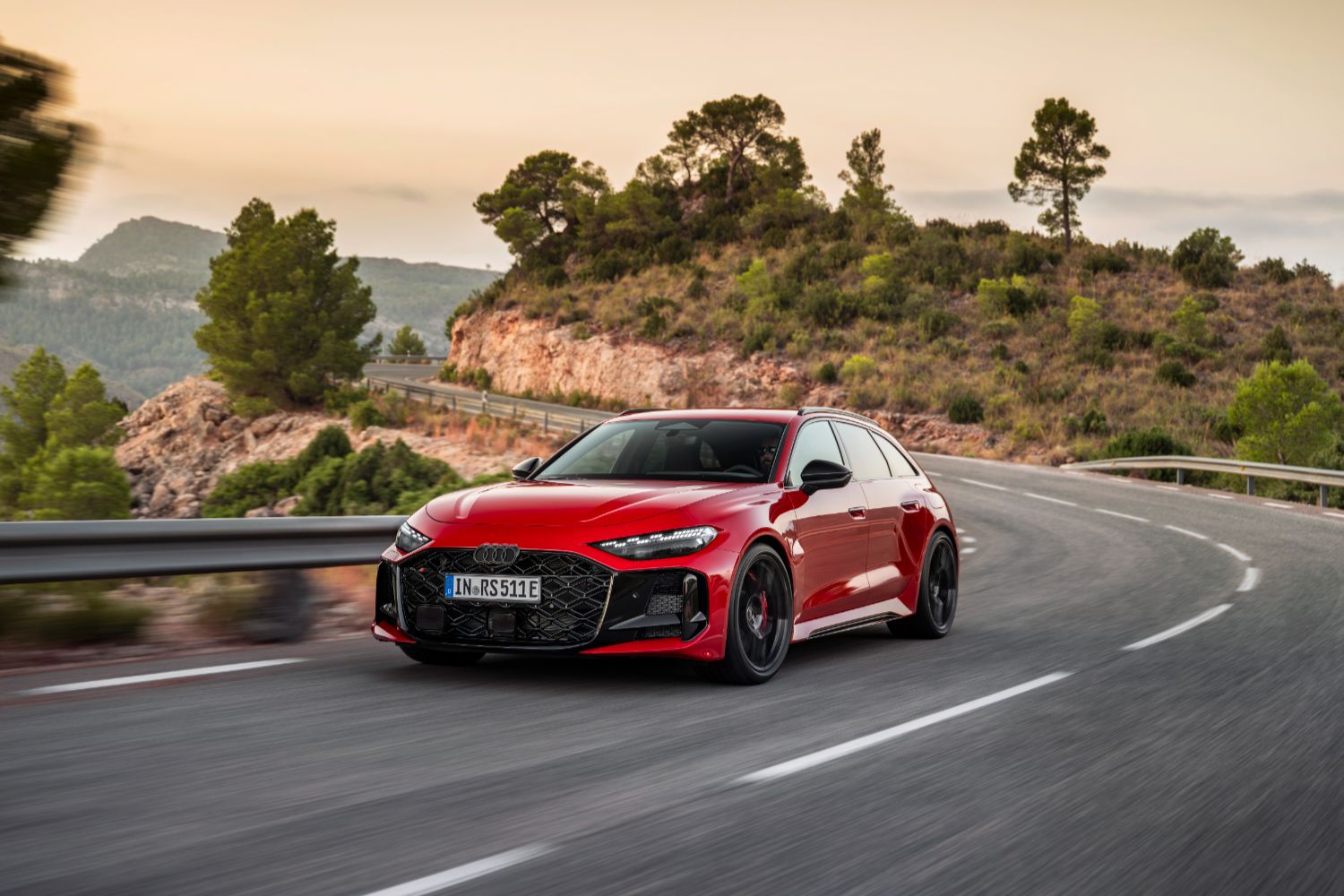
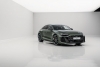
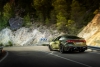
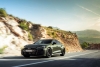
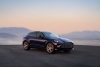
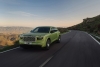
This terrifically hench specimen is the all-new Audi RS 5. Now, it's a successor to the car you previously knew and loved as the B9 RS 4 Avant, but of course because Audi went and painted itself into a corner over its even-numbered model lines being EVs and its odd ones ICE - a decision it has since made a hasty U-turn upon - it means the newbie is going under the RS 5 moniker, to tie in with the regular A5 line-up. As you can see from its estate form, this is not a direct follow-up to the machine you previously knew as the RS 5. All a bit confusing, yet there's a lot of very interesting and good stuff to talk about with the new RS 5. And, er... one detail which perhaps is best glossed over.
OK, can you start with those extraordinary looks?
Certainly can. It's pretty beefy, isn't it? That's because the RS 5 has 45mm of extra width compared to any other A5 in the family. On each side. So yes, it is 90mm wider than its stablemates and it's even 77mm broader across the beam than the very B9 RS 4 it replaces, and that was hardly a shy and retiring car from an aesthetic point-of-view to begin with.
In either body format, the RS 5 shares only four panels with any other Audi A5 variant, these being the roof, the tailgate and the front doors. After that, it's all blistered arches, whopping great oval exhaust exits, splitters and spoilers and diffusers, and gaping air vents too, with the heavy use of black detailing on both the RS 5's nose and its rump designed to visually widen what is already a thumpingly muscular shape in the first place. Also take note of the chequered-flag motif you can see in the Audi's light signatures at both ends of the car, because even the high-level brake light at the rear beams this pattern onto the windscreen glass below it when the RS 5's driver is slowing down. Wheel sizes, incidentally, are 20-inch as standard with a 21-inch rim an option. And they have those little spinny centre discs on gyroscopes, so the Audi emblems remain level even when the car is in motion, and are all neatly parallel to the ground when it's parked. Great if you have OCD.
Hold on, either body format? Isn't the RS 4... sorry, the RS 5 always an Avant?
Normally, yes, but this 'B10' derivative is going to give buyers a choice. If you take the entire preceding lineage of the RS 5, you can kick things off with the Porsche-fettled RS 2 Avant of 1994. That mega old-timer spawned the four distinct generations of the RS 4: the B5 (1999-2001), the B7 (2006-2008), the B8 (2012-2015) and then the B9 (2018-2025). Of all five of these ultra-fast Audis, only the B7 RS 4 came in anything other than Avant format, the German company offering it as both a four-door Saloon and the one-of-a-kind Cabriolet.
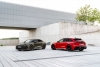
The B10, though, is going to serve up a Saloon model alongside the wagon, breaking the RS 4/5's Avant 'norm' in the process. It would probably be more accurately termed the RS 5 Sportback, given its tailgate hinges up at the roof and so it is technically a five-door car, rather than a four-door, but presumably Audi has done enough to confuse its own customers and dealers with both the now-abandoned even EVs/odd ICE strategy and also that bonkers period when the Ingolstadt outfit tried to baffle everybody with the two-digit boot-badging debacle. Which it also chucked in the bin, before too long. And so, rather than risk people misunderstanding that the RS 5 Saloon is not, in fact, a successor to the RS 5 Sportback but instead a four-door RS 4 that we've not seen for nearly 20 years, Saloon it is.
Presumably, the Saloon is not as practical as the RS 5 Avant? And we won't get it in the UK?
Yes to the first part of your query, no to the second - quick answer to that latter detail is that both body formats are confirmed for our shores. Moving onto the practicality issue, one of the big developments here is that the RS 5 has (gulp) gone to plug-in-hybrid (PHEV) power this time around, augmenting the ICE part of its nature with some electrical assistance. That places a whopping great 25.9kWh gross, circa-22kWh net lithium-ion battery pack (EV range: 50-53 miles, claimed) under the boot floor on both variants of the RS 5. In turn, it means official cargo capacities are not about to have Skoda quaking in its boots (if you'll pardon the pun): the Avant can summon up 361 litres (less than a Mk8 Volkswagen Golf) with all seats in use and 1,302 litres with the second row folded down, while the Saloon's numbers drop back to 331 and 1,170 equivalents. We've been to see both the Avant and Saloon at a secret-squirrel-type event over in Munich and got to sit in both cars, and the Saloon definitely has restricted headroom in the rear compared to the Avant.
What about the rest of the interior?
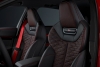
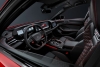
It's based on Audi's current A5 cabin architecture, which means the huge Digital Stage interface. Some like this, others aren't so keen, but the rest of the material finishing is impressive and of course the RS 5's ambience is enlivened by sporty touches, like red stitching, carbon-fibre trim panels, a Dinamica-clad steering wheel with a motorsport-esque 12 o'clock marker, and some fabulous front bucket seats too. In the instrument cluster and touchscreen infotainment displays, various RS 5-specific graphics can be espied as well.
Right, you mentioned the RS 5 is now a PHEV. What's the good and bad news here?
Let's start with the negative: weight. You stick a massive great battery in the car, plus Audi's legendary quattro all-wheel-drive system, an eight-speed Tiptronic gearbox and the sort of hefty brakes/suspension/wheels that can handle vast quantities of petrol-electric power, and the net outcome is one heavy-ass Audi. As a Saloon, the new RS 5 clocks in at 2,355kg; it's another 15 kilos portlier again as the Avant, its near-2.4-tonne figure of 2,370kg eye-widening for all the wrong reasons.
Counterbalancing this, and almost certainly cancelling out any weight impediment, are a simply colossal set of power and torque figures. Brilliantly, Audi has managed to avoid falling into the same four-cylinder-wrongness trap its compatriot Mercedes-AMG did with the lacklustre C 63 S E-Performance, and it has instead retained the same 2.9-litre twin-turbo V6 as seen in the prior B9 RS 4.
Exceeeept... it's not quite the same engine. In fact, Audi says it is all-new, despite the apparently identical swept capacity and configuration, which is why it can now deliver 510hp when the preceding RS 4 was rated at 450hp, with the exception of the ultra-rare and run-out RS 4 Edition 25 Years, which had 470hp. Torque from the biturbo petrol, incidentally, is unchanged at the same 600Nm it was previously.
Yet with a 130kW/460Nm electric motor adding another 177hp to the mix, you end up with the ginormous data of 639hp and 825Nm. Sure, not quite a 'sum-of-its-parts' set that would read 687hp/1,060Nm, but still more than enough for the RS 5 to brutally eclipse any of its obvious, PHEV-unadorned rivals such as the BMW M3 Touring and Alfa Romeo Giulia Quadrifoglio, for instance. Audi-philes among you might even register than 639hp is in excess of what the C8 RS 6 mustered up, even as the magnificent end-of-the-line GT, and it also means there's a 272hp/275Nm chasm between the RS 5 and the next model down its own family tree, the 367hp/550Nm S5 subordinate - with its own 3.0-litre V6 petrol.
Performance on the RS 5 is, therefore and as you might expect, brutal. It'll run 0-62mph in 3.6 seconds despite its mass, while the top-speed limiter is pegged at 177mph. Lord knows what it would run on to if allowed to gallop free and unfettered by an electronic nanny.
Is the chassis uprated to cope with all of this?
Naturally. The big news here, from Audi's perspective, is that the quattro AWD uses a 'world-first' electro-mechanical torque-vectoring set-up on the rear axle, with a teeny-tiny 8kW/40Nm motor ensuring the grunt of the powertrain can be apportioned out in as little as 15 milliseconds. Teamed to the limited-slip central diff on the quattro underpinnings, this invention should lead to some lairy drive modes and settings, with the inference we took from Audi Sport's representatives' own implications being that the RS 5 will feel quite rear-driven at times, rather than boringly four-square and grippy, or alternatively overtly nose-led; good news.
Elsewhere, the suspension is handled by a five-link arrangement front and rear, accompanied by twin-valve dampers and an RS-specific state-of-tune. The steering is faster and more direct than that of any other A5, with a 13:1 ratio, while there are some monster brakes to try and reel in 2.4 tonnes of hard-charging RS 5 time and again without fade. As standard, they're steel affairs with 420mm front/400mm rear discs, but a carbon upgrade enlarges those rotors to 440mm/410mm respectively. Again, a slightly negative by-product of the Audi's goliath weight is that said carbon upgrade changes all four discs to the lightweight material; the company reckons this is a segment first, but it's only necessitated due to the car's bulk. Still, equipping the carbon stoppers trims 30kg from the Audi's kerb weight.
Any word on prices?
They're not set in stone as yet, but an Audi UK representative suggested that the RS 5 Saloon would be around the £90,000 mark for starters, with the Avant commanding another two-grand premium on top of that. Either way, we're very excited by the idea of a 639hp Audi with a snarling V6 retained in this day and age, and also mighty keen to see if Audi Sport's chassis wizards can pull off the immense magic trick of making the RS 5 feel lighter on its feet than it actually is. Keep your eyes peeled for a first drive review of the car(s), coming soon.
Matt Robinson - 19 Feb 2026