Styling
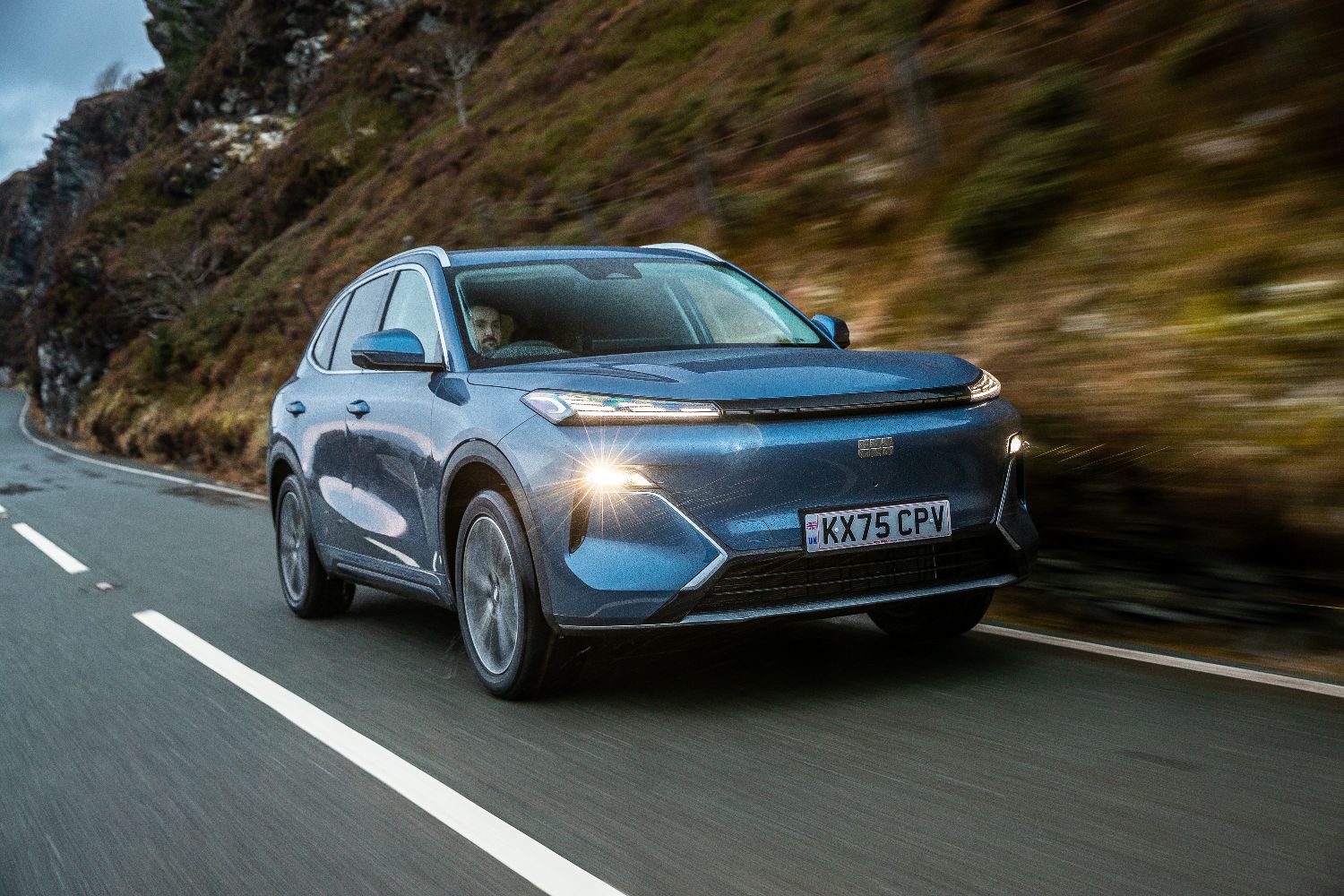
Personal opinion and all that, but we reckon this Starray looks pretty good. It's still not the most massively distinctive piece of exterior design we've ever clapped eyes on and there's arguably more than a hint of
Volkswagen Tiguan about the rear aspect, but the face of the Starray has greater definition and appeal than the smoothed-off snouts of the other two Geely cars, the EX2 and EX5, and it helps the PHEV SUV's case no end that the test version is painted in luscious Rainforest Green too. All three specifications of the Starray EM-i sit on 19-inch aerodynamically optimised alloy wheels and these are attractive rims, too.
Interior
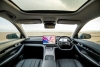
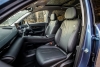
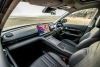
Geely serves up another nicely finished, bounteously equipped and easy-on-the-eye passenger compartment in the Starray EM-i, although it's one blighted by a few of the foibles we experienced in the EX5 - in the PHEV, this means you therefore have to open the sunroof and its attendant blind on the touchscreen, and the same goes for the tailgate as well. Yes, we know; ridiculous. Just fit some sodding buttons for these kinds of things, please, Geely.
Then there's some unusual grouping of various advanced driver assistance systems (ADAS) in the menus on the 15.4-inch HD infotainment display, requiring multiple taps (and subsequent confirmatory second taps) just to switch them off. And deactivate them you'll assuredly want to, as - on one local backroad without central markings - the emergency lane-keep assist tried to swerve us into an oncoming car. Not just annoying; actively, dangerously stupid use of tech, this.
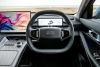
However, once you have got all the ADAS idiots disabled and you've acclimatised yourself to some of the quirks of the infotainment, the Starray EM-i's cabin is a fine place to spend some time. Alongside the main Apple CarPlay-/Android Auto-enabled touchscreen is a 10.2-inch instrument cluster and 13.8-inch head-up display, and these items are standard on all versions. Overall, we approve of the Geely's interior, even if it slavishly follows the now-all-too-predictable cabin layout of all Chinese cars; namely, those dual screens, a column-mounted shift lever, a high central tunnel area, and precious few physical buttons.
Practicality
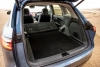
An area the Geely Starray EM-i monsters. A 528-litre boot with all seats in use is decent enough as it is, but fold the 60:40 split-tumbling rear bench down and more than 2,000 litres of cargo capacity puts the Chinese PHEV on a par with some vans. It's a vast volume. There are also some good storage solutions throughout the cabin and
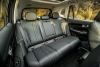
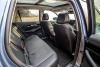
biiiig door pockets, while the Starray doesn't do away with the glovebox entirely. And then the icing on top of all this is that passenger room in the second row is thoroughly generous, while there's also a completely flat floorwell for the maximum in practicality benefits for a five-seat SUV like this.
Performance
As with the interior layout following a very well-trodden path in terms of aesthetics and interface compared to its compatriots, so too the Geely Starray EM-i has a PHEV drivetrain specification that is
awfully familiar if you know about Chinese hybrids. With that three-letter honorific standing for 'e-motive intelligence', and not being a million miles away from a direct rival's use of
DM-i for its PHEV alternative, there's a 99hp non-turbo 1.5-litre four-cylinder petrol engine under the bonnet, assisted by a potent 160kW (218hp) e-motor driving the front wheels through a dedicated hybrid transmission.
Associated with this powertrain, there's a choice of two battery packs, both of which are lithium-iron-phosphate (LFP) chemistry. The entry-level Pro version and the mid-grade Max, as tested here, have an 18.4kWh unit which confers a claimed all-electric range of 51 miles on the Starray. The top-spec Ultra, however, ups that to a 29.8kWh battery, along with a theoretical 84-mile zero-emission capability. It also has faster DC charging (60kW, although both the Pro and the Max still have DC connections, rated at 30kW), so it'll do a 30-80 per cent top-up in 16 minutes, as opposed to 20, despite the increased capacity of its cells.
There's no hike in power for the Ultra, though, to offset an increase in kerb weight brought about by its larger power pack, which takes the mass beyond 1.8 tonnes, but Geely claims all versions of the Starray can achieve 0-62mph in eight seconds dead. This is because it's quite punchy compared to its compatriots, like the painfully average
Chery Tiggo 7 or the really quite awful
Jaecoo 7 SHS-P, as the EM-i has a peak output of 262hp.
What's best about the Starray's notably above average performance is that the engine never becomes hideously coarse and rowdy, even when it fires up to assist the electric portion of the powertrain. So not only is the Geely nice and swift, and accelerates with more verve than you might expect of a 1.5-litre, 1,770kg SUV, it also remains quiet and civilised throughout. The brakes are OK too, although the pedal is a little over-servoed in its action (something we found with the EX5 EV, as well).
Real-world efficiency is in the order of 46mpg. We drove the Starray for 264 miles across the week, on a variety of roads, and it hovered at anything from 45.5- to 46.9mpg (indicated) during that time, which is more than acceptable considering we never charged the battery pack up from the mains to boost its real-world efficiency yet further. Basically, we were using a PHEV wholly incorrectly, and it still proved to be reasonably frugal.
Ride & Handling
We touched upon the Lotus link in our previous two reviews of the Geely EVs, and we're going to name-drop the Norfolk concern again here because the Starray EM-i is yet again the midsized Chinese SUV hybrid we like the most, of all the ones we've tested so far. This is because the Geely gives the impression that there's a meaningful connection between its front axle and the steering wheel, while the suspension is set up quite softly to counteract the shambolic state of the UK's roads, yet it has the necessary control to keep the EM-i's shell properly tied-down.
This results in the Starray being mighty pleasant to drive. It is, of course, not thrilling on quieter, more interesting routes, even if the steering is fine and the body control, while slightly loose at times due to the comfort-oriented set-up, is nevertheless good enough that the Geely never descends into outright roly-poly behaviour in the corners. So while you're never going to have genuine fun hustling the Starray, unless you're the sort of person who takes a perverse delight in wilfully thrashing something that was never designed for such a scenario, it is nevertheless perfectly capable and composed, and one of the better Chinese cars we've driven.
Where it really wins you over, though, is that it rides well and keeps the passenger compartment suitably hushed at all road speeds. Whether ambling about town, cruising along a smooth-flowing A-road or hammering down the motorway at 70mph for prolonged periods, the Starray is always amenable, subdued and comfortable. Honestly, the dynamic difference between this and that unfathomably popular darling of the moment, the Jaecoo 7, is absolutely enormous. If you want a Chinese PHEV SUV which drives in a manner that feels like it has been properly tuned for Europe, i.e., in a commendable fashion, buy the Geely. If you're an inveterate sadomasochist with a fetish-linked weakness for the exterior appearance of the Range Rover Evoque, then by all means, have the immensely inferior and
even more expensive J7 if you must.
Value
The Geely Starray EM-i costs £29,995 as a Pro, £32,690 as a Max and £34,990 as an Ultra flagship. Those are all really competitive prices, certainly compared to
established European opposition, but also when ranged up against other Chinese newcomers.
And, as with all machines from the eastern country, even a Starray Pro comes with masses of kit. All the Max trim really adds is the panoramic roof, powered tailgate, a heated steering wheel, ventilated front seats, 256-colour ambient interior lighting, a 16-speaker Flyme Sound premium audio system and also front parking sensors. Essentially, the Geely represents fabulous value-for-money, and it can be financed for something like £335-£395pcm while it is also backed up by the company's six-year, 100,000-mile vehicle warranty (with eight years and 125,000 miles' worth of cover on the high-voltage battery).
Verdict
As a brand, Geely has made the most-impressive start of all Chinese manufacturers, as all three of its products are thoroughly decent cars, yet sold at the sort of combative prices that should get potential customers to sit up and take notice. Brilliantly, the Starray shows that Geely can manage PHEV powertrains as well as it can EVs, and if it weren't for the infuriating ADAS and various human-machine-interface irritations, we'd perhaps rate the EM-i even more highly than we already have. Put simply, while a long way from perfect or class-leading, the Geely Starray EM-i is undoubtedly the best PHEV family chariot yet to emerge from China. By quite some distance, too.