Styling
At 4,171mm long with a wheelbase of 2,601mm, the Epiq is the second-smallest car Skoda currently makes. Yup, it
is shorter than the petrol-powered
Kamiq (4,241mm L, 2,651mm WB) and only bigger than the manufacturer's
Fabia supermini (4,137mm L, 2,549mm WB). It's also the smallest EV put together by the firm since the electric version of the
Citigo bit the dust in 2020, going off-sale almost as soon as it arrived.
Curiously, the Epiq doesn't
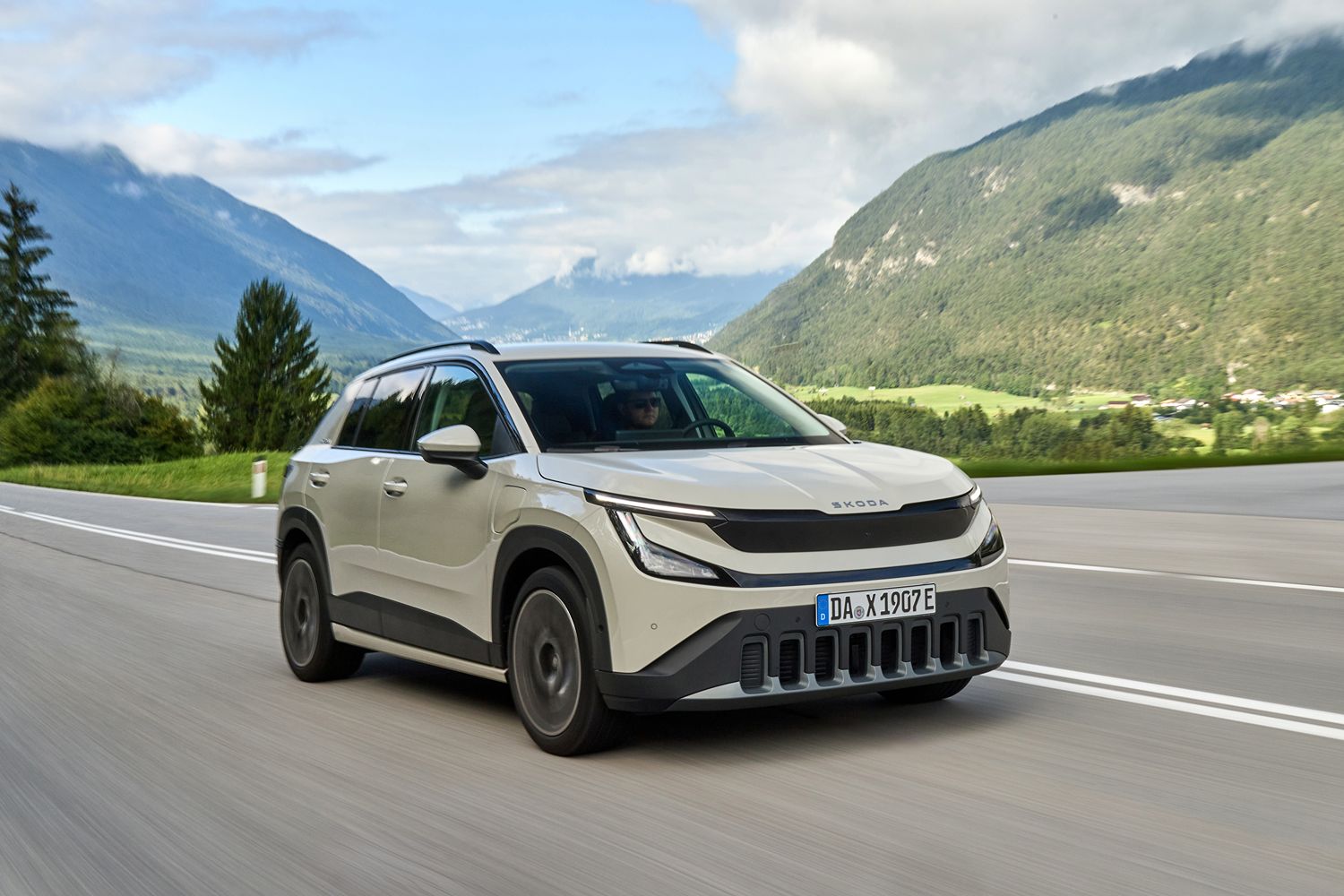
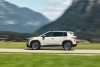
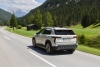
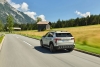
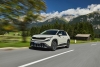
seem small as you walk up to it. We mean this in a good way - in that, we're saying the Skoda EV has plenty of presence, rather than it appears hulking and hefty. It's a proponent of the Czechian outfit's 'Modern Solid' design philosophy, which is centred on minimalist detailing, an evolution of the Tech Deck Face first seen on the Elroq and Epiq models, and then with the whole kaboodle capped off by those T-shaped rear-lamp clusters, which are almost a direct lift from the Vision O Concept. It'll share much of its styling cues with the Peaq sitting at the other end of Skoda's electric range, including that new 'Skoda' wordmark emblem sitting on the C-pillar. Other features of the Epiq are the eight vertical details in the front and rear bumpers, and the black plastic trims on the sides to visually break up the flanks. Looks smart sitting on its 19-inch 'Lark' aero-optimised alloys (a £620 option on the Edition), too.
Interior
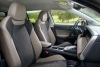
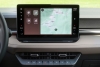
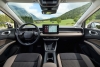
An attractive and, crucially, round two-spoke steering wheel almost has more buttons on it than the dashboard in the Skoda Epiq, but thankfully the company's fabled ergonomic sensibilities have not all been sacrificed at the altar of fanatical touchscreen worship. Yes, you do control almost all the climate on the 13-inch central infotainment display, but this responds cleanly and quickly, and looks nice - plus, the necessary climate features like temperature adjustment and the heated-seat controls are always presented down the side of the screen. And there's a rank of physical shortcut buttons on the centre stack, as well.
Menu layout deeper into the infotainment system is fine and well-ordered too, while the digital instrument cluster - a small affair at 5.3 inches - is nevertheless crisp, clear and a doddle to operate. Beyond that, the general design and quality feel of the material finishing in the Epiq is, to borrow the name of another Skoda model, superb, so the passenger compartment of the new EV gets off to a smashing start.
Practicality
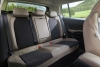
One thing you always expect of a Skoda is that it will be comparatively roomy in the back, when measured up against its class equivalents, and it'll have a big boot. The Epiq, happily, ticks both boxes, although we would say that the rear seats are above average rather than amazing. There's a fair amount of leg- and headroom in the back and, off the tops of our heads, we can't think of anything which massively outstrips the Skoda in this regard, but whereas rear-passenger space in something like an
Octavia feels like it is from a class or two above the level of the market at which it operates, the Epiq doesn't quite pull off the same trick.
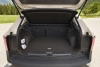
All five seats in use - well, four really; the central-rear squab is high and narrow and, despite a flat floorwell in the rear, nobody apart from very small kids will be happy sitting in that position for any lengthy period of time - Skoda claims a massive 475 litres of boot space, which is huge. There's a height-adjustable floor back there, so you can either have a flat loading lip with the open tailgate area and a vast underfloor storage well, or you can reduce the latter in capacity but introduce a slight step down into the boot area from the hatch. Our only gripe about the cargo bay is that there's no extra versatility to it than the moveable floor and a couple of moulded-plastic bag hooks. It's a plain 'hole' at the back of the car, if you'll forgive that somewhat unfortunate terminology.
The practicality points of the Epiq are not finished there, however, as with the 60:40 split-folding rear bench dropped down, up to 1,345 litres of space becomes available, while - soon after launch - there'll be a moulded under-bonnet storage tray device that will serve as a 25-litre 'frunk'. And parents will be happy with three full Isofix positions in the cabin, one on the front seat and two more in the rear, too. Oh, don't forget Skoda's 'Simply Clever' flourishes, either: things like an umbrella in the driver's door and an ice scraper in the boot, for example.
Performance
There are three powertrains available for the Skoda Epiq, labelled the 35, the 40 and the 55. From launch in the UK, only the 55 will be available, with the 40 joining later. All models are front-wheel drive and have a single-speed reduction-gear transmission, but there are two different sizes of battery, a detail which goes hand-in-hand with quite a marked power jump from the modest 35 and 40 cars to the surprisingly swift 55.
It's not immediately clear if Skoda will offer the 35 at all on these shores, but for the sake of completeness we'll outline its details. It is fitted with an 85kW e-motor and a 37kWh lithium-iron-phosphate (LFP) battery. Power peaks (peaqs?) at 116hp with torque of 267Nm, and weighing in at an admirable 1,542kg, the 0-62mph is a respectable enough 11 seconds precisely. Skoda reckons this one will go 193 miles to a charge and replenishes its battery at its fastest at 50kW DC (all Epiqs have 11kW AC charging, incidentally), requiring 33 minutes for a 10-80 per cent top-up.
Moving up to the 40, a lot of the stats on it don't change - the torque, the battery size and chemical make-up, the weight and the range all remain identical to the 35. It does, though, have a slightly more potent 99kW e-motor, which equates to 135hp, and that lift in output trims the 0-62mph time to 9.8 seconds, although both 35 and 40 are limited to 93mph flat out. The 40 also has faster DC charging with a 90kW maximum, reducing the 10-80 per cent time to 25 minutes.
This 55, though, feels like a horse from a different stable. It gets a sizeable hike to a 155kW e-motor, which is 210hp (it's actually 210.8hp, so nearer 211hp, but we'll play it safe for now) in old money. Torque also climbs to 290Nm but of more interest to EV fans is that this Epiq dumps the 37kWh LFP battery for a chunkier 52kWh nickel-manganese-cobalt (NMC) affair. This doesn't do wonders for the Skoda's weight, pushing the kerb figure into the zone of 1.6 to 1.7 tonnes (exact trim spec depending), but even so the 0-62mph time comes down markedly to a hot-hatch-esque 7.1 seconds. The top speed also rises moderately to 99mph, although it's the 105kW DC charging speed - 24 minutes for 10-80 per cent - and the 274-mile official range which are the headline selling points for an affordable zero-emission machine like this.
We haven't yet had a chance to sample the 35 and 40 models, as all the cars on the international launch were 55s, but we suspect that missing them will be no great loss. This 210hp Epiq has wonderful real-world performance, providing effortless yet nicely graded speed that makes it an equal delight to thread about town, just as much as it is to punch the car down a twisting road or cruise along a motorway (autobahn, in our case) at 80mph and more.
But it's not so much how it gains speed which sticks with you - it's how it sheds the stuff. When we drove the group's initial development car for this small MEB+ affordable EV platform, which was the
prototype version of the Cupra Raval VZ, we marvelled at the Spanish car's braking system. Being the first VW Group EV to have disc brakes on the rear axle, its stopping powers felt strong yet also, crucially, completely organic and natural.
Well, that most-welcome trait has carried over to the Epiq, so you have beautiful, progressive pedal feel and hardly any sensation of the point where regenerative deceleration hands over to friction braking from the discs. This bodes very well for the next two cars on this same platform, the
Volkswagen ID. Cross and its related
ID. Polo supermini - the latter of which is going to have a 226hp GTI hot model. Good brakes are one of the cornerstones that help make up a talented performance hatch.
There's another mighty benefit to the Skoda Epiq's on-road behaviour as well, which is its real-world electrical efficiency. Skoda claims it'll do 4.5 miles/kWh, which is fantastic as it is, but on our 112-mile route back from the Tyrolean Alps in northern Austria to Munich airport, for the first ten miles or so of the trek, the Epiq 55 reckoned it was doing negative kWh/62.1 miles. That, if you're trying to work it out, means it wasn't using any of its battery resources at all and, in effect, could have been topping the power cells up on regen alone. OK, we started at the Interalpen Hotel, which sits almost the same height above sea level as the summit of Ben Nevis, but we didn't do a straight 4,000-plus-foot descent to the valley floor. There was some level running through towns on the Austrian plateau in this initial section of the trip.
Further on, as we dropped further down from the mountains and started heading for the German border, it was still showing 6.0kWh/62.1 miles after 30 miles and more of motoring, with more roads involving a 100km/h (62mph) limit included in the mix. That's 10.35 miles/kWh.
Ten miles per kilowatt-hour. If you could keep that up, the Skoda would go nearly 540 miles on its resources before needing a charge. Maybe we should move to the top of an Austrian Alp and only commute in the downhill direction or something.
Ahem. Even by the time we'd got to Munich airport an hour or so later, having had protracted periods pushing the Epiq 55 along at 80-90mph on the autobahn on what was a cold and wet day (so the climate was on, so were the heated seats, and periodically so too were the lights and wipers), it ended up at 13.5kWh/62.1 miles. That's better than the official figure of 13.7 and equates to a most remarkable 4.6 miles/kWh, in a driving situation and climatic conditions that were in no way conducive to the best possible electrical economy. In other words, you're going to easily get 200-250 miles from an Epiq 55, all year round, without having to drastically modify your driving style to do so.
Ride & Handling
You were probably expecting that we'd say the Skoda Epiq was quiet, comfortable and easy-to-drive, yet not particularly thrilling in the corners. However, without getting too carried away with its dynamic prowess, one of those statements is not exactly true.
It is, of course, supremely assured and confident for day-to-day driving duties. For just pottering about town on broken surfaces, or motoring along a bit quicker on country lanes and A-roads at a decent lick, or even cruising on a motorway for sustained periods, there's not a situation where the Epiq ever feels anything less than brilliant. There's no Dynamic Chassis Control (DCC) variable dampers working their multimode magic here; just a suspension set-up of professionally bob-on springs and shocks working in spectacular unison. Noise suppression is marvellous too, as you hear next to nothing of wind, tyre or suspension sounds when you're on the move, even at 70mph and more.
So you're really not going to complain about the highly polished everyday demeanour of the Skoda Epiq. But you could say the same thing about the company's
Karoq as well. Thus, where the compact EV surprises the most is with its unexpectedly likeable roadholding. The steering, for instance, is sweetly weighted and even boasts a bit of meaningful feel, while the body control permits just the correct amount of squidge in its movements to telegraph where the limits of adhesion are to the driver, long before they are breached. Those sharp and ultra-dependable brakes also ensure chucking the Epiq into corners is fun, rather than frightening, and it also feels fabulously balanced from front to rear when you're needlessly provoking it mid-bend. Further, 210hp and 290Nm are ideal outputs for the chassis, so everything feels cohesive and like it's working together, rather than any one element of the car overwhelming or fighting with another.
We're not about to declare the Epiq some kind of vRS in disguise, you understand, but as B-segment EVs go, be they hatchbacks or mini-SUVs, the Skoda is easily among the more satisfying cars for keen-driving enthusiasts. It betters most of its established European and Japanese competition for the way it goes down a challenging road, and when you try it against something from China, even one of the
better compact electrics hailing from that country, the Epiq will feel like is in another kinematic league entirely. It's a magnificent little thing.
Value
The excellent news keeps on coming. The 55 is sold in three specifications from the off, running SE L, Edition and then First Edition. These cost £27,700, £30,450 and £31,450 respectively, and there's a wealth of desirable equipment on even an SE L. An Edition like ours comes with further items like adaptive cruise, heated front seats and heated steering wheel, wireless smartphone charging, keyless entry and go, and much more besides. It has big-car kit levels, put simply.
And as if that wasn't enough, once the 40 comes online with its smaller battery, then the Epiq will only get even more affordable. For something that is as shot through with quality in all departments as this, anything in the region of £30,000 and below seems like exceptional value to us.
Verdict
We've refrained from giving the Skoda Epiq full marks off this first showing because we're keen to try the car in the UK, to see if it maintains its unruffled and dignified behaviour even in the face of extreme provocation from the sorts of roads which look like they navigate through a warzone, and we have the slightest of slight reservations about the over-reliance on the touchscreen, the space in the second-row seating and the lack of versatility to the boot. But we're nitpicking, and it's clear to see that the Epiq 55 immediately moves very near to the top of the compact EV class. And perhaps even tops it, as it's
that good.