Styling
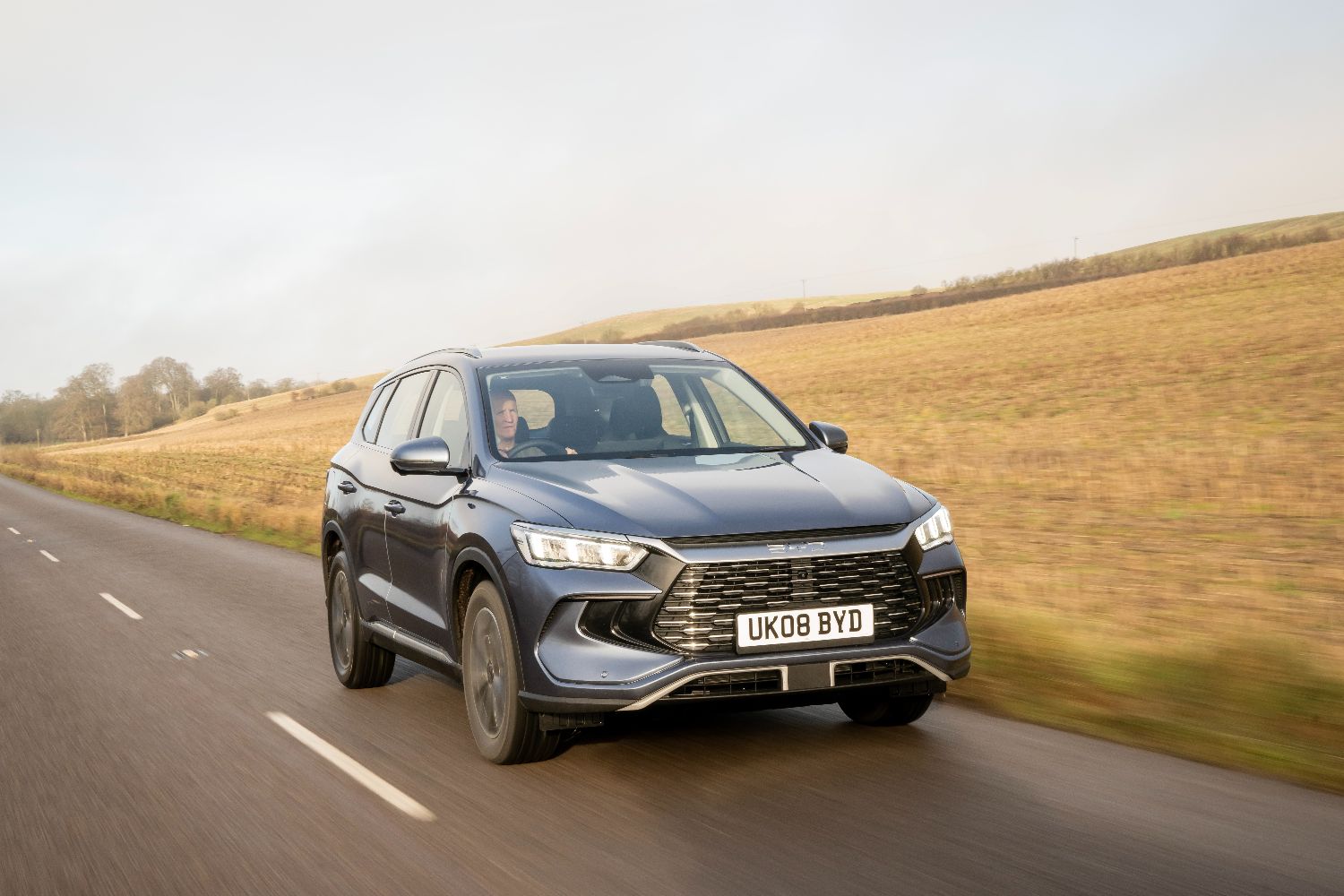
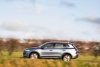
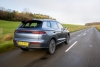
BYD's design team has clearly 'had a go' at trying to inject to visual interest into the bodywork of the Sealion 5, but whether that effort has genuinely worked or not is up for debate. Certainly, there are features of merit on the outside of the SUV, such as the wavy upper swage line down its flanks, the attempt at a 'floating roof' with the silvery D-pillar, and then the defining feature of the Sealion 5 (which makes it stand out amongst its smooth-nosed stablemates) - the 'Dragon Face' front end. This means the SUV is one of the few BYDs with a proper radiator grille, as well as a metallic bar linking the headlight units, so at least it's easy enough to identify in the manufacturer's showroom. But the overall effect of the Sealion 5 remains that of 'inoffensive hunk of crossover-SUV shape from a carmaker attempting a breakthrough'. As in, it's all a bit safe and anonymous, and it could have come from any one of about five Far Eastern firms if you took all the badges off it.
Doesn't help that BYD only offers four colours in a pretty drab palette for the Sealion 5, which are black, grey, white and blue, or that there's just a solitary design of 18-inch alloy wheel for all models. What is in the Sealion 5's favour is the amount of metal you get for your money - the BYD is a good foot longer than a Qashqai, making it a physically huge machine for the C-segment at almost 4.75 metres overall from tip-to-tail, but we'd sound caution about buyers expecting Skoda-like levels of rear-passenger space, because the wheelbase is only tens of millimetres greater than either its Nissan or Tucson chief rivals. Most of the extra length on the BYD seems to be tied up in that ungainly front overhang, in truth.
Interior
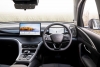
Material-quality wise, the cabin of the Sealion 5 is decent; nothing spectacular, but fine enough for what it is. Technology-wise, it's a little more annoying. The 8.8-inch instrument cluster is OK but saddled with graphics all clustered together in tight formation, rather than being better spread-out on the digital area afforded to it, and also one of those infuriatingly useless 'last 50 miles' trip read-outs - then on top of that, there's way too much reliance on the main 12.8-inch infotainment screen.
This no longer rotates from landscape to portrait, as apparently early BYD adopters in Europe saw it as nothing more than a pointless gimmick (which it was, because it precluded the use of smartphone mirroring when it was in the upright orientation), but it's not without its flaws regardless. Such as the needless multi-tapping faff required just to access your heated-seat functions, an unforgiveable sin that so many touchscreen-obsessed manufacturers are guilty of in the modern era. Or the fact that some of the ADAS gear is in one submenu, which you can get to by swiping down from the top of the screen, but the genuinely hysterical driver-monitoring system (it's awful; our co-driver was barely looking away from the road for a second before it was repeatedly shrieking its disdain, so we immediately deactivated it once we were behind the wheel) is in a completely different options list called 'Cabin Monitoring'. Just...
why, BYD? Why?!
Practicality
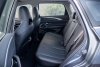
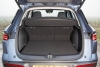
Better news for the BYD Sealion 5 in this department, because while we did earlier say the rear-passenger space isn't stupidly generous, it is still above average for this class. Leg-, knee- and headroom are all excellent, while behind the human occupants sits a useful 463-litre boot. This rises to 1,410 litres with the 60:40 split-folding rear bench tucked away, so while neither of these numbers are class-defining, they're more than enough for the accumulated clobber of regular family usage.
One minor gripe, though: BYD has placed the USB sockets in the front of the cabin in one of those 'under-dash' areas. This is understandable from an aesthetic neatness perspective, but it makes them irksome to access unless you've got double-jointed elbows. And there are no USB sockets on the higher level of the transmission tunnel, nor in that gigantic lidded cubby in the central armrest, so unless you plug a charging cable for a smartphone device (only the top-grade Design has a wireless Qi pad as standard) into the ports and leave it there permanently, you'll curse the Sealion 5's designers for this decision.
Performance
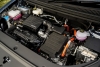
As we've said before, DM-i is BYD's 'Super Hybrid' PHEV system, because it stands for 'dual motor, intelligent'. The dual motors in question are a 1.5-litre, non-turbo, four-cylinder petrol engine, selected for its high thermal efficiency more than anything else, and then a 145kW electric motor mounted on the front axle. Drive comes from what is effectively a CVT.
The 1.5 only contributes 98hp and 122Nm to proceedings, mind, so the vast bulk of the Sealion 5's peak drivetrain outputs of 212hp/300Nm come from the electric unit, which makes 197hp on its own and all the maximum 300Nm of torque. There's no difference in power from Comfort to Design, so - as with the Seal 6 - the main point of variance is that the former of these has a 12.96kWh LFP 'Blade' battery, while the latter enlarges that to an 18.3kWh unit.
There's a 61kg weight penalty for those additional power cells, though, so the Design is four-tenths slower to 62mph from rest than the Comfort, with an 8.1-second sprint. However, it obviously goes further, both on electric power and combined resources: the Design will go 53 miles in zero-emission mode as part of a 631-mile overall range, whereas the Comfort is marginally pegged back to 38 and 616 miles accordingly. It's also not quite as good on the quoted eco-stats (62g/km of CO
2 and 104.6mpg) as the Design (48g/km and 134.5mpg), either.
Having been a passenger in a hard-driven Comfort and then piloted a Design ourselves, we can honestly say from a purely subjective standpoint that the acceleration on the two variants of the BYD feels hardly any different. Because it's not very good at all. Not that people often drive this way, but if you slap the accelerator down to the floor to demand full power, you will be waiting entire seconds (three, by our rough count) for the engine to waken, the gearbox to slur the powertrain's way to maximum revs, and then the 1.8-tonne mass of the Sealion 5 to be overcome with a meaningful increase in forward momentum. It's similarly lethargic to let go of engine revolutions when you come back off the throttle, too, and overlaying all of this is a noisy and coarse roaring from the uncultured 1.5-litre four-pot. The result is that this BYD does not feel anything like as swift as its claimed 7.7-second quickest 0-62mph time; nowhere close, in fact.
It also gets nowhere close to the on-paper economy claims, if our test is anything to go by. Admittedly, we weren't driving the DM-i Design in the most sympathetic and fuel-efficient manner, but it did have plenty of battery charge in its pack at the start of our route. It then gave back just 33.2mpg across 50-plus miles in the Welsh borders, which isn't great at all. Granted, with some more careful usage and regular charging, owners should therefore easily see in excess of 50mpg more often than not, but to get into triple-digit economy figures is clearly going to take the sort of astounding self-restraint usually reserved for people who end up becoming Benedictine monks.
Oh, and the battery charging of the Sealion 5 DM-i is slow, too. A 3.3kW AC rate is the only one offered, so it'll take 4.5 hours to top up the Comfort's c.13kWh unit and fully six to replenish the Design's 18.3kWh power pack from 15-100 per cent.
Ride & Handling
Improvements have been made here, when comparing this chassis set-up on the Sealion 5 to the sloppy and unimpressive display put on by the Seal 6 (the last BYD DM-i we drove before this one, and very similar in terms of power/weight) - but unfortunately the manufacturer has managed to sharpen up the SUV's handling to a sufficient degree, at the cost of a lot of ride comfort and refinement.
The body control of the Sealion 5 is doesn't feel like some porpoising marine mammal that's out of its environment when on land. Actually, it's pretty good. Not brilliant, of course, and the feel-free steering - which has weight but no great detail - denies the driver from building a proper rapport with the BYD's underpinnings. Yet there's plenty of grip here, no significant lean from the shell, and even (when thoroughly provoked) a feeling that the rear axle will adjust the Sealion's course around a given corner, as much as the front tyres. You don't often get that sensation in C-segment SUVs, not even ones from well-established manufacturers.
The problem is, the Sealion 5 has overtly firm and unsettled ride quality that borders on the awful, and surely the primary remit of a vehicle of this type is to be quiet and comfortable, before it's any good at linking a series of challenging corners together. The BYD's secondary ride is jittery and incessant, so even when you're travelling along smooth dual carriageways and A-roads in the 50-60mph speed zone, there's a constant background bobble to everything the Sealion 5 does that makes the tarmac feel like it has been folded up into a series of low-lying ridges by some invisible, nagging wind.
That's as nothing to the way the whole structure of the Sealion 5 shudders and shakes in the wake of larger compressions to its springs, though, because it loudly crashes and bangs through sunken manhole covers, only modest potholes and transverse expansion lines in a thoroughly disconsolate fashion. At one point, it smacked into its bump stops with such a terrific, ear-splitting crack that both we and our driving companion winced and unleashed unwitting invective at the sheer discomfort of the moment. So while the Sealion 5 is certainly a better effort at dynamics, taken as a whole, than the shoddy Seal 6, we'd happily sacrifice some of its surprising roadholding abilities for a good extra slug of rolling refinement and ride comfort. And we suspect many potential buyers would feel the same too, if they were to take the SUV out on a pre-purchase test drive.
Value
All of the above considerations - the 'meh' styling, the noisy and slow powertrain, the infuriating infotainment and ADAS, the crunchy ride quality and the underwhelming real-world efficiency return - have to be weighed carefully against the BYD Sealion 5's great value. At £29,995 for a Comfort and £32,995 for a Design, it's one of the cheapest new PHEVs on sale today, and it of course comes with a wealth of kit on even the base model. Indeed, making the three-grand step up to the Design means that, aside from the bigger battery (clearly the main reason to opt for the additional expense of the higher grade), the only bits of equipment added to a bountiful basis roster on the Comfort are heated front seats, a powered tailgate, front parking sensors to go with the rear items, a camera system uprated from a 180-degree reversing lens to a full 360-degree overview, wireless smartphone charging, and dynamic welcome lights. Beyond that, the only cost option on the Sealion 5 is paint: Atlantis Blue is the standard, 'free' colour, with all of Obsidian Black, Time Grey and Polar White setting customers back £850 apiece.
About the only way you could match the BYD's superb value-for-money is to go for one of its rival compatriots; something like the equally flawed
Chery Tiggo 7 CSH, for instance.
Verdict
As ever with a fresh Chinese challenger, the big question you have to ask yourself with the BYD Sealion 5 DM-i Design is this: can I put up with the significant compromises this car brings in terms of everyday civility, in favour of treating my wallet with a little more kindness? This PHEV SUV is by no means a bad car, and indeed is probably one of BYD's better DM-i efforts so far, but its subpar refinement and vexatious human-machine interface might be enough to put some people off. Nevertheless, if you can live with those two facets of the Sealion 5's character, you get a heck of lot of fairly competent car here for your cash. And that may well transpire to be the determining factor in this BYD picking up some healthy sales numbers in the UK.