Styling
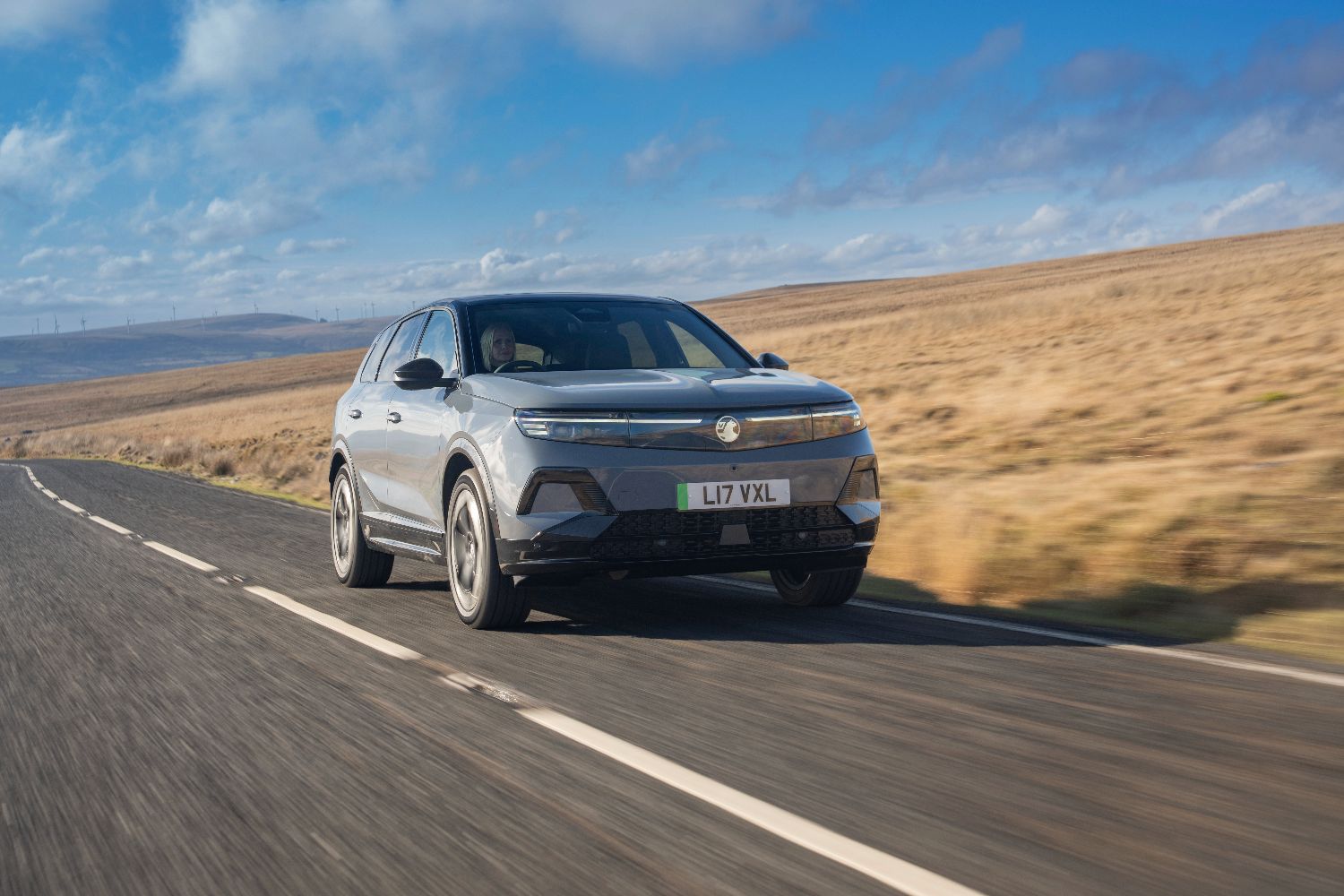
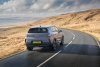
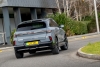
On the outside, there's not much to complain about with the Vauxhall Grandland Electric, unless you were hoping to be able to signal clearly to your neighbours in suburbia that you've opted for the upmarket dual-motor AWD model and not just the 'mere' front-wheel-drive derivative. Aside from its 20-inch diamond-cut alloys, the flagship Grandland EV looks no different to any other car in the range, no matter what form of drivetrain is under its bonnet. Not that this is inherently bad news, because with its full-width light strips at both ends of the car (both complete with, and framing, illuminated corporate logos/wording), the two-tone paint scheme of the upmarket Ultimate specification and the general angularity of the second-gen Grandland, it's a handsome, proportional thing. But you'll never know this is the AWD from the outside, unless you're really, really clued-up on a car company's alloy-wheel hierarchy.
Interior
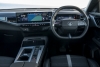
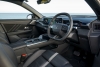
This is one of Vauxhall's better interiors, with a bit of sculptural interest to the Grandland's dashboard, nice light-and-shade material finishing, good quality throughout, excellent front seats and reasonably neat integration of the onboard tech. That said, once again the cabin in here feels slightly less impressive and eye-catching than that of its
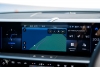
Peugeot equivalent. Sure, for those of you who despise the French firm's strict adherence to the idiosyncratic iCockpit layout (tiny, low-set steering wheel, high-mounted instrument cluster), the Vauxhall's more prosaic arrangement might be more to your tastes. But even the harshest detractors of Peugeot would have to confess that the Grandland's cabin is, quite simply, duller to behold than that of the E-3008. And we still maintain that for all its quoted physical size, at a huge 16 inches across the diagonal, the main touchscreen infotainment of the Vauxhall is the wrong shape. It's too letterbox in format, being way too wide and far too shallow top-to-bottom, to adequately display the (admittedly rather nice) satnav mapping clearly on the screen. A 14-inch, or even 12-inch, screen would be better, as long as it was higher and a bit narrower too.
Practicality
No major issues here, as there's a good amount of space in both rows of the Vauxhall Grandland Electric's passenger compartment, plus there's a sizeable boot of 550 litres with all seats in use and plenty of storage solutions throughout the passenger compartment. Also, as we said in the section before, the driving position here is more traditional than it is in the Peugeot, so for very tall or, er,
not so very tall drivers who struggle with the E-3008's interior layout, the Grandland EV's standardised set-up will be preferable. Shame the Vauxhall's steering wheel is quite an ugly thing, though.
Performance
Again, following its French overlord Peugeot rather than leading it, the dual-motor version of the Grandland Electric has trailed into market in the wake of the comparable E-3008. Nevertheless, its inclusion here is most welcome, as it brings a significant uptick in the performance of the British (yes, yes, we know; Opel, Vauxhall's direct parent company, is German...) EV when compared to the
single-motor FWD model.
Using the same 73kWh battery pack as the pre-existing Grandland Electric, the addition of the secondary motor on the back axle hikes the overall power to 325hp from the FWD's 213hp output, although it's the hefty boost in torque - from 345Nm previously to 509Nm here - which is the best news. On paper, the gains are quite drastic: this AWD Grandland is almost three whole seconds quicker than the FWD model for off-the-line acceleration, putting in a 6.1-second 0-62mph time instead of one which stops the clock at nine seconds dead. And the payoff for this increased grunt is, apparently, a sacrifice of only 14 miles of maximum range on the claimed figures (we're down to 311 miles here).
Of course, as with any Stellantis EV, the Grandland Electric AWD will only deliver 325hp/509Nm in certain drive modes, namely both AWD and Sport (the former of these two, understandably, unique to this model alone in the SUV's range). There's not much of a deficit in Normal mode, the Vauxhall then running still-healthy numbers of 317hp/450Nm, but if you switch it into Eco then you're effectively driving a single-motor FWD Grandland, with 215hp/343Nm on tap as the rear motor is sort of 'disconnected' to save charge.
Luckily, in no mode does the throttle of the Grandland Electric AWD ever feel all horrid and fuzzy, and nor does the car ever come across as undernourished for propulsive strength. Even in Eco, if you absolutely flatten the throttle then you'll get the full hits of power and torque as a safety override feature, but in the other settings this Vauxhall feels a more edifying EV to drive, because it's properly responsive to throttle inputs. Again, kudos to the dual-motor arrangement, as it does a much better job of masking the startling bulk of the EV Grandland than the single-motor variant: in this spec, it weighs a colossal 2,290kg, compared to a shade beyond 2.1 tonnes with just the one drive unit installed. But as you're then looking at a power-to-weight output of more like 142hp/tonne for the AWD, as opposed to around 101hp/tonne for the entry-level EV, it's this latest Grandland that feels the more premium product on the move.
There's a penalty to pay with real-world range, though. Despite that earlier claim of just a 14-mile drop-off to the single-model, we'd expect there to be a larger gap in reality, considering the AWD's behaviour on test. For the first 128 miles in our care, at a slow 27mph average, it was turning in an indicated and commendable 3.4 miles/kWh, which - for a 325hp, 2.3-tonne SUV - is not too shabby at all. A DC top-up to 87 per cent battery also suggested a resultant range of 241 miles; again, admirable.
We then had reason to do a drive to Heathrow and back (a round trip of 300 miles) and, once again, for the first part of it, the Vauxhall EV did well enough. We charged the car down near LHR prior to an overseas trip, so the Grandland would be reasonably full of charge for the later-evening, 150-mile return journey to base a few days later, and we were confident it would be easily capable of making it back home without needing another charge.
However, having stopped at Leicester Forest East services for a breather, setting off again the trip computer simply began haemorrhaging range, no matter what we did. We were cruising up the M1 and then A46 at 65mph, the night was mild and the in-car climate control was switched off, yet still it savaged about 60-70 miles of range in what was an actual 20 miles of cruising/driving. And this sort of EV behaviour infuriates us no end, because it means you can't trust the distance-to-empty readout at all; we went from about 110 miles of range to something like 50 in 20 minutes, when driving the car in about as efficient a manner as you can get from an electric vehicle (save for being in a town or city).
In its defence, the Grandland reckoned it had done the entire 307-mile return journey to Heathrow at a very decent 3.5 miles/kWh with a 49mph average speed, while an overall return of 3.3 miles/kWh across 693 miles at 42mph is, for this type and power of car, superb. But that one incident with the trip computer, late at night on the journey home, just shook our confidence in the Vauxhall AWD and its long-distance capabilities.
Ride & Handling
We feel like we're being somewhat hard on Vauxhalls lately, having lamented the crunchy or uncontrolled ride quality of both the
facelifted Astra Electric Sports Tourer and the
affordable Frontera Hybrid. Now, the Grandland Electric AWD was generally better and more dignified than both of those cars, but it still doesn't have the best comportment when its suspension is dealing with big impacts and deeper compressions in the road surface. At a motorway cruise with a favourable stretch of well-finished tarmac under its tyres, the Vauxhall EV is very pleasant and quiet, but there are too many occasions it thuds and thumps as the 20-inch wheels attempt to soak up the multitudinous imperfections with the UK's roads network. More revealing is that the AWD apparently runs frequency selective dampers (FSDs), which are normally more capable at filtering out these kinds of discomfiting manners.
And there's no real gain in handling for the sometimes stiff-legged gait of the Vauxhall. The Grandland Electric AWD is OK in the corners, nothing more, with an acceptable level of body control and accurate, if largely feel-free, steering. But while the dual motors can do a good job of hiding the sheer bulk of the SUV, the chassis isn't quite as talented at the same task if you get enthusiastic on the handling front. The Vauxhall is a car to drive just within itself, in all honesty, which is why we wish its ride was more pillowy-soft and amenable than it actually is.
Value
Here's one area where the Grandland Electric firmly puts one in the eye of its Peugeot relation. At the time of writing, the price for the top-grade Ultimate version of the Vauxhall, complete with the 325hp EV powertrain, was less than £39,000. Whereas a dual-motor E-3008 in GT specification is about £10,000 more; yikes! Obviously, you'd have to drill down into the monthly figures to see if the gap is as wide on PCP, but it's a notable gap between the two when written down like this.
There's an excellent level of kit on the Grandland Ultimate, too, so it looks like it is highly competitive at £38,500 as tested, although it's a shame a heat pump is optional kit when it ought to be standard-fit on all EVs these days, certainly on bigger and more potent machines like this one.
Verdict
We're worried for Vauxhall these days, although the company's robust recent UK sales figures suggest we shouldn't need to be. But what is the brand's USP in Stellantis? Citroen is the value outlet with the comfiest suspension and seats. Peugeot is clearly an upmarket brand, hence this is one area where the Grandland easily beats the E-3008 (on price alone). DS is ultimate luxury. Alfa Romeo is sportiness. Fiat will do cheeky kerb appeal and affordable transport for the masses. So what's a Vauxhall all about these days? It would appear to be 'fancy headlights', given the firm's willingness to big-up its Intelli-Lux HD matrix LED lamps at the front of this car (and others in the Griffin's portfolio), but is that going to be enough to tempt punters in?
The latest Mk2 Grandland is, undoubtedly, a good SUV overall and this dual-motor AWD Electric is arguably the most convincing model we've yet seen to wear the nameplate. But it still feels like it is being deliberately kept back from greatness when compared to the Peugeot it is based upon, rather as the
ho-hum Mk1 Grandland X was nothing like as nice as its
contemporary Pug equivalent. If this Grandland Electric AWD had slightly more interesting interior detailing, subtly revised and improved infotainment, and a much better, controlled ride quality, we could be a lot more effusive about the savings it offers consumers over a similar Peugeot E-3008. As it is, this zero-emission SUV feels worthy and...
there, as an option, if you want an electric family vehicle of this ilk. But regrettably, the dual-motor Grandland is not much more memorable or endearing than that rather banal summation.