Test Car Specifications
Model: 2026 Vauxhall Astra Electric Sports Tourer Ultimate
Price: Astra range from £29,995, Electric Sports Tourer Ultimate as tested £33,995
Motor: 115kW front-mounted electric motor
Battery: 55.4kWh (usable) NMC lithium-ion
Transmission: single-speed reduction-gear automatic, front-wheel drive
Power: 156hp (Sport mode)
Torque: 270Nm (Sport mode)
Emissions: 0g/km
Range: up to 276 miles
0-62mph: 9.5 seconds
Top speed: 106mph
Boot space: 516 litres rear seats up, 1,553 litres rear seats folded down
Kerb weight: 1,765kg
Styling
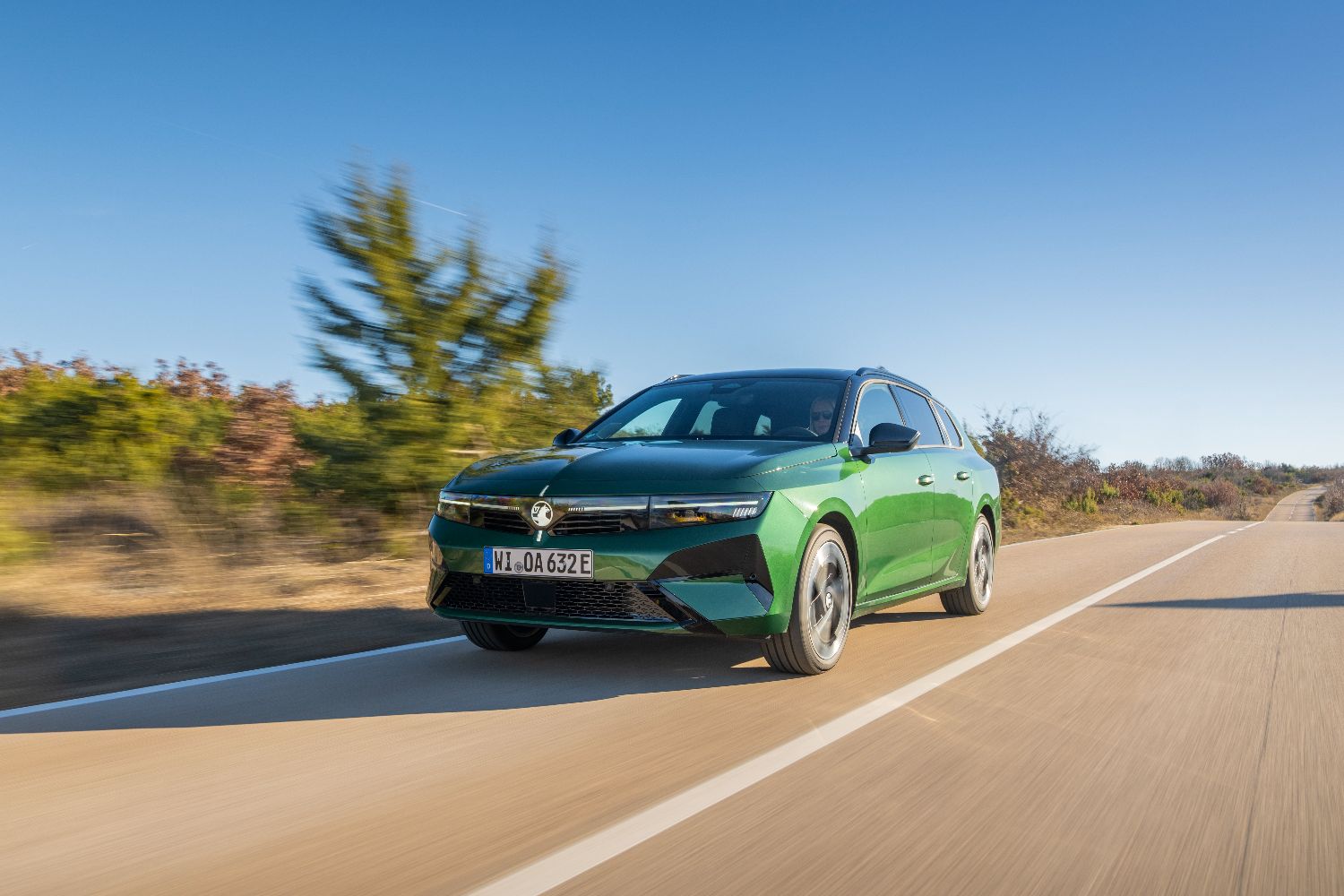
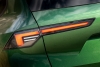
Vauxhall would like you to focus on the 'Compass' front lighting signature that is the hallmark of the facelifted eighth-gen Astra, which features one broad horizontal band of illumination that links the headlamp clusters together, and then a small vertical LED detail in the middle which forms a compass-point graphic on the nose of the car - where the Griffin logo can also be seen to light up for the first time, too. There are also super-bright IntelliLux HD matrix headlamps on the flagship-spec Ultimate Astra, a first for this model line and boasting more than 50,000 individual illumination elements plus advanced anti-dazzle, auto-dimming tech.
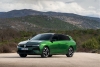
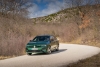
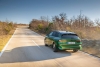
All very fancy and swish, but tweaked light signatures are on the verge of becoming passé these days, so we'd much rather draw your attention to the luscious paint colour you can see on the wagon in these pics. It's called Clover Green and it's new for 2026, and quite aside from the fact that estates always look better than their hatchback or saloon equivalents - something true of the sharp-suited Sports Tourer, which is nicer to behold than the (admittedly handsome) five-door Astra Hatch - then the other plus point in the wagon's favour here is that glorious Clover is exclusive to the ST. The hatchback line of the Astra has its own unique hue, Electric Yellow, which in turn you can't specify on the estate, but the Sports Tourer in Clover Green with its contrasting black roof and the fresh, attractive design of 18-inch wheels exclusive to the Electric model (they're aero-optimised and have the word 'Astra' written on one of their spokes) is a thoroughly smart-looking thing. Showroom/kerb appeal is therefore ultimately one of the Vauxhall's main strengths.
Interior
Considering how crisp, angular and stylish the 2026MY Astra Sports Tourer is on the outside, it's such a shame to once again find one of Vauxhall's quite dreary passenger compartments hiding in the interior. The company says it has updated some of the material finishing for the facelifted range to enhance the premium ambience of the cabin, but we're not entirely sure where said work is alleged to have been carried out.
True, if you've tried sitting in the related Peugeot 308 and you simply abhor that car's iCockpit layout predicated on a small, low-set steering wheel and a high-mounted instrument cluster, then the Vauxhall's more prosaic configuration with a regular-height digital dial pack and larger, conventionally mounted steering wheel might be more to your taste.
But is there any sound reason the dash design sitting alongside this driving position has to be so dour? In terms of both immediate visual impact and perceived quality, when it comes to 308 versus Astra, the former wins hands down. This is not to say the Vauxhall's compartment is without merit, as the Luton lot (well, they're German, really, given they're associated to Opel, but you know what we mean) have decided to stick with a useful smattering of physical buttons for various key features, mercifully including the climate controls. Yet it's all so staid and uninteresting to behold in here. Even the twin 10-inch screens of the Pure Panel Pro infotainment screen look lacklustre compared to the glittery Peugeot software. Sigh.
Practicality
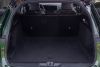
A strong suit for the Astra Sports Tourer, although in Electric format there's the usual lament that this zero-emission powertrain has a slightly smaller cargo area than if you just specified the Vauxhall with either the 130hp petrol or 145hp hybrid powertrains. All seats in use, the Electric ST summons up 516 litres and then increases that to 1,553 litres with the rear bench folded down, but both the PureTech and Hybrid Astra wagons - which don't have to accommodate any significant battery pack beneath their cargo-bay floors - beat those numbers with 597 and 1,634 litres respectively. Still, the Electric Sports Tourer is better than the PHEV estate equivalent, which drops volume back even further to 466-1,483 litres accordingly.
Besides the boot, passenger room in the rear of the Astra ST is slightly better than in the Hatch, as the wheelbase of the wagon is marginally longer (by 57mm) and the roof a touch higher back there, but it's hardly a transformative improvement and you're still looking at the Vauxhall estate being a more agreeable vehicle when deployed as a four-seater than it would be with three occupants crammed in across the rear bench. Otherwise, more plus points for the Astra include a good array of storage solutions throughout the cabin, including a hidden sunglasses/oddment pop-out cubby which is tidily secreted away at the bottom of the centre stack. You open it by pressing that rectangular button integrated into the silver strip of trim beneath the central air vent, door-lock switch and hazard-warning lights control.
Performance
No changes to the e-motor have been enacted on the Astra Electric for the 2026MY, which means peak outputs of 156hp and 270Nm... but only if you remember to cycle the car up into Sport mode using the drive-settings rocker switch down on the transmission tunnel. The Vauxhall defaults to Normal mode every time you start it, which means more like 145hp/250Nm, but in Eco the software trims the figures back considerably to 109hp/220Nm to preserve range. We'd advocate avoiding this mode, because the throttle becomes quite fuzzy and long in this setting. The car's otherwise acceptably brisk in the remaining two drive modes, although even in Sport it's not remotely approaching what you'd call fast. A printed 9.5-second 0-62mph time for this Electric Sports Tourer tells its own story of what a modest 156hp is being asked to do in shunting around more than 1.75 tonnes of car.
It's for that reason that, having immediately tried another Sports Tourer straight after this Electric with the 145hp 1.2-litre three-cylinder Hybrid powertrain fitted, we'd recommend going with the turbocharged triple. It's not faultless either, as its six-speed dual-clutch transmission is only acceptable rather than exceptional, while not everyone gets on with the noisiness of the three-cylinder engine at higher revs (we don't mind its characterful trilling, however). But because the Hybrid is a whopping 311kg lighter than the Electric, it feels much sprightlier and lively in operation than the EV.
Nevertheless, it's the Electric Sports Tourer which has the most compelling purchase argument going (there are plenty of hybrid estates in this class, but far fewer totally electric wagons), so if you do want to go with this zero-emission Astra estate then its performance is fine. The major change here is that the old 54kWh (gross) battery has switched to a new 58.3kWh net, 55.4kWh usable nickel manganese cobalt (NMC) unit here, which marginally increases the range of the Astra Electric Sports Tourer to a claimed 276 miles. Shame Vauxhall didn't up the charging rates, though, as the 100kW DC peak now looks undernourished in the modern EV era, so a 32-minute 20-80 per cent charging cycle at its swiftest seems a tad tardy going by 2026's standards.
Ride & Handling
Without ever being appalling in any one kinematic discipline, the Vauxhall Astra Electric Sports Tourer excels neither at rolling refinement and ride comfort, nor roadholding either. Too often on its 18s, the Astra estate crashed and thumped through only medium-sized imperfections in the tarmac of Croatia (which is generally in a lot better state than our own godforsaken roads back here), while furthermore it's not exactly cathedral-quiet for either tyre or wind noise when travelling at speed. In all regards, the Peugeot 308's suspension set-up is superior to this Astra's chassis, if all you want is a comfy day-to-day conveyance.
Worryingly for Vauxhall, despite being plusher and softer than the Astra, the 308 is also more enjoyable in the corners too. The Electric Sports Tourer is blandly satisfactory for cornering, with commendable body control, good grip, limited understeer (save for one hairy moment we had on a slippery right-hand bend taken at only middling speeds) and reasonably responsive steering, but there's precious little joy to be extracted from hustling it along - mainly, once again, down to that bulky kerb weight which is knocking on the door of 1.8 tonnes. Eventually, as the driver, you realise that the Astra is stuck between two dynamic stools, because it's not a hoot on the twisty, challenging roads when they arrive and nor is it a paragon of comfortable manners for more everyday driving scenarios. It's just... OK. Nothing more.
Value
Perhaps the most intriguing feature of the 2026 Vauxhall Astra range is the company's approach to UK pricing. It has decided to 'flatten out' the electrified choices in its line-up, offering three specifications (running from base-trim Griffin through GS and then topping out at Ultimate) for all powertrains. So, taking Griffin to start with, if you want a 145hp Hybrid, it'll be £29,995. If you want this Electric powertrain, it'll be £29,995. If you want the 196hp PHEV, guess what? Yup. £29,995.
Ah, you're thinking, but those prices are for the Hatch, right? And not the Sports Tourer? Wrong. There is no longer a premium to be paid for picking the more versatile estate Astra over the standard five-door. You pay £29,995 for an Astra Griffin, be it HEV, PHEV or EV, and hatchback or wagon accordingly. It's the same thing at GS level, with all possible variations and combinations of the above coming in at £31,495. And the Ultimate cars are all £33,995. That's at least a newsworthy strategy from Vauxhall, which may convince some potential customers that a fully specced-up Astra Electric Sports Tourer Estate, like our test car, at £33,995 is a good-value proposition. We wouldn't argue on that score.
One final note here: the 130hp petrol PureTech is joining the UK line-up later in the year, with both six-speed manual and eight-speed automatic transmission choices. Whether these two will also be offered in all trims at matching prices (i.e., the auto is the same cash as the three-pedal H-gate) remains to be seen as the figures haven't been confirmed by Vauxhall as yet, but we'd certainly expect that this plain-petrol derivative would at least be less money trim for trim than any of the electrified cars that are on sale now. As in, we don't envisage a 1.2 PureTech 130 manual in Griffin specification being sold at the same £29,995 flat rate; it really should be even cheaper than this.
Verdict
A host of moderate updates for the 2026 Vauxhall Astra range have, understandably, not transformed this car into a game-changer. It's a nice enough thing, especially as a Sports Tourer in the excellent Clover Green warpaint, but while the exterior styling remains pleasing, the interior is spacious, the new pricing arrangement is incredibly easy to understand and the concept of an electric estate at this level of the market continues to be the Astra's main sales draw (even if a sub-300-mile official range is not that impressive), the humdrum dashboard design, so-so ride comfort, uninvolving handling and insipid performance all combine to leave the Astra outmanoeuvred by several key rivals, all of which are more talented in various departments than it is. Perhaps most worryingly for Vauxhall, the revised Peugeot 308 is among their number.