Styling
There's no denying that, inherently, the Vauxhall is less interesting to look at than the Citroen take on exactly the same vehicle. With plainer light clusters and a little less
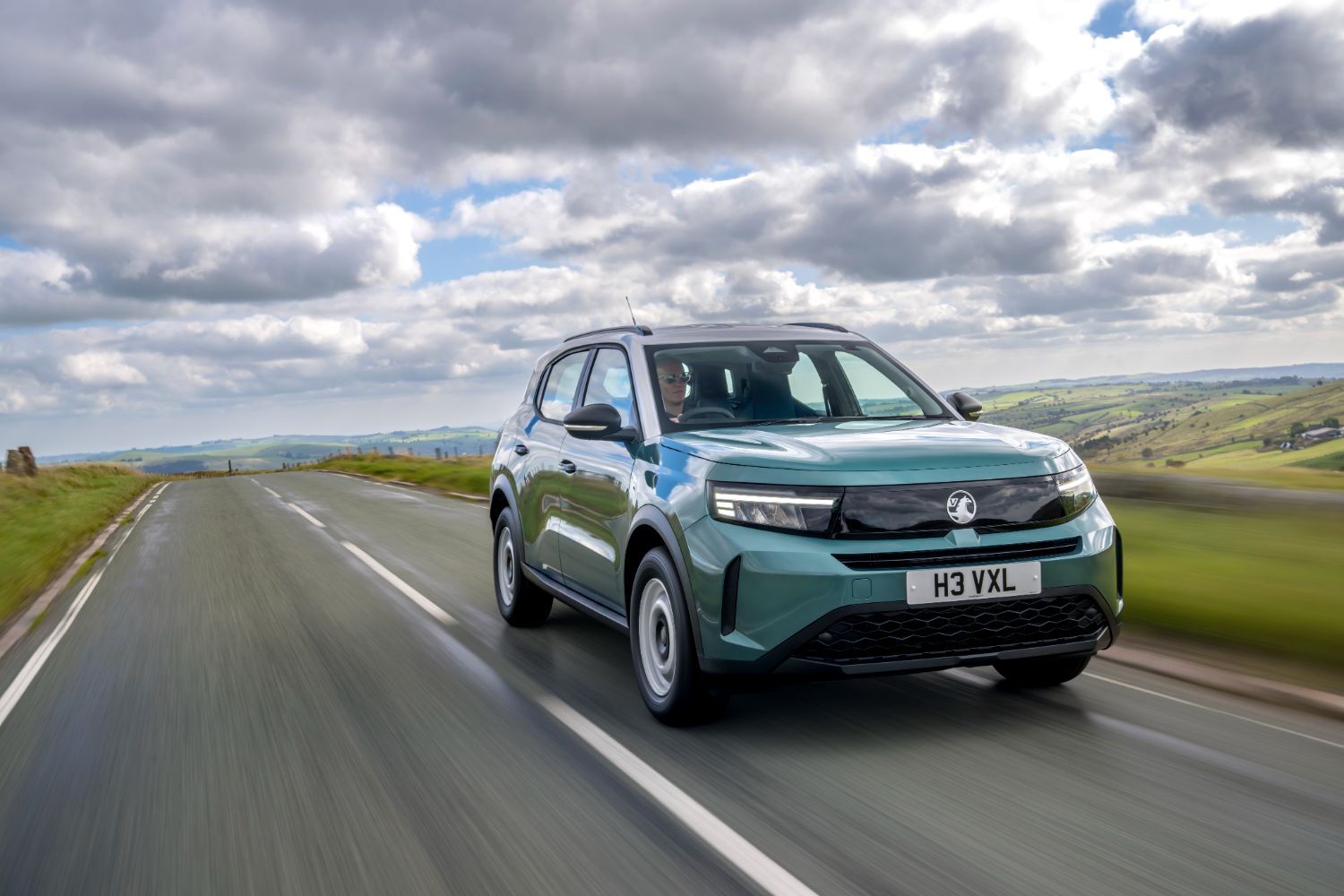
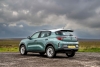
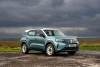
joie de vivre for the Frontera, we'd probably take the Aircross every single time. Except for the fact that the Griffin offers the superb Design Styling Pack, seen here, for £400. All this does primarily is finish the roof in white, which isn't so outlandish, but it also brings in a set of glorious 16-inch white 'steelies' to match. When teamed to £650 Khaki Green paint, as on H3 VXL, it gives the Vauxhall the sort of aesthetic clout that brings to mind a shrunken
Land Rover Defender Commercial, so it's a definite thumbs-up from us for the Frontera in this regard.
Interior
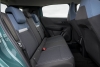
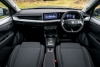
The glory of the luscious green-and-white exterior soon fades when you climb into the Frontera's cabin. Again, it's less interesting than that of the Citroen, and while both are built down to a cost, the Vauxhall's passenger compartment looks and feels markedly cheaper than the interior of a C3 Aircross. Some of the plastics used in the Frontera are quite clacky and nasty, the seat fabric is coarse and basic (even if Vauxhall attempts to zhuzh up the upholstery's appearance with some blue-green patches and white-bar detailing, which it grandiosely terms 'Riaz Blue and Anthracite Melange'), and Vauxhall's choice of steering wheel is fairly ugly - also, it has a weird ridge on the back of the rim, which makes holding the wheel feel odd.
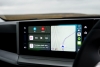
As a base-trim Design model, it's fairly primitive in terms of tech in here, with manual air-conditioning (remember that, folks?) and a straightforward infotainment system presented on a 10-inch colour touchscreen. However, in the Frontera's defence, everything is easy and intuitive to operate, while the infotainment runs Apple CarPlay or Android Auto wirelessly if you think the proprietary set-up is way too rudimentary. Furthermore, the 10-inch digital instrument cluster in the Vauxhall is snazzy and there are two physical switches, down to the right of the clunky steering wheel, which immediately deactivate the lane keep assist and speed limit warning functions with a simple long-press process. Bravo, Luton.
Practicality
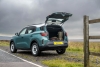
One of the Vauxhall's stronger points, this, as there's a good amount of room in the second row for even taller passengers, while the floor is almost flat in the centre so seating five people into the vehicle for shorter journeys shouldn't be totally out of the question. Beyond this, an excellent 460-litre boot with all seats in use rises to a robust 1,600 litres of cargo capacity with the rear bench-backs folded down, but while our test car was in five-seat specification, just looking at the boot area makes us wonder what the third row in a seven-seat Frontera would be like. 'Notably cramped', would be our guess.
Performance
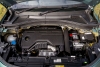
There are two hybrid powertrains available for the Vauxhall Frontera, both fitted with a 1.2-litre three-cylinder turbo petrol engine and delivering either 110- or 145hp - and it's the latter we're trying here. That headline power output, along with a meaty 230Nm torque figure, is more than enough for a crossover which, commendably, weighs less than 1.35 tonnes in this particular specification. With low-down grunt handled by the 21kW (28hp)/55Nm e-motor, acceleration in the Frontera Hybrid 145 is surprisingly lively, and it also feels strong once it has burst through 50mph and is heading towards motorway speeds.
Better yet, the e-DCT6 gearbox didn't seem too sluggish or vexatious; admittedly, it's not the best double-clutcher we've ever tried, but with intelligent gearing and reasonably smooth operation, it proves to be an unobtrusive companion for the little triple burring charmingly away up front. And, having covered more than 500 miles at the wheel of the Vauxhall during the course of our week-long test, we are more than happy to say that we far prefer the Hybrid model to the Electric. There's no worrying about doing long motorway journeys or using your climate control in the part-ICE Frontera, whereas when we spent seven days with the 44kWh e-C3 Aircross we were constantly fretting about where next we would be charging the thing. And how long it would take to achieve 80 per cent once we got there.
Sure, there's a 54kWh longer-range variant for both the Vauxhall and Citroen EVs, but we still prefer the driveability and sprightliness of the Hybrid. With a bang-on nine-second 0-62mph sprint, the Hybrid 145 is 3.8-4.0 seconds quicker for this benchmark than either of the electric models, while it's also two seconds faster than the 110hp alternative too. This makes the regular act of keeping up with everyday traffic flow much less of an effort in the Hybrid than it is in the EV.
And because it achieved an overall 44.1mpg during our time with it, recording 44.8mpg on a long motorway run to Reading and back, and an indicated best of 56.5mpg when tootling around local lanes in Nottinghamshire, the petrol-powered Frontera had a realistic, easily attainable range in the vicinity of 400 miles. We need not say that the EV versions will get nowhere close to that, of course... oh. We just have. Bugger.
Ride & Handling
Poor old Vauxhall. We're not sure what its USP is within Stellantis right now. And this shows in the way the Frontera drives. This car doesn't have the comfy, plush seats of the Citroen, and it also doesn't have the C3 Aircross' Advanced Comfort Suspension set-up with the clever and cosseting Progressive Hydraulic Cushions either. This becomes painfully apparent in a poor, unresolved ride quality, all the more alarming in the Frontera Design given that it's rolling on 16-inch steels. On a motorway or better-surfaced routes, its comportment is merely OK, but on the sort of broken-up, godawful roads that are the commonplace scenario in 2026 UK, the Vauxhall can be actively unpleasant as it bounces loosely up and down, with too much crashing and banging coming from the wheels as an accompaniment to this roguish behaviour.
This might be sort of acceptable if Vauxhall had decided to go for a dynamic handling angle, leaving the Citroen to do plush, pillowy comfort, but even here the Frontera is a let-down. The steering, through that discomfiting ridged wheel, is far too light and utterly feel-free, while the body control is disappointingly slovenly given the firmness of the ride. And, right at the extremes of provocation, the rear suspension - when fully loaded up - has a bizarre lateral swaying sensation to it that can give the driver the impression they're about to have a massive accident. Even when they're not.
However, if you can sift through the fuzzy messaging, the roadholding isn't as bad as you initially think. Yes, there's a lot of lean, pitch and dive to circumnavigate, plus that aforementioned suspension quirk
in extremis, but the Frontera actually grips quite hard and finds good traction, even in slipperier conditions. So it
can flow down a challenging back road in a fairly capable fashion; it's just that the driver won't be enjoying the process at all, as there's such a dearth of meaningful feedback that the whole shebang becomes an exercise in futility.
Anyway, super-crisp handling wouldn't really have saved the Vauxhall here, seeing as B-segment crossovers in the value segment are not supposed to be some kind of substitute for hot hatchbacks. More unforgiveable is the unimpressive ride quality, which jars even more because the Frontera is pretty good for sound suppression, accepting its value proposition. So it's only some slightly softer suspension away from being much better than it is.
Oh, and something else we don't like about the Hybrid: no matter whether you have the e-DCT6 in regular 'D' mode or you've pressed the 'L' for increased braking assistance, the brake lights illuminate if you come fully off the throttle at anything below 52mph. It makes you look like you can't read the road for toffee and is thoroughly bloody annoying, as you have to remember to try and tickle the accelerator, even if you're in a long queue of traffic, lest you come across as some kind of nervous Nerys who has to touch the brake pedal every five seconds.
Value
At an entry-level price of twenty-three-and-a-half, and a smidge beyond £27,000 for the Hybrid Design 145 as tested here, the Vauxhall is certainly good value - but not amazing. In this spec, you get the twin 10-inch screens with connected navigation plus wireless Apple CarPlay and Android Auto, as well as a wireless smartphone charging pad, Bluetooth, voice recognition, electrically adjustable door mirrors, rear parking sensors, a reversing camera, cruise control, and a healthy amount of ADAS kit including Intelli-LED headlights and high-beam assist - but, as previously stated, just manual air-con rather than climate, and no heated seats nor steering wheel either. So we'd say the equipment list on the car is good, not great.
Verdict
Unfortunately, it has been far from a convincing showing from the Vauxhall Frontera Hybrid Design 145. We love the way it looks, although this particular warpaint combo requires £1,050 of additional spend at ordering time, while the performance and economy are both strong for this class of vehicle, and the value-for-money quotient is decent too. But the interior feels undernourished in terms of quality, the ride comfort is way off it, and even the handling isn't any great shakes either. Still, at least it has clarified things in our minds - if you want a Stellantis B-segment crossover and you're unsure whether to go Citroen or Vauxhall, or part-petrol or fully electric, we'd be steering you straight towards a C3 Aircross Hybrid as the optimum way to go.