Styling
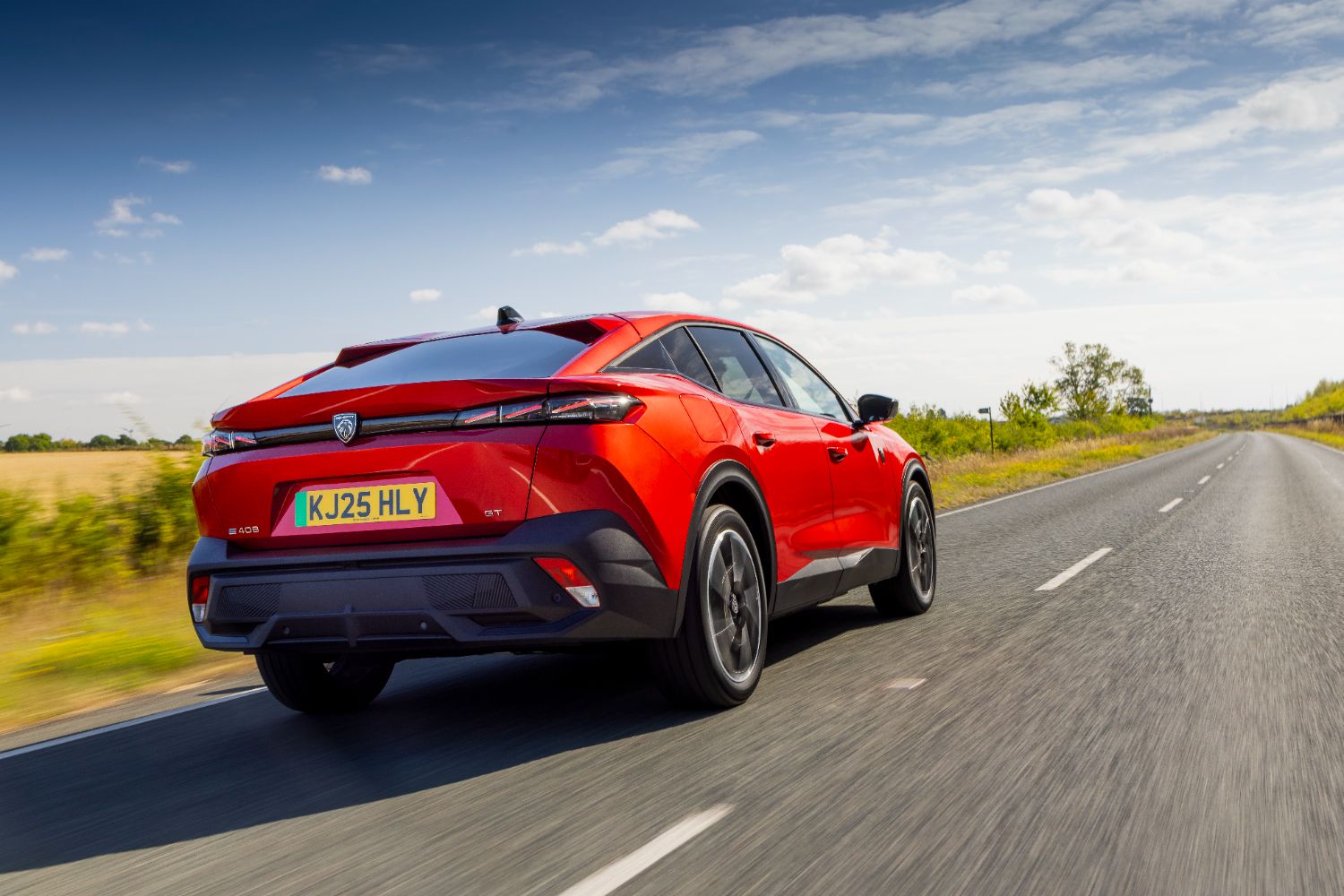
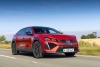
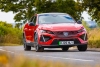
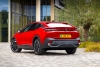
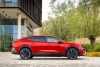
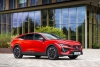
It might seem odd that Peugeot is about to change the appearance of the E-408 when it has only been a fixture on our roads for about six months, but this apparent hastiness on the French firm's part arises because the regular 408 has been in service since the start of 2023. Therefore, these RHD electric 408s with the big 'fang' daytime running lamps and a more complicated-looking grille/front-bumper area will become something of an oddity in years to come, as the newer version has the triple-claw light signatures fore and aft (straight from the 308), along with badging, wording and grille details which all illuminate too. So if you want the current style of the E-408, you'd better move fast and order one now. Either way, you'll end up with a very handsome fastback car; the basic 408 shape in any format has plenty of presence and class.
Interior
Again referencing the 308, the pleasant cabin of the E-408 betrays the fact this EV is on Stellantis' older EMP2 platform, rather than the newer STLA Medium chassis which underpins the likes of the
E-3008 and
E-5008. The two baseboards are related, of course, but this point will become relevant later on in this review, when we come to talk about battery packs, range and powertrains.
However, there's nothing wrong with the E-408's interior, even if (in a common lament of the modern motoring age) too many of the ancillary systems are run through the central ten-inch touchscreen, which itself is... fine, but not the paragon of such systems, and it has been outmanoeuvred by some of Peugeot's later set-ups. Too often, the display in the E-408 considerably lags behind taps of the screen, with this trait particularly noticeable when you get in the car on a cold morning and everything is starting up. Despite this, with the iToggle digital shortcuts and then another bank of physical command switches beneath these, the Peugeot turns out to be relatively easy to operate with a degree of familiarity factored in, while the crisp and clear 3D ten-inch instrument cluster is a real highlight.
Finally, material quality in the E-408 is excellent, with the GT specification bringing in supportive and comfortable sculpted sports front seats, as well as natty microfibre trim on the doorcards. The overall ambience in the Pug is, ultimately, upmarket and premium, which is presumably precisely what the manufacturer was aiming for in the first place.
Practicality
Space in the E-408 is in plentiful supply and it definitely feels roomier in the back than any 308, even with that sloping, coupe-like roofline on the outside. While three adults across the rear bench may be ambitious, two taller people should be more than adequately catered for in the second row, while a trio of smaller occupants (such as kids) would easily fit side-by-side. The boot's also a fine size, measuring 471 litres - and it makes you wonder what an SW version of the 408 would be like, albeit such a thing would be totally unnecessary when the model line is sandwiched between both the 308 and the
508 families, each of which have handsome wagons at their disposal.
Which means that the only real practicality issue with the E-408 is one which affects every Peugeot in the current portfolio: the iCockpit arrangement. This is yet another car with the high-mounted instrument cluster above a low-set and tiny little steering wheel, a set-up that not every driver gets on with. It tends to be the very tall or the very short who suffer with this layout the most, which is borne out by the fact this correspondent (as someone of average height) has never really had a problem with it. But if you don't like iCockpit, you therefore won't really gel with the interior of the E-408. Oh, and one minor gripe while we're on the driving position: the rear screen of the Peugeot is one of those pinched, letterbox-type affairs and there's no wash-wipe system on it either, so visibility out of the interior mirror during winter is often negligible. This is a car which'd be better beaming a rear-view camera feed to the mirror's face instead.
Performance
As one of Stellantis' larger EVs, the Peugeot E-408 is again one of those zero-emission cars from the giant conglomerate that requires you to put it into Sport mode to get the full drivetrain outputs of 213hp/343Nm. In the Normal setting, which the car defaults to each and every time you start it up, these figures fall back to 190hp/300Nm, and then they're denuded even further in Eco, with the e-motor limited to 170hp/270Nm. Of course, in either of the latter two modes, if you absolutely flatten the throttle then the Pug will give you the full figures as a safety feature (i.e., if you need to accelerate out of trouble while overtaking or you're trying to take a gap in traffic that was smaller than you first anticipated).
Thankfully, there's no real problem with the E-408 not making its maximum outputs in Normal, because the French firm has calibrated both the throttle and brake pedals so nicely. There's no horrid mushiness to either, so despite its bulky 1.9-tonne kerb weight the Peugeot always feels lively and responsive. And it's decently swift if you do decide to ping it up into Sport and start deploying more than half-throttle - although we'd still love to see a more potent 408 model (electric or otherwise) in the future, as befits its racy-looking exterior aesthetic.
That might not be possible for the EV, though, due to that point we made earlier about EMP2 versus STLA Medium. Both the E-3008 and E-5008 have larger 73kWh battery packs as standard than the E-408's 58kWh unit, while the SUVs also have the ability to be fitted with dual-motor powertrains that deliver 325hp and 509Nm, allowing them to run 0-62mph in the region of 6-6.5 seconds. Whereas this E-408 is limited to the 213hp motor and front-wheel drive.
It's fairly brisk on paper with its 7.6-second run for 0-62mph and, as we've already said, it feels subjectively quick enough in reality. So perhaps the bigger reservation with the E-408 relates to its sub-300-mile maximum range, although a claimed 280 miles to a charge is none too shabby and certainly will be more than enough capability for most people's daily-driving needs. However, in cooler weather, we
once again found a Stellantis EV that a) didn't really do the real-world efficiency we'd want (2.7 miles/kWh across 155 miles of testing, with relatively little high-speed motorway running included, would only yield a 160-mile range outright), and b) wasn't as quick to charge as the advertised 120kW DC peak - twice, it only sucked down power at 50kW at InstaVolt ultra-rapid public chargers, meaning the Pug took longer to top up than was strictly necessary.
Ride & Handling
Peugeot has a historic reputation for dynamic handling, even in some of its regular and non-performance mainstream models, but about a decade-and-a-half ago it was hard to remember that fact when driving an assortment of the stodgy vehicles the company put out. It's therefore a relief to report that some of the Lion's chassis sparkle is coming back, although we'd stop short of saying the E-408 is out-and-out thrilling or particularly remarkable in the corners. Nevertheless, the Peugeot is sufficiently assured, with smooth body control, surprisingly feelsome steering and a decent level of agility. It doesn't feel like a nigh-on two-tonne behemoth when you're pushing it along a back road at a faster pace, which means you can hustle the E-408 in the confidence that it won't fall apart at the slightest provocation and become all ragged and scruffy.
Its primary remit is comfort and rolling refinement, though, and on these two scores it does a brilliant job. True, the 19-inch 'Graphite' alloys can occasionally thump through larger imperfections in the road's surface, its discomfiture brought about by the considerable unsprung mass particularly noticeable at low speeds on cratered urban routes, but these instances are few and far between, and it's generally an accomplished and discreet car at anything up to regular motorway pace. Both wind and tyre noise are well suppressed, for instance, while the secondary ride is largely flawless. Again, despite its relationship to the smaller 308, the E-408 comes across as a grander and more sophisticated type of car than the related Peugeot, so it feels like a worthwhile exercise on the company's part - rather than simply a model shoehorned into the line-up purely for the commercial sake of it.
Value
More good news here - the resumption of the Government's plug-in car grant for EVs means that the E-408 is actually less model-for-model than the 145hp Hybrid (which is supposed to be the entry-level drivetrain), and it's a heck of a lot cheaper than the
225hp PHEV too.
As a GT, standard equipment includes adaptive cruise control, a powered tailgate, keyless entry and go, full Matrix LED headlights with LED exterior lighting elsewhere on the car, a heated steering wheel and front seats, front and rear parking sensors with a 180-degree reversing camera, wireless Android Auto and Apple CarPlay for the infotainment, eight-colour adjustable ambient cabin lighting, and a high-performance sound system, among more. Our car was fitted with the £550 360 Vision & Drive Assist Plus Pack, which (as the name suggests) brings in a 360-degree camera system, as well as rear cross-traffic alert, a stop-and-go function for the adaptive cruise, long-range blind-spot detection and lane-position assist, and the funky 3D instrument panel in the cluster. However, wireless charging for a smartphone is another £100 again, although that equipment is standard for the higher GT Premium spec of the E-408.
Verdict
The Peugeot E-408 is a quietly capable and rather enjoyable vehicle, all things considered, and it should possess decent one-shot driving range in warmer climes along with sleek styling, a quality, well-equipped and spacious interior, and a nice blend of ride and handling that makes it a fine car to live with. Add in that there isn't really anything comparable from another manufacturer, as most of the E-408's rivals are electric SUVs like the
Ford Capri and
Cupra Tavascan, and you can see this French machine has plenty of appeal. Mind, it might have been even more tantalising with a touch more overall range (oh, for that 73kWh set of cells!) and some extra power, and the all-round, cold-weather electrical performance of the vehicle was suspect too, but we're probably being picky. Otherwise, the Peugeot E-408 is one of Stellantis' most convincing EVs we've seen so far.