Styling
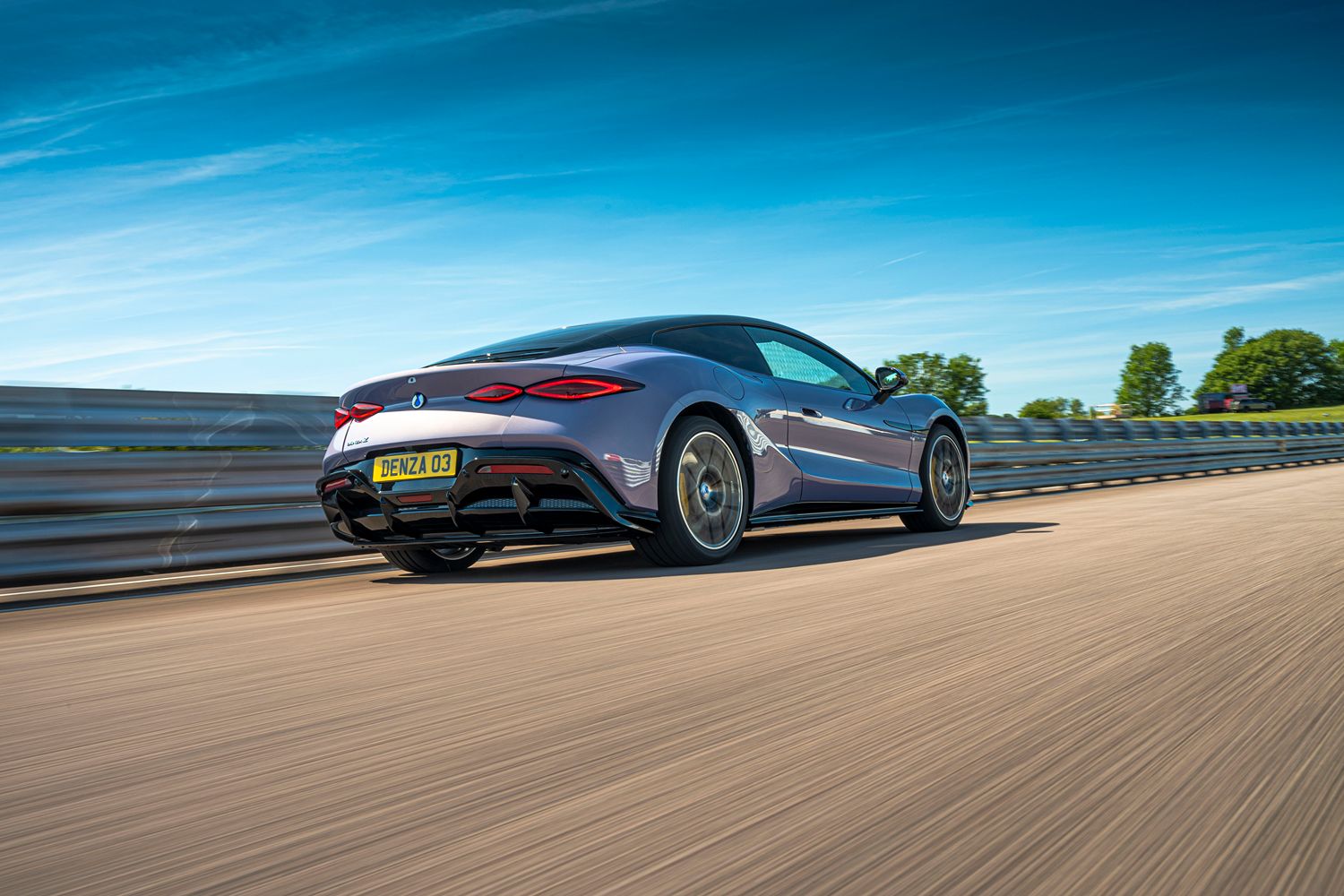
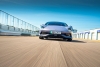
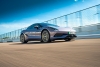
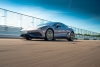
At 4,780mm long, with 2,780mm of that made up by wheelbase, and almost two metres wide, the Denza Z is a sizeable, imposing thing. Admittedly, with its swoopy shape being kind of derivative of top-end GTs and sports cars alike, then you can see elements of European vehicles in its appearance if you want to - particularly the
Maserati GranCabrio and the
Lotus Emira, to these eyes.
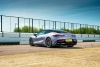
But there's just enough novelty about it that the Z manages to have a defined aesthetic identity of its own. The quad flattened diamonds that make up the rear light signature, for instance, are a real highlight, while some strong colours are available for the flowing bodywork of the Denza, penned as it was by the German chief of design for parent outfit
BYD, Wolfgang Egger. Our favourite of these shades is striking Monte Carlo Orange.
Denza will sell the Z in three basic body styles: the Coupe, an unadorned entry-point to ownership of this Chinese land missile; the Spider, a drop-top 2+2; and then the Racing, which comes with big wings and aero flics and splitters and vents and so on, and which has the option of being specified with its rear seats stripped out. It gets no more power than the other two, though. But then, it doesn't really need such a thing. We'll finish by swinging back to the exterior dimensions: at 1,350mm tall, the Denza Z feels more akin in stance to something like a
Bentley Continental GT, rather than particularly low and lithe. But that's a personal observation, we guess.
Interior
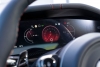
We had a handful of laps of the high-speed Goodwood Circuit in a Denza Z Coupe, while wearing a racing helmet and with a good-natured track instructor installed in the passenger seat watching our every move. Therefore, we can't tell you a lot about how well-organised, or otherwise, the infotainment system is on that high-mounted 12.8-inch touchscreen (although it does have Google Built-In software), or particularly comment on the ergonomic correctness of the cabin as we didn't use an awful lot of it, except for the steering wheel, gear selector, pedals and the 8.88-inch instrument cluster.
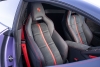
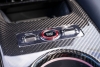
We will say that it all looks good and material quality seems fine, while the 12-way electrically adjustable heated, ventilated and massaging front bucket seats are most pleasant. They are maybe mounted a fraction high for a sports car, but even wearing a lid we didn't feel like we were way too perched up in the Z, or that headroom was notably restricted. The doors to the Coupe's cabin open conventionally, with no kerbside theatrics, and while most of the ancillary systems within the interior will obviously be run through the main display, there are some physical buttons inside the Z to aid intuitive operation of the vehicle on the move.
Practicality
With that big, long body, Denza has positioned the Z as a 2+2. There are even Isofix mounting points on the vestigial-looking rear seats, if you fancy trying to cram a Britax child chair back there. In all honesty, we never got a chance to sit in the second row of the Chinese EV, but it appears incredibly cosy in that area for anyone but the smallest of children. Meanwhile, there's a 250-litre boot on the Coupe and Racing models, which can be enlarged to 550 litres with the 50:50 split-folding rear bench folded down. The Spider is less accommodating, offering just 131 or 176 litres of storage, depending on whether its hood is down or up accordingly.
Performance
Denza is trying to muscle in on an upmarket automotive arena that includes a wide variety of sports-car and GT luminaries from established brands. This includes both petrol- and electric-powered competitors, so not just the supremely talented likes of the
Aston Martin Vantage, all the varied forms of the sensational
Porsche 911 and even outliers such as the brilliant but leftfield
Chevrolet Corvette, but also zero-emission creations such as the
Folgore versions of the Maseratis GranTurismo and GranCabrio.
To garner all the headlines, then, Denza has decided to make its triple-motor EV stupendously powerful. Its three electric propulsion units, a larger one at the front and then two smaller items handling each back wheel, have enough individual oomph that any one of these on their own would make a decent motor for a smaller EV: the Z's leading e-motor standing at 500kW, the rears 340kW apiece.
That's 680hp, in old money, at the nose, and then 462.4hp each at the back. Along with 440Nm for the front e-motor and 410Nm each from the rear pair, Denza tots all this lot up for simply mind-boggling stats of 1,604.8hp and 1,260Nm (the latter is a ridiculous number in and of itself, but it looks curiously undernourished compared to the horsepower). Hence, you could call the Denza Z a 1,605hp car, but most outlets - including the company's own marketing materials - say it is 1,604hp. At this level, a solitary horsepower either way is a mere 0.06 per cent difference, so really, who's counting?
Predictably, with such outrageous data on its side, the Denza Z - with all-wheel drive and a single-speed reduction gear transmission to deliver all that grunt instantaneously with no shift interruptions - is preposterously quick. All three models on their standard tyres will top out at 186mph, while the 0-62mph time for the Coupe and Racing is 2.25 seconds; for the slightly portlier Spider, it's a searing 2.3 seconds. You also want to look at the 0-124mph times, because they're bonkers: 6.46 seconds for the Spider, 6.36 seconds for the Coupe and six dead for the Racing.
If that's not enough, you can optionally switch the Racing onto a set of semi-slick tyres. At which point, its top speed increases to 217mph and the 0-62mph time comes down to a frankly terrifying 1.96 seconds. Lumme!
And so, it is with a strange sense of almost mild embarrassment that we tell you the Denza Z Coupe... didn't really feel that quick at all. It's undeniably strong, with that rich and unrelenting pull of acceleration that marks out all mega-power EVs, and on the few occasions around Goodwood where we managed to focus on the numbers accumulating in the Z's cluster as we pinned it out of the tighter curves (principally, when exiting the Chicane and heading along the start/finish straight, and on the long run from Lavant down towards Woodcote) then the way it continues to go hard above 100mph certainly indicates it's a mighty machine. It also deploys its monster power to devastating effect, with no disturbing wiggles from the rear Continental tyres when unleashing full throttle.
But we never got the chance to give it a standing start, where we suspect the Z will put on its best efforts to violently rearrange your organs through nothing more than g-force. And maybe it's the scale of Goodwood and that trick which happens on all tracks, where the lack of immediate roadside furniture diminishes the sense of speed that you'd get when out on public roads, but if you'd not told us the horsepower figure of the Denza Z in advance and asked us to 'guesstimate' it, we'd have said in the ballpark of 800hp - rather than double that amount.
Still, a few laps on one British circuit are not representative of the car's performance as a whole and we'll therefore reserve judgement on the Z Coupe until we've driven it for longer in more realistic UK conditions. We should also add at this point that the car does one of those 'ICE-mimicking' performances in certain drive modes, where it momentarily ceases torque delivery to imitate a shift of gears, and there's a soundtrack to match. But with the muffling effects of a helmet, balaclava and the wind/tyre noise generated at 130mph-plus, we didn't really pick up an awful lot about how good or bad this system might be.
In another realm of performance, the Denza Z has a 76kWh, second-generation, LFP 'Blade' battery pack. This gives the Coupe a WLTP range of 254 miles between top-ups, while the Spider will need to visit a charging point every 248 miles. For the Racing, the number is denuded even further by the aerodynamic drag of its spoiler, with a theoretical maximum of 236 miles.
Naturally, when you've got 1,604-/1,605hp at your disposal (no matter how much we think it feels like that number or not), you're unlikely to ever get this sort of range out of the Chinese EV if you ever start deploying the old leaden right foot. Therefore, the big news is that the Z is one of the first cars to benefit from Denza/BYD's 'Flash' charging. That's 1,500kW DC, or 1.5MW if you prefer it expressed another way, which means a 10-70 per cent charge takes a mere five minutes, while 10-97 per cent is done and dusted with in nine. And before you say it - yes, we are getting Flash chargers in the UK. Denza reckons 300 of them will be installed here by 2027, out of a wider European target of 3,000 units. So not only does the Z in principle accelerate faster than almost anything else out there, it can also replenish its power cells much more rapidly, too.
Ride & Handling
With three motors performing proper torque-vectoring (Denza calls this system 'e3'), plus a large-ish lithium-ion battery, a 4.8-metre-long body, and all the necessary luxury and control accoutrements required to run a car like this, the Z is a weighty thing. In standard spec, the Coupe is the lightest car of all at 2,230kg, the Racing not far behind at 2,250kg (we haven't got a figure yet for what it would weigh with the back seats junked). The Spider, meanwhile, is bang on 2.3 tonnes.
In an attempt to corral this heftiness, the Z not only has the torque-vectoring via its motors but also DiSus-M magnetorheological dampers. They're allied to double-wishbone front and multilink rear suspension, with a hub called Vehicle Motion Control overseeing all of this and monitoring braking, suspension and steering constantly, with a fastest signal-transmission time of ten milliseconds said by Denza to be 'industry-leading'.
It results in an EV which has promise, but also a few moments of alarm which just hold it back from being an unqualified success on this initial showing. Let's start with the good points, then. The steering is one of the better systems we've tried on any Chinese car, and it undeniably feels more organic and well-weighted than the slightly digital set-up we tried on the Yangwang U9 last year. The front end of the Denza Z Coupe is a pretty eager thing, so the turn-in is crisp and immediate, and helps belie the sheer weight of the car.
Ditto the carbon-ceramic brakes. If ever mass is present in one dynamic aspect of a given car, it's when you're asking for full braking power and the thing still feels like a runaway train heading for the buffers. However, we always got the bite and progression we wanted from the left-hand pedal in the Z, and we didn't experience any worrying squirrelling under heavier applications, nor fade after repeated high-demand usage. Into Woodcote, the point on the track where the biggest speed variance occurs as you brake hard for the tight right-hander, we always had faith the Denza was going to drop down to the pace we were after and turn in with agility.
Indeed, the DiSus-M suspension impressed, because Goodwood is a lumpy circuit and yet the Denza Z managed to breathe with it quite naturally. There also wasn't pronounced pitch, lean or drive from the shell
in extremis, but there's a definite softer edge to the Coupe's set-up that hints at a more GT character than an out-and-out hardcore track car. That's fair, though, because there's the Racing for that sort of thing, if you want it. And, also, an incoming Special Edition version that'll be track-only, capable of generating 2,000kg of downforce and with system power taken beyond 2,000hp. Yeesh.
The problem, then, came on the high-speed left-hand kink that's about a third of the way along the Lavant Straight at the back of the circuit. We'd earlier been raging about someone ahead of us in a Denza Z Racing who braked so hard for this 'corner' that we had to drop down to about 70mph to avoid rear-ending them in our Coupe. However, when we later went through there flat on a faster lap, all of the steering, the torque-vectoring and the DiSus-M seemed to contrive to get themselves out of sync, while we were travelling at about 110mph.
This manifested in a discomfiting corkscrewing sensation as the car became unsettled, and it pushed well wide towards the outside of the track despite dialling in more steering lock, and then lifting to try and get it to come back onto the intended line. It was but one moment in six laps of action that unnerved us, but it was significant enough to question what the Denza Z will be like for hustling out on public roads.
Value
After the 2026 GFoS, Denza announced prices for all three Z models. The Coupe will start from £142,900, the Spider £159,900, and the Racing £172,900. The impending Special Edition is as yet unconfirmed. No matter how much standard kit they come with (it's lots), nor that headline power figure, that's punchy in the extreme. Whether affluent punters will, um, take a punt on an unknown EV quantity like this, when they could buy an Aston, Porsche or Bentley, or even stretch a little for something like a Ferrari Amalfi or
McLaren Artura, is a point up for some considerable debate.
Verdict
We very much enjoyed this brief glimpse into the abilities of the Denza Z, and it has left us wanting to know more about how the vehicle will perform in a wider variety of motoring circumstances. Certainly, it has epic traction, well-calibrated delivery of its power, sharp steering, good body control and a feeling of immense EV power. However, it's bloody pricey for a newbie in this rarefied and ultra-demanding sector of the market, while we'd also add that we have some question marks about the on-the-limit handling and the veracity of that 1,600 horsepower figure after our initial, incredibly brief test. We look forward to trying the Z again soon, perhaps in motoring conditions more representative of the UK marketplace, to see whether it's an unqualified hit or a bit of a miss.