Styling
The Super-N is based on a 'kei' car, a certain micro-sized class of vehicle in Honda's homeland which must conform to a rigorous set of technical specifications. Since 1998, these have stipulated that the vehicle in question must be no longer than 3.4 metres, must not exceed a width of 1.48 metres and a height of two metres, and should have an engine no bigger than 660cc, outputting a maximum of 47kW (64hp).
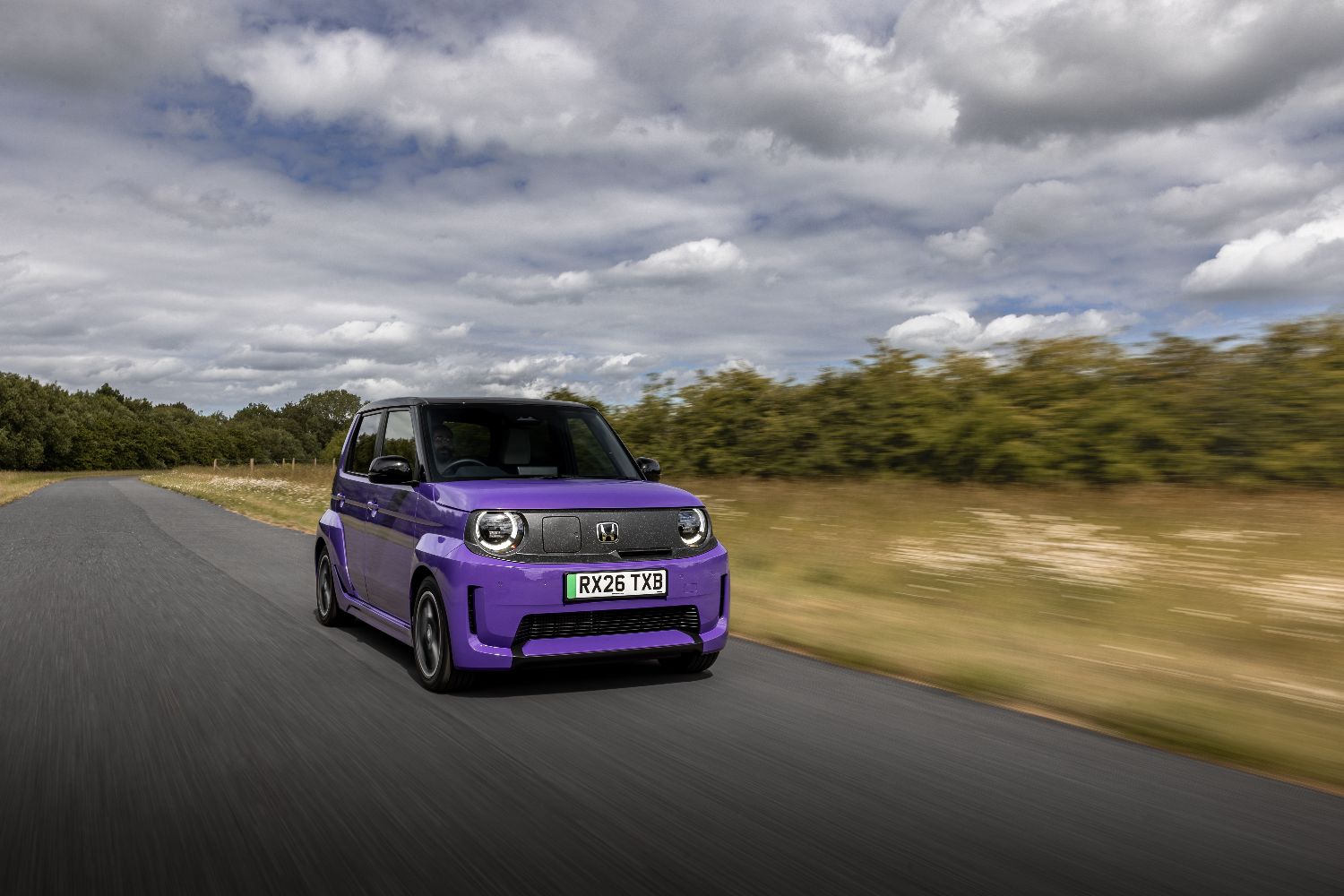
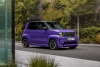
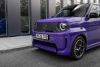
So although the Super-N fails the kei-car entry exam by dint of the fact it is a millimetre shy of 3.6 metres long and 1,573mm wide, it remains one of the dinkiest vehicles on sale today. And one of the most undeniably alluring. With its flared-out arches, cheeky little face, jutting roof spoiler and set of minuscule-yet-glorious 15-inch alloys shoved into all corners, it manages to look weirdly purposeful and unthreateningly beguiling, all at the same time. There's no doubt the haymaker showroom/kerb appeal of the Honda is one of its chief weapons, and we wouldn't blame punters for buying the Super-N on the strength of its appearance alone.
Helps massively that the magnificent Boost Violet Pearl paint you can see in the images is, in fact, the standard, no-cost finish. You have to pay £675 to render the Super-N in any of white, black or silver (please, don't do this; purple for the win), with the only other interesting colour for the car - Seabed Blue, lifted from the updated
Mk11 Civic range - being the same price. Indeed, aside from a two-tone option (£300) that renders the roof black, two decals packages that put matte-grey decals over the bonnet, roof and tailgate spoiler along with Starry Silver pinstripes down the flanks (with or without a set of complementary floor mats for £695 or £455 respectively), and a black-emblem kit (£305), there are no other cost options on the Honda at all. So we'll cut the manufacturer some slack, despite the fact we would love to see some lairier colours in the palette, such as yellow, orange, red and lime green, to really make the most of this tiny city car's monumental aesthetic desirability.
Interior
Honda has built the Super-N down to a careful cost (which leads on to another major customer benefit that we'll discuss in the Value section later on), so be prepared for the fact the plastics used on the dashboard's upper surface, the door cards and some lower areas of the cabin are, well, cheap. But don't for a minute think the city EV's interior is nasty, because it isn't. Quite the opposite - it's hugely endearing.
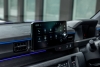
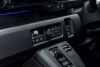
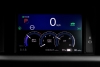
Technology is handled by the nine-inch central infotainment screen, which runs Apple CarPlay and Android Auto wirelessly. You'll want to use those, as the graphics on this system aren't the sharpest in the world, while there's no native navigation either. But it broadly works well enough and, joy of joys, Honda doesn't force you to operate the climate controls via the touch display - they have their own dedicated panel of switches in the centre of the stack. For the cluster, there's a seven-inch configurable unit, which is nice enough and which also shows interesting different displays, depending on which drive mode you're in.
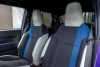
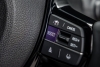
Further, there are superb and heated front bucket seats in the Super-N, a lovely two-spoke steering wheel with a purple-tinged 'Boost' button upon it, and a banging Bose premium eight-speaker sound system with a boot-mounted subwoofer, which all add extra gloss to the Honda ownership experience.
Practicality
Not the Honda Super-N's strongest suit, this - but probably not for the reason you might expect. Because passenger room in this teensy car is remarkably generous, notwithstanding the fact it's a strict four-seater, rather like one of its key rivals, the
Hyundai Inster. True, taller people in the back are going to have their thighs pointing upwards as the bench feels low in relation to the floor (but head- and legroom are both ample), and if the driver is of the more, um, substantial persuasion then the driving position might leave them butted-up against the front door with no room for their right elbow, rather like piloting a miniaturised version of the classic
Land Rover Defender. But generally, for four reasonable-sized adults, or even a couple of forward-thinking, urban-dwelling parents with two younger children, passenger space in the Super-N is just fine.
Where the Honda falls down on the day-to-day usability front is with in-car stowage space and, predictably, cargo capacity. On the former score, there's a ledge in the dash which we eventually dubbed the 'Shiny Shelf of Shame'. It's supposed to be for the placement of smartphones, with a recessed central section near the USB ports for precisely that task. But because the SSoS is made of slippery plastic and has no rubberised base, if you place your device there it will simply hurl itself at the nearest door-card at the first corner-related opportunity, ultimately landing in the footwell. So flat is the floor throughout the Super-N that our phone went walkabout from the driver's footwell, into the back, over to the left and then partially forward underneath the front-passenger seat. Took us ages to find it, much to the amusement of our driving partner.
There's more. The door 'pockets' are literally just recesses for drinks bottles, the glovebox ain't vast, there's simply not enough room between the close-mounted front seats for any sort of central cubby, and there are two cupholders in odd places - one down between the seats, presumably for the passenger, the other mounted to the right of the steering wheel for the driver. A good idea in principle, but this cupholder is smaller than the one situated low in the cabin. Basically, don't bring a lot of clutter to the car, is what we're saying here.
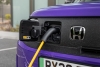
And the boot? It measures just 162 litres. Which wouldn't be so bad, if not for the fact the subwoofer for the Bose sound system lives beneath its floor in a 13.1-litre box, occupying what might otherwise have been a handy location for the charging cables. As there's no 'frunk' on the EV whatsoever, if you're carrying the cable around then its bag robs more volume from the 162-litre main boot.
Let's end on a positive note here, though. Fold the 50:50 split-folding backrests down and the Honda's boxy, upright form reveals 967 litres of overall capacity. And the Super-N has the manufacturer's patented Magic Seats in the rear, where the squabs can be flipped up to allow for the transport of tall items in the back footwells. So it's not totally without some versatility merits.
Performance
As standard, the Honda Super-N has 47kW, as per a kei car. What do we mean by 'as standard'? Well, in four out of its five available drive modes, the front-mounted e-motor is delivering just 64hp, along with a rather more useful 162Nm of torque. In a featherweight car tipping the scales at just 1,097kg and driving the leading wheels through a single-speed reduction-gear transmission, this micro-EV will do 0-62mph in 14.5 seconds.
That sounds more glacial than it feels in practice. There's enough scooting 'oomph' from the Super-N to ensure it is lively at up to 50mph, although above that speed the car can seem quite undernourished if it's only delivering its 64hp. Kudos to Honda for the throttle calibration, though, and the judgement of the adjustable regenerative braking. Precisely controlling the little Honda's speed on the move is a pleasurable activity, while in City mode there's a brilliantly executed one-pedal function if you want to use it.
So as an everyday runaround for congested town traffic, the Super-N is admirable. But those chunky arches, that squared-off jawline, the unmissable rear spoiler and Yokohama Advan tyres promise something more from the Honda than mere A-to-B merchanting. And a hint of what's to come can be found in Sport mode, by pulling and holding the left-hand paddle on the steering wheel.
This engages a simulated seven-speed DCT gearbox, achieved both by torque interruptions and the broadcasting of an 'engine' noise through the Bose system's speakers. Yes, like a boil-washed
Hyundai Ioniq 5 N, this Lilliputian Honda EV is attempting to engage its driver by simulating a combustion-powered car. And it works. Sure, the buzzy, thick, rumbling note the Super-N emits is not like any car we've heard, even though one of the chief engineers on the project gamely tried to claim the soundtrack was a mix of the Honda City Turbo II of the 1980s, the very car which informed the look of the zero-emission newbie, and no less an automotive luminary than the mighty
DC2 Integra Type R. As much as we like the synthesised acoustic efforts in the Super-N, we're here to tell you right now that allusions to the screaming B18C four-pot yowling its heart out in VTEC are a spectacular reach of the imagination, and then some.
But what good is a pseudo-ICE driving experience with 64hp? Aah, then you need to press that mauve square marked 'Boost' on the Honda's steering wheel - because, just as its pugnacious exterior form is no longer beholden to kei-car rules here in the UK, so too is the car freed from the shackles of 47kW on these far-flung, foreign shores. And so Boost liberates 70kW from the propulsion motor, resulting in 95hp powering 1.1 tonnes of car.
Make no mistake, Boost doesn't transform the Super-N into a searing road-rocket. But it does give the Honda enough of a shot in the arm to scythe fully 4.5 seconds from the 0-62mph time, equating to a ten-second-dead run for the little scamp. And now the Super-N's exterior glamour, its fake engine noises and its artificial gearbox all make so much more sense. Thus, the Honda EV is far sparkier (forgive the pun) like this and is even capable of staying with the flow above 60mph, while its 84mph V-max doesn't seem to be out of all realistic reach.
So, that's the speed part of the Honda's performance taken care of. Now for the range. Remember the question we posed in the intro, about whether the carmaker had learned its lesson on price and driving distance after the Honda e? It has in one regard. But, clearly, the Japanese outfit thought 137 miles of one-shot range on the e was a bit too generous on its part. And therefore, the Super-N has an even smaller battery than its predecessor at 29.6kWh, while the official WLTP claim for the car is a mere 128 miles.
Hmm. In its defence, the Super-N is clearly positioned as a budget city EV, so perhaps expecting 200-mile-plus capabilities is unreasonable. And if you stick to urban speeds, Honda reckons you can do 199 miles between top-ups. But when the Renault 5 can provide almost double the Japanese car's range, in theory, for not much more money, has Honda gone and fallen into the same short-range trap as the e once more? Further complicating matters is the fact that both the
Dacia Spring and
Leapmotor T03 have the Super-N covered. Even the
Fiat 500e raps on the door of 200 miles WLTP combined. And while none of these three have the knockout charm of the Super-N, the Renault Twingo (163 miles) is soon going to come along to ruin the Honda's day.
There's also the issue of 50kW DC peak charging, which means despite its compact battery, the Super-N still needs half-an-hour to top up from 10 to 80 per cent. Sure, it's a city-centric car so rapid charging won't be on the menu for targeted owners as much as AC replenishment (10-100 per cent on a typical 7.4kW domestic wallbox requires 4.5 hours), yet we can't help but feel that if Honda could've given it 70-80kW DC to just trim public-charging cycles to around 20 minutes, it would have compensated much better for that 128-mile range. It remains to be seen if buyer sentiment is adversely affected by the Super-N's ultra-short-distance abilities, then.
Ride & Handling
All this talk of Boost this and wide arches that creates a dynamic bed that the Honda Super-N must lie in. But thankfully, tuning of the steering and suspension has been done to make sure the EV is fun to drive on those occasions you've escaped the throttling grip of the city and you're out on open roads.
While not the sort of car that possesses glittering handling, the Super-N is nevertheless a delight to hoon about. Tall and narrow it may be, but the Honda doesn't feel unsteady on its feet and has masses of grip from its comparatively small contact patches. Further, its steering is satisfyingly direct and reasonably well weighted, while the lack of mass results in an agile, chuckable and enormously enjoyable vehicle, which you can exploit fully without smashing speed limits to all unholy smithereens. You'll carry far more speed through corners, for instance, than you would ever think possible just by looking at the Honda's vertiginous form.
If there's a payoff to this dynamic goodness, it's that the Super-N doesn't always ride with quite the good grace it possibly should, and the most alarming part of this is that the most unsettled behaviour tends to come with large hits to its primary ride taken at low pace; speed cushions and significant potholes and the like. Obviously, these are the sorts of things you'll most likely encounter in what is supposed to be the Honda's favoured natural habitat, built-up areas, so it's a shame that such incidents present themselves at all, however infrequently they occur.
On the flip side, for the vast majority of the time, the Honda Super-N is a pleasure to travel in. It's comfortable, assured and stable when out on faster-flowing A-roads, while it can even hack it at motorway speeds in terms of minimising wind and tyre noise to a substantially high standard. Therefore, aside from very occasional crashiness, Honda seems to have tuned the chassis of its new EV quite marvellously.
Value
This is the second-best bit of the Honda Super-N, after the way it looks. While the manufacturer might not have markedly improved the range of the new EV from the old e, it has at least addressed the overpriced nature of the latter. This is because the Super-N costs just £18,995 for an Advance, and £19,295 for an Advance Two-Tone, the black roof which Honda considers a separate 'spec'. The most you can add from here are the £695 Super-N Style Pack for the stripes, and then £675 for Seabed Blue Pearl (the only colour worth having beyond the violet), meaning the absolute maximum you can drop on the half-pint Honda is £20,665. The brand is also doing finance offers at 2.5 per cent APR representative and including a £549 deposit contribution that work out from £199pcm, so tempting fiscal stuff for a desirable machine such as this.
And Advance spec, with or without the black roof, comes with loads of big-car kit for the money. Your equipment list includes heated Sports bucket front seats and a heated steering wheel, keyless entry and go, front and rear parking sensors with a reversing camera, LED lights, Magic Seats, climate control, adaptive cruise control, ambient interior lighting, 15-inch alloy wheels, a digital driver's display and the smartphone-mirroring infotainment touchscreen, a thorough suite of ADAS gear as part of the Honda Sensing safety bundle, and that thumping Bose sound system. A pretty comprehensive roster, for a vehicle of this size and price, don't you think?
Verdict
Honda learns from its errors of the past and brings a small, short-range EV to market that has all the character and chutzpah of the old e hatchback, but which doesn't cost a fortune to buy in the first place. We adore the Super-N, even if we accept there are a few negative observations to highlight - a few of the plastics inside are sub-par, the low-speed ride can be tough on occasion, there's not a lot of interior stowage solutions and the boot's not very big, and of course the 128-mile theoretical maximum range will remain a sticking point for some.
But a lot of these characteristics you really should've expected, considering the modest size of the product. This is a city car, so it's not going to do 300 miles to a charge, have a 500-litre boot and seating space for five bulky adults. And when judged against reasonable parameters of expectation, you have to say the Super-N is a major success. Crammed full of personality, great to drive, packed with standard equipment, affordable to buy or finance, and looking as sensational as it does (with
purple as the standard paint), then the Honda EV immediately becomes one of the most likeable and easily recommendable small cars on the market, no matter what their propulsion type.