Styling
You have to look long and hard at a picture of a
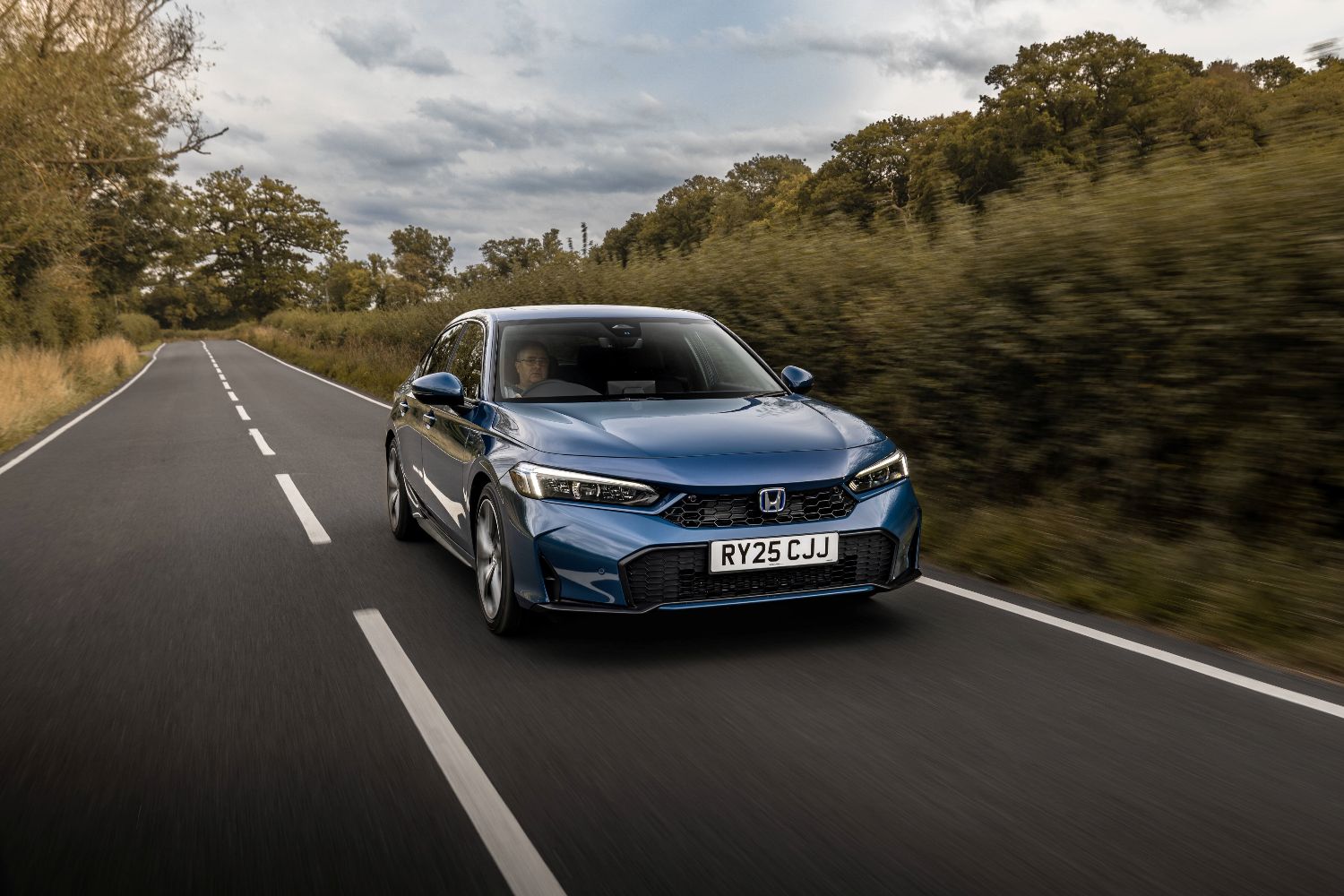
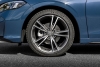
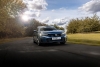
pre-facelift Mk11 and the front end of this latest version before spotting the differences between the two, so let us give you some pointers. The bumper is cleaner and has a more upright outer-vent detail, mainly due to the chief omission from the nose of the Honda - all 26MY-on cars have had their front foglights deleted. In the chin is a more defined lower air intake, while the radiator grille between the headlights is wider than it was before. The garnishes for both the grille and the headlights are designed to give the car a sharper, sportier look, while other changes include 18-inch, two-tone, diamond-cut alloys in grey for Advance-spec cars like our tester (Sport Civics' wheels are black), and also a new body colour called Seabed Blue. Yes, it's the one you can see in the pics.
Whether you think it was a smart choice on Honda's part to be so conservative with the visual amendments to the Mk11 probably depends a lot on whether you considered the
Mk10 Civic to be a dog's dinner from an aesthetic perspective or not. If you liked the daring design of the old car, then you might find the current version's exterior appearance a bit dull. But if you thought the previous-gen Civic outlandish and a conflicting riot of lines, then even with this nigh-on-indistinguishable airbrushing, you'll reckon the latest version of the Honda hatch is a smooth, sleek thing. We actually liked the Mk10, for what it's worth, but we think the facelifted Mk11 remains handsome and striking enough, with its fastback-like shape.
Interior
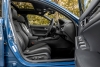
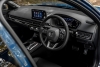
The rooflining and pillars inside all 2026MY-on Honda Civics are now rendered in black, to create what the company claims is a more premium interior-ambience feel. You can spot matte-chrome detailing around the air vents in the revised cars, while better illumination of the cabin (including footwell lights) is another detail change in here. From Sport grade upwards, there's a new heated steering wheel thrown into the mix and wireless smartphone charging is possible across the board too, but the main update is the 10.2-inch Digital Driver Display in the instrument cluster is spread across more models in the range. That doesn't particularly affect our Advance, though, which always had this set-up as the flagship spec.
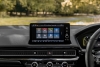
On the one hand, we must praise the 2026 Civic's interior. It's a well-made affair with truly superb ergonomics, as it retains things such as physical climate controls, buttons on the steering wheel, and simple-to-operate air vents. But on the other hand, the design of the fascia is quite staid, while there's no denying the graphics of both the cluster and the central nine-inch Honda Connect infotainment system are well behind the curve these days. Indeed, the main control display is particularly clunky to use and outmoded in terms of response rates as well, with the ADAS functions annoyingly spread between it and the cluster, so the Honda's interface doesn't feel in any way cutting-edge.
Practicality
There are storage and stowage solutions throughout the cabin of the Honda Civic Mk11 facelift, as well as a decent amount of passenger space in the rear - even with that sloping roofline and rear hatch. What there isn't, is a massive boot. At 409 litres, the Honda's cargo bay is OK and bigger than what you'd find in the ageing
Volkswagen Golf Mk8, but something like a
Skoda Octavia hatch would laugh in the Civic's face with its 600-litre capacity. Further, the Japanese car still has that unusual retractable luggage cover that pulls out laterally, from left to right, but it's a flimsy old thing, both in operation and to look at.
Performance
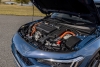
There are no changes to the Civic Mk11's solitary e:HEV i-MMD powertrain, which is a non-plug-in hybrid with two electric motors. This doesn't make the car all-wheel drive, as one of these motors is the generator and the other is for propulsion, but the same Atkinson-cycle four-cylinder petrol engine continues in support, giving the car peak outputs of 184hp and 315Nm. The 0-62mph sprint is said to take just 8.1 seconds, as the whole car is only 1.5 tonnes at the kerb.
The drivetrain of the Honda is something of a peach. The 2.0-litre engine isn't particularly raucous or strained if you decide to rev it out, and the Civic feels properly zippy as it has such a spread of electrically assisted torque that it responds crisply to throttle inputs. Also, praise to the e-CVT, which is one of the most refined and naturalistic-feeling 'boxes of this type we've ever tried; it simulates gearchanges as the car accelerates, so there's no uncomfortable moments of the four-pot engine revving right out in the wake of big throttle openings.
And the Civic proved suitably economical, without any need to drive it in any sort of overtly fuel-saving fashion, during our week-long test of the e:HEV. It averaged 50.6mpg overall after nearly 700 miles of evaluation on all sorts of roads and at all sorts of speeds, peaking at 57.2mpg on a long jaunt up the A1 to Northumberland from the East Midlands. So the hybrid gear proves its worth in a variety of everyday scenarios.
One minor grievance relates to the regenerative braking on the e:HEV, though. It can be adjusted using the paddle shifts, but - unless we were doing something wrong - as soon as you adjusted it for a stronger regen effect, the minute you got back on the throttle, it went back to a lower setting. So if you want to use this feature on the Honda, you're constantly clicking at the paddles as you approach junctions and the like, only for the car to revert to its preferred setting just seconds later.
Ride & Handling
We have to say, there's a certain pleasure these days in driving something relatively light, low and with a nice, hunkered-down centre-of-gravity. And given Honda is one of those companies that knows how to set a chassis up, even when you're talking about a day-to-day motor and not something that's specifically performance-oriented, then we're here to tell you there's definitely a degree of joy to be had being at the wheel of the Civic.
And yet, we're going to stop a long way short of saying it's a brilliantly engaging thing. The steering is positive and accurate, with even some feel to play with, but the rear axle of the Honda is not the most active in the world, so its skill on a challenging back road is keeping itself clean and tidy, rather than the car dancing through the corners with loads of handling sparkle. It's commendable in the corners, rather than corking.
What's better about the Civic e:HEV, however, is that it is suitably refined and comfortable. The drivetrain we've already said is quiet and dignified, and at higher speeds the car keeps itself reasonably hushed in terms of wind, road and suspension noise as well. There are occasions where the 18s can sometimes crash through and over imperfections in the road's surface, but they're few and far between, meaning in general that the Honda is a very easy-going thing to live with.
Value
The problem with the Honda Civic now is that, for 'just' a hybrid hatchback, it does look a bit pricey. It starts at £32,960 as an Elegance, rises to £34,530 as a Sport and then costs £37,880 as the Advance tested here. But those price are excluding fees and taxes, so on the road it comes in at £39,295.
To be fair, the Advance comes with everything fitted, including luxuries like a panoramic roof, the 12-speaker Bose premium audio system, adaptive cruise, heated front seats and steering wheel, and genuine leather upholstery among much more, but nearly 40 grand for a regular car does seem punchy, even by the craziness of modern automotive new-vehicle values.
Verdict
In many respects, having a week with a Honda Civic e:HEV was mighty refreshing. It's 'just' a straightforward car, with accomplished dynamics, an efficient and yet amply powerful drivetrain, and a spacious, well-constructed interior. The issue is that we can't simply be swayed by the fact the Civic
isn't an SUV, or electric, or yet another new Chinese machine; as C-segment hatchbacks go, evidently the midlife update for the Honda hasn't really changed a great deal or moved it further up the segment when ranged against its conventional rivals. At nearly £40,000, for a cabin that doesn't feel very special in terms of its tech and a driving experience that, while capable, isn't particularly stellar, it feels as if the Japanese firm's reticence to make bigger changes to the Mk11 Civic might have been a missed opportunity.