Styling
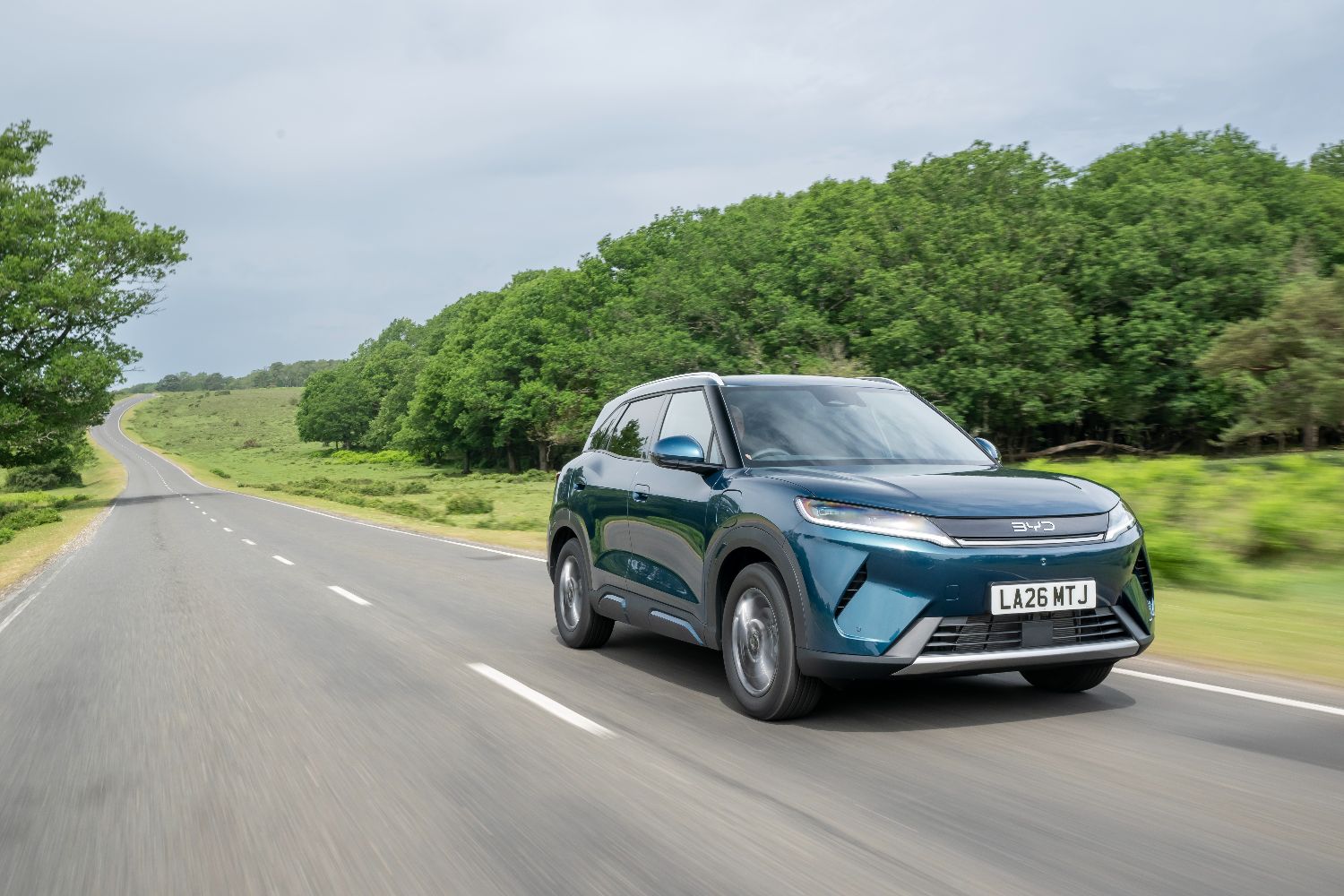
Externally, there's not a lot to differentiate the new DM-i Atto 2 from its EV stablemate, apart from a boot badge on the left-hand side which has BYD's shorthand for 'dual mode, intelligent' on it, and then the fact there are two 'filler' flaps on this PHEV's body: one on the nearside-rear wing for the fuel, and the other on the offside-front panel for the electric-charging port.
Other than that, it looks like an Atto 2 - inoffensively styled and clearly drafted by a BYD designer's pen, but not exactly stunning to behold. It also doesn't help that it is offered in just four paint colours, which are dark blue, white, grey and black. Sigh.
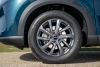
Anyway, with its skid plates, roof rails and chunky side sills, there's at least a bit of visual purpose about the Atto 2 DM-i, with base-spec Active cars running on 16-inch alloys. But Boost models, like our test vehicle, upgrade those for 17s, which make a fair fist of filling the arches. There are further spec differences, and quite crucial ones, between the BYD Atto 2 DM-i Active and Boost variants, but we'll come onto those later in the piece.
Interior
Since the Atto 2 EV launched, BYD has in the interim adopted Google Built-In technology for its infotainment systems, and the software presented on a 12.8-inch touchscreen on the dash is standard kit for all versions of the DM-i. So too is an 8.8-inch instrument cluster, plus Android Auto and Apple CarPlay connectivity, although customers wanting the 50-watt wireless smartphone charging pad will need to fork out the extra three grand for the Boost (see Value, below).
Broadly, the tech in the Atto 2 works well and isn't the most annoying interface in the world, but it's still not without the foibles that mar so many Chinese machines. Not all the ADAS gear, for instance, seems to be clustered in the same place on the menu, so if you want to switch off some of the most over-zealous electronic nannies in the automotive business, it'll take some familiarisation with the touchscreen to get the job done quickly and smoothly. The 8.8-inch instrument cluster is once again populated by far too many data fields, all crammed into a letterbox space and in minuscule fonts in places, so that various information items are hard to read at a glance. And the indicators can make the most annoying sing-song sound if you're not careful; this is switchable to a more standard 'tick-tock' alert, but good luck finding the digital button to perform precisely that task in the menu system without, ironically enough, Googling it first.
Otherwise, the Atto 2's cabin is decent. Material quality is OK for a car operating at the budget end of the market, although it's a shame the design of the crossover's cabin is so staid; there's none of the visual wackiness that you get in the larger
Atto 3 Evo, for instance. Just straightforward fixtures and fittings, and a fascia bereft of buttons that demands its occupants use the central touchscreen for almost every single process onboard.
Practicality
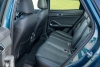
With a completely flat footwell running the full width of the rear in the BYD Atto 2, and thanks to its exterior height which is almost 1.7 metres, passenger space in the back is not bad at all for this class of vehicle. Three adults across the bench might be a bit optimistic, while really tall folks may lament the amount of kneeroom, but the headroom is ample despite the panoramic roof fitted to the Boost variant, while two average-sized adults or three kids would be more than happy sitting in the rear of the Atto 2 DM-i. Furthermore, there are three Isofix positions in the crossover as standard, two in the back and one on the front-passenger seat. Great news for parents.
And then there's a good-sized boot, measuring 425 litres with all seats in use and rising to 1,335 litres with the 60:40 split-folding rear seatbacks folded down. It's maybe not the most versatile cargo bay in the world, in terms of hooks/storage zones/underfloor cubbies and so on, but it is reasonably voluminous for the swallowing of general magubbins.
Performance
As with other BYD DM-i PHEVs, you get a bigger battery and faster charging with the Atto 2 Boost than you do with the Active, which is similar to the arrangement in the
Sealion 5 family, and just as you'd find on the not-so-impressive
Seal 6, you also get more drivetrain power from the grander spec too.
Both versions of the Atto 2 DM-i run a 1.5-litre four-cylinder non-turbo petrol engine selected for its high thermal efficiency and designed, in the main, to only ever directly drive the front wheels of the vehicle (through a reduction-gear transmission) under periods of heavy throttle load. This ICE lump certainly hasn't been chosen for its dazzling outputs, as it delivers just 98hp and 122Nm - numbers outstripped by the e-motor in either Atto 2 hybrid, which comes in at 197hp and 300Nm.
Either one of the PHEVs are slated to make that same peak torque figure from the combined powertrain, with the main variation between the two being that the Active is limited to 165hp while the Boost runs with 212hp - a figure seen in a lot of other BYD DM-is recently.
But, more pertinently than that, the Boost also comes with a Blade LFP lithium-ion battery pack that's more than twice as big for usable capacity as the one in the Active. The latter is just 7.8kWh in size, leading to a 24-mile all-electric range, while the Boost improves the cells to 18kWh, doubling (and then some) the zero-emission running capability to a theoretical 55 miles. The difference in outright combined petrol-electric range is an even bigger 44 miles, the Active needing to visit either pump or charging point every 577 miles, compared to the Boost's 621-mile figure.
Then there are the charging speeds. Again, the Boost has the edge - with a peak of 6.6kW AC instead of 3.3kW for the Active - but it'll be a surprise to many PHEV fans, and indeed supporters of BYD, to see that the Atto 2 DM-i has no DC charging capability at all. The Seal 6 Comfort, for instance, has a 26kW rate in this instance, while the incoming Dolphin G DM-i supermini hatch (which is also a B-segment contender like the Atto 2) has an even swifter 39kW potential. Therefore, in either Atto 2 DM-i, expect a 15-100 per cent top-up of the battery pack to take anything between two hours 42 minutes (Active) and three hours (Boost) on the dot.
Anyway, the powertrain in the Atto 2 DM-i is acceptable, as long as you don't ever rev it right out or demand full power from it. If you do, you'll be waiting what feels like aeons for the e-motor and 1.5 to align their efforts and deliver full 'punch', and even when they do the car feels a bit reedy and sounds terrifically noisy, as the transmission permits the coarse four-pot to sustain peak rpm for seconds on end.
It certainly, as a Boost, doesn't feel capable of a rather brisk 7.5-second 0-62mph time as claimed; we used the (utterly pointless, in a small SUV with no pronounced dynamic character like this) timer function in the cluster to record an 8.3-second sprint at best. Luckily, with 300Nm of system torque on hand, you don't need to mercilessly thrash the Atto 2 DM-i to get adequate performance from it.
Commendable fuel economy, too. We drove the Boost for about 40 miles in fairly untaxing conditions and it managed an average 51.4mpg in such circumstances, although the caveat here was that it started with plenty of battery power to begin the trek - so maybe a higher figure might reasonably have been expected as an outcome.
Ride & Handling
Again, the story here - as with the powertrain - is that the chassis underpinning the BYD Atto 2 DM-I is fine... provided you don't ever extend it whatsoever. Oh, and the low-speed ride is needlessly informative and sharp-edged, which detracts from the crossover's wider refinement levels.
Yes, the Atto 2 can be a little rowdy at higher speeds, where both tyre and wind noise become more noticeable, but if the road surface is good enough and you're going along at a higher velocity, the BYD has about the right level of secondary ride quality that it can feel quite comfortable and relaxing. So it's a shame there's so much unnecessary crash and thump from the suspension on cratered routes in and around towns, then.
The handling is something and nothing. The weight of the steering and the calibration of the brakes on the Atto 2 DM-i are both perfectly satisfactory without in any way being superb, while the body control is surprisingly well tied-down. Yet, in all honesty, you'll never once discover a little jewel of handling information or feeling of a lively set-up hiding underneath all the safety-first, buttoned-down manners of the BYD that would in any way encourage you to hoon the thing. It's the absolute epitome of the humdrum A-to-B merchant; perfect for the company's targeted end user, if a tad disappointing to a driver with any enthusiastic leanings in the slightest.
Value
At £26,990 for an Active and £29,990 for a Boost, these BYD Atto 2 DM-i cars represent one of the cheapest ways to get into a PHEV on the new-vehicle market that you could possibly find. That modest £3,000 uplift and the various technical enhancements it brings with it (more horsepower, faster charging speeds, bigger battery, greater electric range) means we suspect most people will be targeting the Boost, but even the Active comes with a wealth of standard kit - as you might predict of a Chinese newcomer.
So the base-grade BYD comes with the twin digital displays, including Google Built-In, plus a reversing camera and rear parking sensors, six-speaker stereo, adaptive cruise, LED exterior lighting, keyless entry and go, 16-inch alloys and metallic paint from the off, among much more. Stepping up to a Boost, however, also adds 17-inch alloy wheels, vegan leather upholstery, a panoramic roof, vehicle-to-load (V2L) functionality, a 360-degree camera system with front parking sensors drafted in, 50-watt wireless smartphone charging and finally rear privacy glass, as some of the highlights.
Verdict
While by no means flawless, specifically because of the underwhelming and forgettable driving experience and a too-tough ride on what are (at the end of the day) somewhat plump tyres, the BYD Atto 2 DM-i performs the familiar Chinese trick of offering a heck of a lot of kit and space for an amount of money that's less than some competitors with simpler, cheaper drivetrains than this PHEV. As long as you don't mind the looks of the car and you never want to use full throttle, you'll get on fine with the latest DM-i from BYD's hybrid stable, but we can't help thinking that the Atto 2 remains a finer machine all round if you stick with it in its original EV format.