Styling
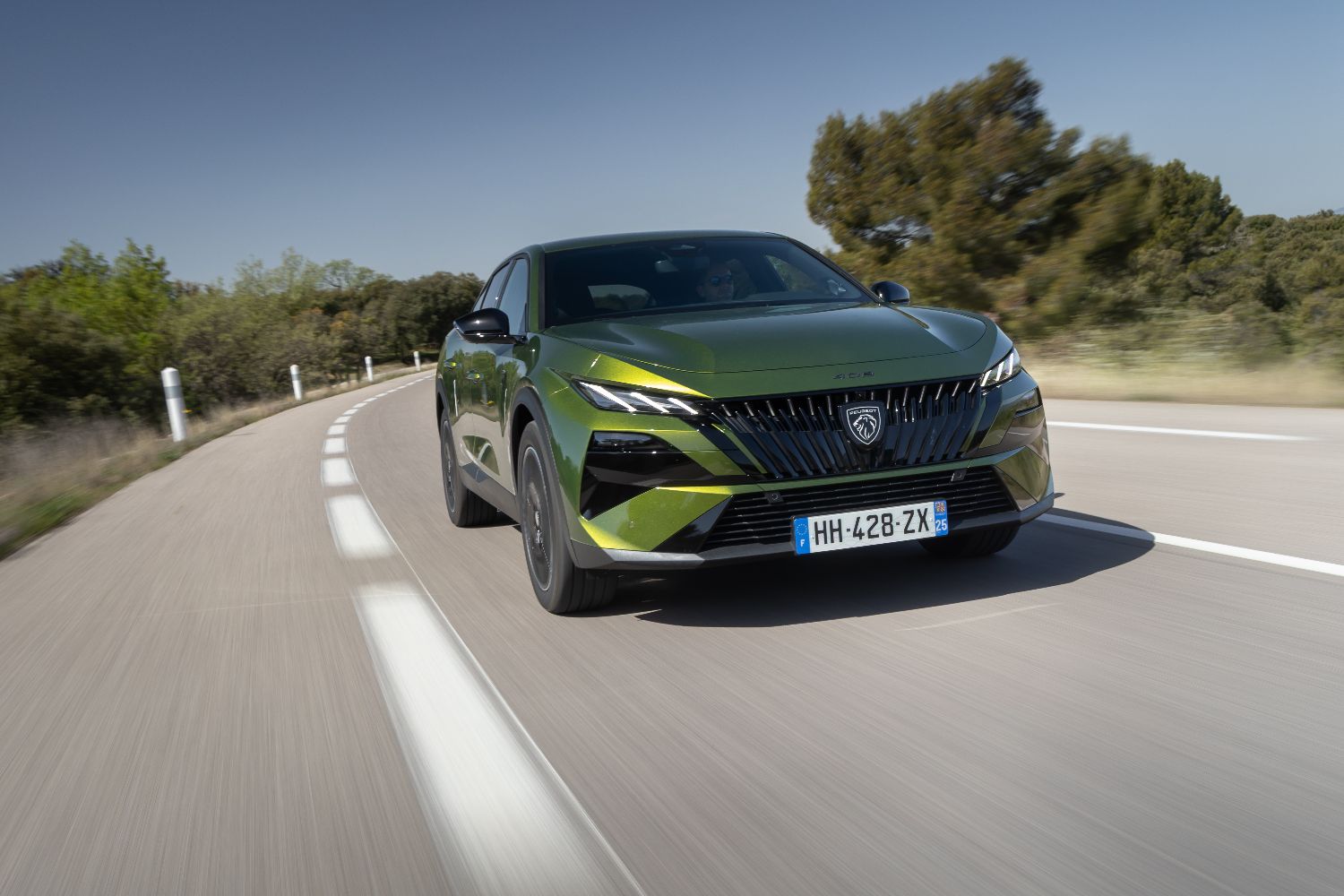
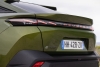
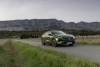
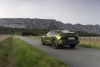
As a reasonably handsome thing prior to its facelift (whether you call it a coupe-SUV or not - and we don't think it's genuinely tall or high-riding enough to pull that ruse off), Peugeot only deploying light airbrushing techniques was hardly going to ruin the 408's lines. The best thing about the revisions is the glorious new paint, Flare Green, which is a belter of a finish that's full of gold flecks. So when it's dusky outside, the car goes very dark and looks almost black, while in bright sunshine it really pops and takes on a much more vivid yellow-ish tinge. Flare is almost as good a green colour as
Audi's magnificent Sonoma, and that's not a comparison we make lightly.
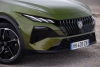
Besides the lick of green paint, which ought to be a no-brainer choice not only for the way it looks but because it's the only standard colour on the revised 408 line-up (all the other finishes will set you back between £750 and £950), then it's all about the lights. At the front, higher-spec GT and GT Premium evoke that aforementioned 308 facelift, complete with the illuminated grille bar of angled LEDs heading towards Peugeot's corporate shield emblem, which also lights up at night. At the back, there are revised taillamp signatures and the 'Peugeot' lettering between them illuminates, the first time this has happened on any model from the company.
Interior
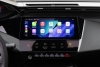
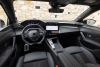
There are even fewer alterations within the cabin of the Peugeot 408 than there are made on the outside. The most obvious are the sharper graphics for the main screen and, more notably, the high-set instrument cluster, which now gets 3D presentation on the top-spec model. Further, there are some new material choices, and then that's pretty much everything. Essentially, it's as good a car to sit in as it was before, accepting there are a few infotainment-related grumbles pertaining to the relative lack of physical switchgear, and so the main stumbling block here will be whether you're one of those people who adores the iCockpit layout (small, low-set steering wheel, lofty driver's binnacle above it) or alternatively abhors it. We're in the former camp, as we've never struggled with it; we know plenty of people who fall into the latter, mind.
Practicality
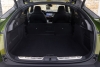
All 408s have surprisingly accommodating seating in the second row, despite the sloping roofline and the fitment of a panoramic roof up top. Furthermore, the Hybrid 145 is your powertrain of choice if you want the maximum amount of practicality in your 408, because it has the biggest boot by volume. The E-408's cargo area drops down from the Hybrid's figure of 536 litres to 468 litres with all seats in use, while the Plug-In Hybrid is even further off the pace with only 415 litres on offer. And then, if you tow anything, it's again the champion: due to its lower kerb weight and despite its comparative lack of peak power and torque, it can lug 100kg more of braked trailer than the PHEV (1,300kg versus 1,200kg), while the E-408 isn't rated to tow anything at all.
Performance
Broadly all carry-over from the pre-facelift line, we'd be able to say the three powertrains of the 408 family were all the same as previously, if it weren't for a slight change to the Plug-In Hybrid model. It gains a more potent e-motor (92kW, or 125hp/118Nm) and bigger battery (14.6kWh usable NMC), so the peak output climbs to 240hp, compared with 225hp before (both have the same 360Nm), while the electric-driving range lengthens to around 53 miles, a significant improvement on the 40 it was reputedly capable of prior. It also gains a seven-speed dual-clutch e-DSC7 gearbox, instead of the old torque-converter EAT8 automatic with eight ratios.
That results in a 0-62mph time of 7.5 seconds and a top speed of 145mph, making it the outright-fastest 408, even if it's not the most accelerative. That honour still stands on the shoulders of the electric E-408, with its 213hp/343Nm powertrain. No changes here, as it also has the same 58.3kWh NMC-rich battery pack it had before, providing a theoretical range of around 280-283 miles (depending on alloy wheel size), and it can do 0-62mph in 7.2 seconds with a limited V-max of 99mph.
The remaining piece in the puzzle is the car we're driving here, the Hybrid 145. This teams the 1.2-litre PureTech three-cylinder turbo petrol engine in 136hp format to a 48-volt mild-hybrid system, comprised of a 21kW e-motor and a teeny-tiny battery that rates at less than half a kilowatt hour, usable. Combined power and torque here read 145hp and 230Nm (the latter surprising, because according to the official specs then the engine delivers 230Nm on its own, assisted by 51Nm from the e-motor across a shared 750rpm band leading to 2,500rpm... but we digress), resulting in a 9.4-second 0-62mph sprint - almost two seconds off any other 408 - and a top speed of 127mph. It uses the same e-DSC6 dual-clutcher as it did before, and for all three powertrains drive goes to the front wheels exclusively; another reason why any sort of visual pretence to the Peugeot being an SUV seems utterly fallacious, in our eyes. It's simply a big fastback with some black-plastic body cladding, isn't it?
Anyway, we drove all three versions of the 408/E-408 over in Marseille for the revised line-up's launch. And while each powertrain has its flaws, it's the Hybrid we ended up liking most of all. Sure, its six-speed e-DSC6 isn't exactly a paragon of whipcrack responses, while it seems almost comically slow in this day and age, even if you're mashing the throttle to the carpet in Sport mode (which only sharpens the throttle, rather than adding any power - more anon).
But the 1.2 is smooth and much quieter than the rowdy 1.6 turbo-four in the PHEV, which in turn is linked to the e-DSC7, a gearbox that is numerically superior in cogs to the e-DSC6 but not much else, and then the E-408 falls into that weird Stellantis EV trap of only offering up its full 213hp and 343Nm if you remember to click it into Sport mode (we did say 'more anon'). Otherwise, you get 190hp/300Nm in Normal and then 170hp/270Nm in Eco, along with a fairly sloppy throttle. At least in both, there's a 'kickdown' function which means if you mat the accelerator, the powertrain will at least give you the full power and torque hits of the drivetrain without having to press the modes button to access the relevant setting.
Also: for a big, ostensibly family-oriented car like this, is the E-408's realistic everyday driving range of roughly 200 miles really enough to cut it in this sector? Shouldn't it have a bigger battery than a sub-60kWh item by now? We'll leave you to decide.
So the 408 Hybrid it is for us, then. As we said, it's by no means flawless and you'd better not buy it if you want to get anywhere in a hurry, or you're a particularly enthusiastic and regular overtaker of slow-moving traffic on two-lane A-roads. But as the most amenable and fuss-free all-rounder in the Peugeot's family, it's the one we'd choose.
Ride & Handling
There's another benefit to having the Hybrid 145 over any other 408, and that's a kerb weight which is considerably trimmer than either the Plug-In Hybrid 240 or E-408. At less than 1.5 tonnes, the HEV is an astonishing 233kg lighter than the PHEV, while it tips the scales at a scarcely believable 343-kilo advantage compared with the EV.
This results in a more agile and biddable car, one that better lives up to the sporty potential promised by the 408's rakish looks. All three versions have smooth, likeable steering and highly impressive ride comfort and rolling refinement, but the two heftier, more-electrified models can display a lumpier disposition on larger alloys when they encounter notable bumps in the road. Again, the Hybrid isn't exactly immaculate on this score, certainly when it's in GT Premium specification on the biggest alloy wheels, but it just floats over and covers off imperfections in the tarmac in a tad more graceful style when it's motoring along.
As to the handling, we wouldn't get excited about any 408, but they're all perfectly capable and composed enough for most people's reasonable needs. It's when you start pushing the envelope of grip that the Peugeot fails to convince, although it's once again the Hybrid which is the star here. Its circa-230-350kg lack of ballast when held up against its stablemates means it'll move around a little bit more readily on the throttle alone when you have its suspension loaded up in a corner, although it takes a lot of provocation of the Pug to ever get to this point. In short, you can hustle the 408 along twisting roads if you want, but it's a long way from Peugeot's finest or most thrilling dynamic hour for roadholding, no doubt.
Value
Once more unto the Hybrid breach, dear reader. There are three specifications of the revised 408 line-up, which run Allure, GT and GT Premium. Most buyers are going to want at least a GT, because that brings in 19-inch alloys and the fancy new light signatures fore and aft, while GT Premium adds luxuries such as the Focal premium sound system, 3D instrument cluster and 20-inch wheels on top of the GT's kitlist.
But, for reference, the Hybrid 145 costs anything between £30,495 and £35,295 as an Allure and GT Premium, respectively. At each trim level, the equivalent E-408 is £2,100-£2,300 more cash than the 1.2, while the PHEV will chunk a monstrous £6,500-£7,100 onto the price of the 145. Indeed, the GT Premium Plug-In Hybrid 240 e-DSC7 is the only 408 in the range to go the wrong side of the 40-grand marker, with a £42,395 basic ticket.
Verdict
As sophisticated and suave as it ever was before, the Peugeot 408 isn't quite a curate's egg of a car - its good points undoubtedly outweigh the bad, you see - but it remains an unusual, leftfield choice in the family-vehicle marketplace. You're going to have to really love the styling to justify it over any number of more conventional SUVs with all manner of motive power choices, while none of the drivetrain options provided by Peugeot put in the sort of display that would allow us to unequivocally recommend them.
As long as you've got a decent charge in it, something not always a given thanks to its modest 58.3kWh battery, the E-408 is, on a spot-sample, probably the nicest one to drive thanks to its ultra-quiet rolling refinement and seamless power delivery, two facets which the other 408s simply can't quite match. But because the Hybrid 145 is much lighter, far longer of one-shot driving range and considerably cheaper than the E-408, plus we reckon it shades the hulking EV on both ride comfort and handling, it's the three-cylinder Peugeot we'd be steering you towards as the primary choice in this lightly updated car's line-up.