Styling
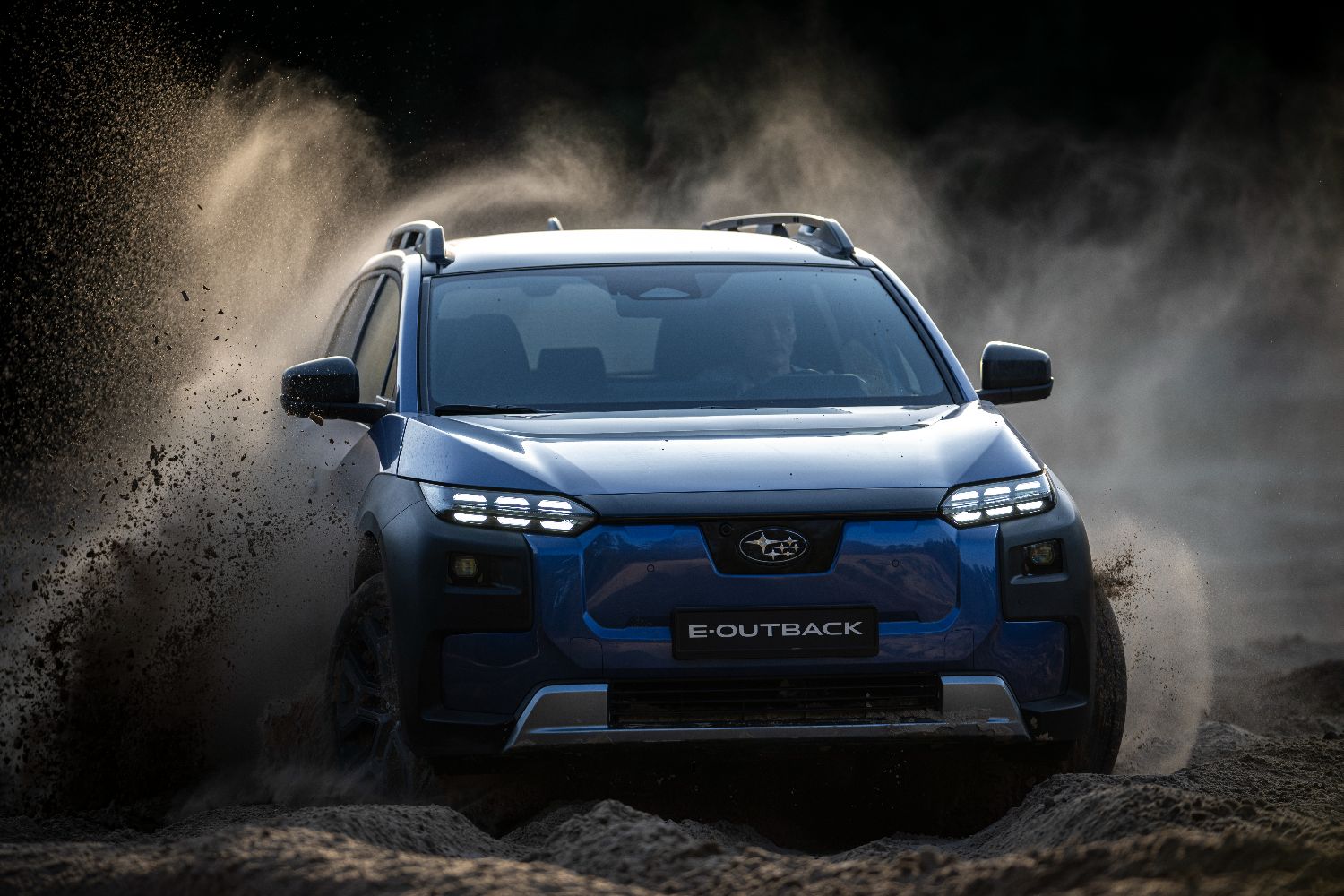
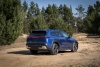
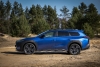
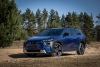
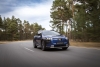
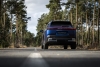
There's no doubting the E-Outback is a Subaru - even if a buyer manages to avoid the model-specific colour of Daybreak Blue Pearl, which has more than a nostalgic whiff of Sonic Blue Mica about it. Chunky plastic body cladding, roof rails, big 20-inch alloys stuffed into the arches... yep, for an EV with some of the same styling accoutrements on it as the Uncharted and Solterra (the six-point DRL signatures at the front being the biggest similarity in this respect), the E-Outback has plenty of presence. Helps that we like estate cars to begin with, of course, and further that we are particularly fond of lifestyle estates (such as Subaru's own and aforementioned Outback, plus late, lamented beauties such as the
Audi A6 allroad and
Volvo V90 Cross Country, among more), but we're happy to go on the record as saying the E-Outback is comfortably Subaru's finest-looking extant model on sale in the UK. Mainly because we don't get the second-gen BRZ, of course. But we digress.
Dimensionally, the E-Outback shares much with the Solterra, because it's effectively the estate version of that pre-existing electric SUV. So it's the same width, almost the same height (give or take 20mm in the newcomer's favour), and has an identical 915mm front overhang and 2,850mm wheelbase to the Solterra. The difference in shape all comes aft of the rear doors, then, with the extra 155mm of metal grafted onto the E-Outback causing it to be almost measure-for-measure a physical match for the petrol-powered Outback from which it borrows its name. Slightly less ground clearance, though; the E-Outback is 211mm off the deck (like the Solterra), whereas the Outback bests that figure by 2mm. For off-roading enthusiasts wanting the green-laning nitty-gritty, the approach, breakover and departure angles of the E-Outback are 17.6, 18.2 and 20.2 degrees respectively.
Interior
Good quality fixtures and fittings, all topped off with a sense of ergonomic correctness are the hallmarks of the Subaru E-Outback's cabin, as is a 14-inch main infotainment system and high-set instrument cluster - which obviates the need for a head-up display, so lofty is its perch - which'll all be very familiar to you if you've been in any of the four related EVs from either this company or Toyota. Still, we like the way this is all integrated and how it works pretty seamlessly, while a couple of 15-watt wireless smartphone charging pads down on the tunnel provide another plus point for the technophiles among us. The best news is that the E-Outback affords a nice semi-command driving position with superb visibility out of the glasshouse in all directions, without making its pilot feel like they are sitting up way too high in the cabin.
Practicality
Proving our own passionately held belief that 'estates > all other types of car', the Subaru E-Outback has lots of practical touches. Not just inside, but it's fully winter-prepped with plenty of clever features all over, such as front headlights designed to prevent the build-up of snow with both their shape and the use of a powerful washer jet to blow away any accumulated powder, as well as a rear windscreen with wider heating elements to better defrost it in a sharp, cold snap, and with its rear-view camera for the interior mirror video feed mounted inside the glass but within the sweep of the back wiper, and then heated seat and steering wheel elements that are more comprehensive for coverage than in rival machines. Of course, here in the UK, these details are probably only pertinent to those of us who live in the high grounds of mid-Wales or northern Scotland, natch, but it's good to know they're there, nonetheless.
On a more day-to-day footing, useful stowage solutions abound inside the E-Outback's passenger compartment, while the rear leg- and headroom is bounteous enough that a quartet of tall adults ought to be easily accommodated within the Subaru's cabin. And then there's the boot: the biggest equipped on any car from this manufacturer yet. Two trim specifications mean there's a slight diminution of the cargo figures in the grander Touring car which we're driving here, but the maximum ratings of 633 litres with all seats in use and 1,718 litres with the 60:40 split-folding rear bench folded down are eye-catchingly large in anyone's book. Not only that, but the boot area in the E-Outback is blessed with various helpful versatility features, including no fewer than six hooks - two of which are mounted up on the headlining, just in front of the tailgate. Hang your wetsuits and soggy waterproofs from these items, whenever you've finished doing whatever lifestyle activity it is that you E-Outback owners get up to in your spare time.
Performance
When Subaru Europe conducted the international launch of the dual-motor Uncharted, previously its most accelerative model with a five-second 0-62mph sprint, towards the end of last year, it put on a media stunt where it pitted the coupe-EV against both a BRZ and a
last-generation WRX STI in a standing-start drag race. And, of course, the Uncharted wiped the floor with both the ICE-powered lovelies. That's progress for ya.
In turn, the E-Outback would make mincemeat of the Uncharted. It has a much bigger rear motor than either AWD variant of both the Uncharted and the Solterra to which it is more closely related, the 167kW/269Nm device on the trailing axle of the estate EV equalling its front propulsion unit. Subaru doesn't quote sum-of-its-parts figures for power and torque on the E-Outback, which would be 454hp and 538Nm in case you're wondering, but it is happy to say it has pegged the powertrain to 280kW (381hp) here, although it won't quote a maximum system torque figure.
Reckon on that 538Nm number being relevant, though. Despite a kerb weight of just beyond two tonnes, the E-Outback is wonderfully quick. It's not brutally sharp for step-off acceleration, Subaru seeming to calibrate the throttle and power delivery to ramp up to max power and torque in short order, rather than just dumping both output amounts at the tyres in one violent hit, but being almost six seconds (officially) quicker to 62mph than the petrol Outback tells only a part of the story. We certainly believe the 4.5-second claim from Subaru's side of the fence, even without resorting to timing gear to test its veracity.
The battery, meanwhile, is a CATL-sourced power pack with a stated capacity of 74.7kWh. Subaru didn't want to tell us what its chemistry was, although as a CATL we're guessing it's NMC rather than LFP, nor would the company reveal the usable figure; reckon on about 70kWh or thereabouts. Charging speeds max out at 11kW for AC and 150kW DC, with the option to upgrade the former to 22kW for a fee while the latter means a 10-80 per cent top-up ought to take around 28 minutes, and officially the one-shot driving range of the E-Outback is 327 miles. But if you start showing off its super-strong acceleration to your mates, or alternatively you do lots of off-roading in the clag and sand which requires extended full-throttle inputs for tractive purposes, that capability is clearly going to come down a bit.
We didn't have a properly representative drive of the E-Outback at the test facility outside of Berlin to give you a steer on real-world energy consumption this time around, but for a little hint one of the off-road-course cars had an indicated 74 per cent charge showing on its trip computer, and the estimated range was well below 250km (155 miles). Still, as we say, with that vehicle spinning all four tyres in loose sand and spraying rooster tails of grains into the air, it's not really reflecting how owners might use them on, say, the rural B-roads of Shropshire, so we'll refrain from saying any more at this stage.
Ride & Handling
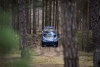
Although we didn't venture out onto the public roads, there was enough driving on tarmac at higher speeds conducted at the test facility to get a good idea of the E-Outback's general behaviour. We were also taken on a reasonably challenging off-road course in a forest, which might have been more technically demanding if it had rained (but on the day we drove the car, it was lovely, sunny and warm, so the ground was bone dry). However, one vertiginous 36-degree slope, some serious axle articulation work and a deep sandpit (see the main pic, above) all meant we could make a sound assessment of the Subaru's rough-roading chops.
And the early indications, in all departments, are very promising. This is easily, of the five Subaru/Toyota EVs we've driven so far in this family of machines, the most convincing, engaging and likeable vehicle the two firms have yet delivered. On metalled surfaces, what we could ascertain of its ride comfort and rolling refinement both seemed mighty impressive. One big, long-constant-radius, sweeping right-hander was taken at 80-90mph in the E-Outback, and through it body roll was well contained, the steering had enough fine detail and weighting to enable you to minutely adjust your line using both it and minor changes to the throttle without everything becoming all ragged and sweaty-palmed, and a couple of slaloms and rapid direction changes demonstrated that the E-Outback had an agility and feeling of being lighter on its feet than it actually is. These are all very good things, but we want more time with the car on cratered town roads or running long distances on the public highways before we fully sign off on giving its on-road manners a glowing appraisal.
Off-road, though, it's way, way more capable than it surely ever needs to be, considering what owners will likely subject the vehicle to. That, though, doesn't diminish what the carmaker has achieved here with the E-Outback, which is one of the most supremely talented off-road factory-spec EVs we've ever had the pleasure of sampling. It doesn't have locking diffs or Subaru's fabled 'symmetrical' AWD, but the way the company has laid out its hardware aims to simulate those desirable characteristics. It also has a decent X-Mode setting to manage the delivery of its twin motors' ample power and torque reserves when the car is driving through the scenery, while Grip Control is a clever feature which Subaru says is basically 'off-road cruise control'. We tried this switch-based system and the way the E-Outback managed to move off from a standstill when halfway up that 36-degree incline we touched upon earlier, which was strewn in loose sand for a slippery mu factor, was quite remarkable. So was the way it frolicked about in the deep sand and never once felt like it might get stuck. And then we were told that all the cars used for the off-road course were on summer, road-oriented rubber; Dunlop Sport Maxx 20-inch tyres, if you're interested. Fit this thing with some all-terrains and it'll likely be unstoppable.
Back at base, Subaru's development team rather coyly told us why the E-Outback is more than just a Toyota bZ4X Touring with some Solterra light units and a six-star badge on its nose, although its people were clearly nervous about potentially offending its compatriot outfit. Nevertheless, the E-Outback has permanent AWD whereas the bZ4X Touring will have a rear-wheel cutout feature, plus Subaru has shifted the brake balance in the maximum regen from 70:30 front to rear to nigh-on 50:50. It also says it has done its own 'specific tunes of both the suspension and the electric power steering' to suit its traditional dynamic heritage, while the E-Outback also has five modes of regenerative braking rather than the Toyota's four, plus it has an additional, third drive mode that is brilliantly called 'Power'. So now you know.
Value
The crucial pivot on which this review, and its overall star rating, hinges. Because this was an early drive of the E-Outback, Subaru UK's reps didn't have any firm prices for us to report to you as yet, but did say that it would clearly be more money than the £52,505 needed to get into even a base-spec Solterra. At £40,000-£50,000, the excellent E-Outback would have been something that we'd have been raving about even more; pushing on for 60 grand, though, its case becomes a little more flimsy.
That said, how many electric off-roading estates are there in the world right now? Precisely. And Subaru will sell the car in two specifications, called Limited and then Touring (yes, we know; confusing, when the Toyota model is called Touring, with the T-word there not being a trim level but instead the more widely accepted use to mean 'estate-shaped'). Either of these will come with a bundle of desirable kit as standard, with the Touring loading in pretty much every luxury you could want for the (yet to be confirmed) asking price. So fingers crossed the E-Outback's entry cost, when Subaru finally reveals it, won't be too outrageous.
Verdict
This early go in the Subaru E-Outback has been a thoroughly positive experience, with the EV off-roading wagon proving itself to be one of the more entertaining and polished zero-emission machines we've tried thus far. However, a lot will depend on how much the E-Outback costs once prices are confirmed for the UK, while we also want to spend longer behind its squared-off wheel on public roads to develop a fuller picture of its overall kinematic capabilities. A thoroughly good start from the E-Outback, though, which is unequivocally one of Subaru's finest and all-round-talented products to enter the market for many a year now.