Styling
We apologise in advance, but this is going to be a review which references the Suzuki e Vitara.
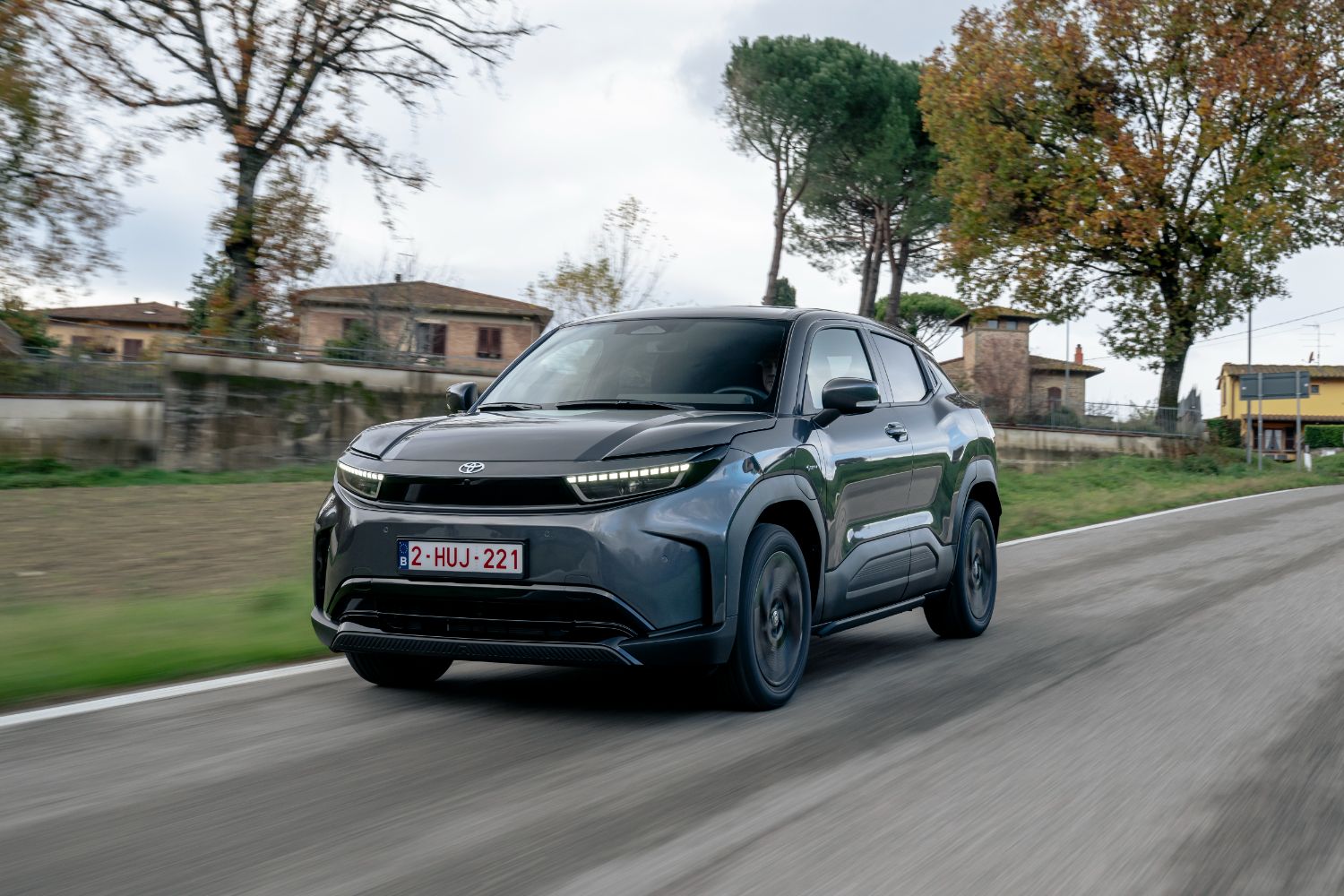
A lot. You see, while Toyota has put its own 'Hammerhead' styling on the car's nose, so that it looks much like the latest swoopy Prius or the
C-HR when viewed from the front three-quarter angle, and it has adjusted the rear light signatures to match the LED DRLs in the headlamps, this crossover is otherwise (save for company/model badging) identical to the Suzuki. It's also identical dimensionally, save for the fact the Toyota is apparently 10mm longer than the e Vitara overall.
Even the colours are the same. Granted, Toyota's given the finishes available its own names (Suzuki's Arctic White Pearl, for example, which is the free colour on the e Vitara, becomes Lunar White and an expensive option on the Urban Cruiser, which instead is rendered in Nimbus Blue as the no-cost selection, which in turn is called Celestial Blue on the Suzuki, and so on), and it also offers the two-tone efforts - including Spirit Red, its version of Opulent Red Pearl metallic on the e Vitara - which paint the roof in black to contrast some of the body colours. Look, the Urban Cruiser looks OK on the outside (as, of course, does the e Vitara), but there's nothing to really differentiate the Toyota from the Suzuki - aside from that lights-plus-linking-trim-bar arrangement up front.
Interior
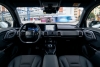
If the exteriors of these two Japanese EVs are almost identical, inside the Urban Cruiser is pretty much a carbon copy of the Suzuki. This means its steering wheel boss has a 'T' badge on it instead of an 'S', while Toyota doesn't (for some reason) offer the nice tan-leather upholstery choice you can get in the e Vitara, which at least enlivens the ambience of an interior which is otherwise quite sombre.
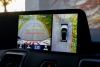
The worse decision here is that Toyota has just gone with the same infotainment system too, which means you'll be faffing about for entire seconds just trying to turn your heated seat on, off or down a setting or two, while the two roughly 10-inch screens might well sit in the same oblong housing, but they're set at different heights within that so they end up looking ungainly.
This is a cabin that needs more physical switchgear than it has and the proof of this was provided to us the next day, when we drove the updated version of the
Aygo X (a
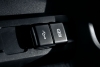
proper Toyota product) - and it has this really novel idea, of providing two actual buttons for the front heated seats. You reach down, press one switch within a fraction of a second, and your chair-warming elements are either on or off. How good is that, eh? How much sodding better is it than having to tap at a screen five times and watch pointless, agonising animations of spinning seats with your eyes mainly off the road throughout, so that you end up roaring with frustration at a needlessly complex routine that has replaced something so simple? Ahem. Rant over.
Practicality
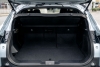
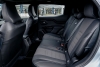
Like the Suzuki (sorry, we really are...), the Toyota seems to promise a lot on this score but in truth delivers very little. The rear row of seats slides forwards and backwards by 160mm, so you can tailor the interior of the Urban Cruiser to your needs, as to whether you need more passenger space or greater cargo room. But even with the second-row bench slid right back, people in the back won't be sitting in the most cavernous accommodation possible. And the payoff is that the Toyota's boot measures a measly 244 litres in this format. Sling the back seats all the way forward and no one but young children will be able to sit there, yet the boot capacity is only up to... 310 litres. It's not a great figure in this class, even by compact EV standards, but then you see the rear-seats-folded down capacity is a mere 566 litres and there's not a lot more you can say in the Toyota's defence. Even if that's a stat which only measures up to the window line, as perhaps a small form of mitigation.
Performance
Toyota UK seems to have made another crazy decision here with the Urban Cruiser, because it - unlike Suzuki in this country - has decided not to bring the dual-motor model to these shores. That's the one with the 184hp/307Nm powertrain plus four-wheel drive, and that stronger torque figure plus the all-corners traction is about the biggest USP of the e Vitara.
So Toyota looks like it has put itself on the back foot, because Urban Cruiser buyers' choices are then limited to the pair of single-motor models, the base car with 144hp and a 49kWh battery, for a 214-mile range and a 0-62mph time of 9.6 seconds, and then this longer-range variant that gains the 61kWh power cells. Power rises to 174hp, cutting the 0-62mph time to 8.7 seconds, and the one-shot driving capability increases too, although 264 miles official is hardly resetting any parameters in this class as it is.
But the problem is that these two front-wheel-drive Urban Cruisers can only call upon a meagre 193Nm. Which is, somewhat incredibly for an EV (which are supposed to be torque-rich machines), less grunt than a blinkin'
Honda S2000 could muster up (208Nm, in case you're wondering). And that's a car that has always been lambasted for being appallingly torque-light.
It doesn't matter so much that the Urban Cruiser 61kWh FWD is painfully slow, though - and it is. The 0-30mph acceleration feels just about passable for city work, yet when you're out on the open road and doing anything above about 45mph, the Toyota feels incredibly reedy when you ask it for any sort of meaningful acceleration. It's not a car in which you take on two-lane-road overtakes, for instance, without a severe amount of forward planning first, and it's also not particularly adept at moving into faster-flowing lanes of traffic on motorways either.
No, the bigger issue is the shameful electrical consumption. The best, the absolute best average we saw from the Urban Cruiser, while driving it around central Italy in fairly warm conditions and in a fashion where we weren't hammering it for dear life that often, was 25.6kWh/62.1 miles. That equates to a tragic 2.4 miles/kWh. From a single-motor, relatively light (1.8 tonnes) EV. With just 174hp and 193Nm to call upon.
At that alarming rate of guzzling down its electrical resources, the 61kWh Urban Cruiser wouldn't, in fact, do 264 miles to a single charge. It would instead achieve, as an absolute theoretical maximum, 146 miles. And that's if you started with 100 per cent battery. At the usual 80 per cent you'd get from a public charger, you'd be looking at more like 117 miles. And probably double-digits if the ambient temperatures were what we'd usually expect in a British winter. Oh, and charging? That's hopeless, too. The peak rate of the Toyota is a mere 70kW, so it'll take 45 minutes to get the battery from 10-80 per cent. It's almost as slow at topping up its modest-sized battery pack as it is going from 30-60mph on a country road.
But markedly lacklustre performance - either courtesy of the propulsion motor or the charging system - is not the worst of the dynamic story here. Not by a long chalk...
Ride & Handling
This Toyota Urban Cruiser is one of the worst-riding modern cars we can think of. It's absolutely terrible at dealing with even the most minor imperfections in the road surface, so if you have the bare-faced temerity to put its wheels through some innocuous-looking grate on a street in a built-up area, you'll be greeted with a loud thud from the suspension and alloy in question, as well as a discomfiting level of bouncing around inside the passenger compartment as the crossover completely fails to control the movement of its shell in the wake of the compression. Things only get worse as the speeds rise, because the velocity amplifies the intensity of the Toyota's slovenly body movements and results in the car taking even longer to regain its composure after its suspension has been asked to do, well, pretty much anything of note.
Some vehicles ride badly because they're trying to be sporty, with too-firm springs and dampers, exacerbated by big, hefty alloys sitting unsprung on rubber-band-profile tyres at all corners of the car. That's not why the Urban Cruiser is deeply uncomfortable, though. It simply lacks even the most basic level of polish to both its wheel and body control when it comes to primary ride. Yes, sure, fine - if the road you're travelling on is in good condition and you can rely on the Toyota's more bearable secondary ride qualities, it's what we'd term 'acceptable'. But every conceivable rival can do that sort of thing to exactly the same standard, or better, without making driving around towns such a bloody chore, in the manner the Urban Cruiser does. The irony here being that on cratered cityscape routes, the very environment from which this car takes its model badge, the Toyota is an incredibly poor companion. 'Urban Cruiser' is a total misnomer, on both counts.
And don't go hoping for handling redemption, because the loose body control only makes the Toyota feel roly-poly and imprecise during faster-speed cornering, while the featherweight, feel-free steering and limp powertrain further detract from the Urban Cruiser's extremely limited kinematic capabilities.
Basically, there are a handful of moments when you're driving the Toyota Urban Cruiser where it sort of feels...
OK. But they only account for about 20 per cent of the time when you're behind the wheel, and for the rest of your duration driving the car (or riding in it as a passenger), you will likely be vehemently cursing Toyota and all its chassis engineers for not giving this thing a damned good recalibration from the settings Suzuki supplied in the e Vitara.
Value
We just can't stop bringing the bad news. Toyota UK will sell the Urban Cruiser in three main specifications, which are Icon, Design and Excel. The 49kWh powertrain will only be sold as an Icon, while the 61kWh, 174hp model we're testing here will come in more luxurious Design and Excel grades. You get plenty of kit at each level, so it's not like Toyota is skimping on the equipment for the Urban Cruiser. Fine.
So what's the problem, then? Well, the three Urban Cruisers will cost £29,995, £33,495 and £35,745 accordingly. These two cars, both the Toyota and Suzuki, cannot qualify for the plug-in-car grant available in the UK, because too many parts for the basic vehicle come from outside Europe. Suzuki UK has manoeuvred around this thorny issue by discounting the list price of its e Vitara family by £3,750 model-for-model, so the entry-level car is now £26,245. Toyota, though, is doing no such thing. It's hoping that its ownership experience and the after-sales care it offers in this country will make up for the increased purchase cost.
And while this is a compact electric crossover, with the bigger and forthcoming C-HR+ supposed to take on the talented likes of the
Skoda Elroq and
Kia EV3, those two rivals aren't that much more than the Urban Cruiser. And they're both nicer to look at, provide superior accommodation and quality inside, they're so much better to drive, and they'll go further on their battery packs than the Toyota could ever hope to. Also, once the VW Group gets to grips with all the affordable EVs that will be built on the highly promising
MEB+ platform (including the Volkswagen ID. Cross and Skoda Epiq crossovers), then the Urban Cruiser's case looks like it will only become even more shaky.
Verdict
This is a bit like that episode of
Red Dwarf, where Lister is incredulous that the Inquisitor should be trying to delete him and Kryten from reality, rather than their crewmate washouts in the form of Rimmer and the Cat. And the Inquisitor's reasoning is that "you, and the mechanoid... could have been so much
more".
You see, you might think it unfair of us to have docked the Urban Cruiser another half-star in the overall ratings, when compared to the Suzuki e Vitara, but here are our reasonings: one, Toyota can, and does, do much better EVs than this - while the e Vitara is Suzuki's first go at such a thing, and therefore you can forgive the smaller company turning in a sub-par effort, on the other hand Toyota is the biggest carmaker on the planet and should really hold itself to sterner account; two, Suzuki is bringing the one version of this crossover to market which makes the most sense, the dual-motor AWD variant that actually has the sort of torque-response you'd expect of an EV - whereas Toyota is not, sticking purely with the weedy single-motor efforts; three, as we've already pointed out, if you still genuinely want this car (and we can't fathom why you would), then the directly comparable e Vitara is almost four-grand cheaper to buy, model-for-model; and four, if you're going to plagiarise someone's homework, at least have the decency to make the copied item look like your own efforts - Suzuki did a better job of turning the
RAV4 and
Corolla into the Across and
Swace, respectively, than Toyota has managed here with the Urban Cruiser, because it's almost identical to the e Vitara in every single way.
This is just a very poor vehicle by Toyota's own high standards, and it looks like precisely what it is - a rather lazy way to plug a potentially profitable gap in its own product portfolio. Like the Inquisitor, then, we lament the Urban Cruiser because it could, and should, have been so much more. So delete it; not from reality, perhaps, that's a bit drastic. But from your own list of compact crossover EVs, because there are far better options available to you out there than this utterly underbaked Toyota.