Test Car Specifications
Model: 2026 Fiat 500 Hybrid Torino
Price: TBC
Engine: 1.0-litre three-cylinder petrol mild-hybrid
Transmission: six-speed manual, front-wheel drive
Power: 65hp
Torque: 92Nm
Emissions: 119g/km
Economy: 53.2mpg
0-62mph: 16.2 seconds
Top speed: 96mph
Boot space: 183-440 litres
Styling
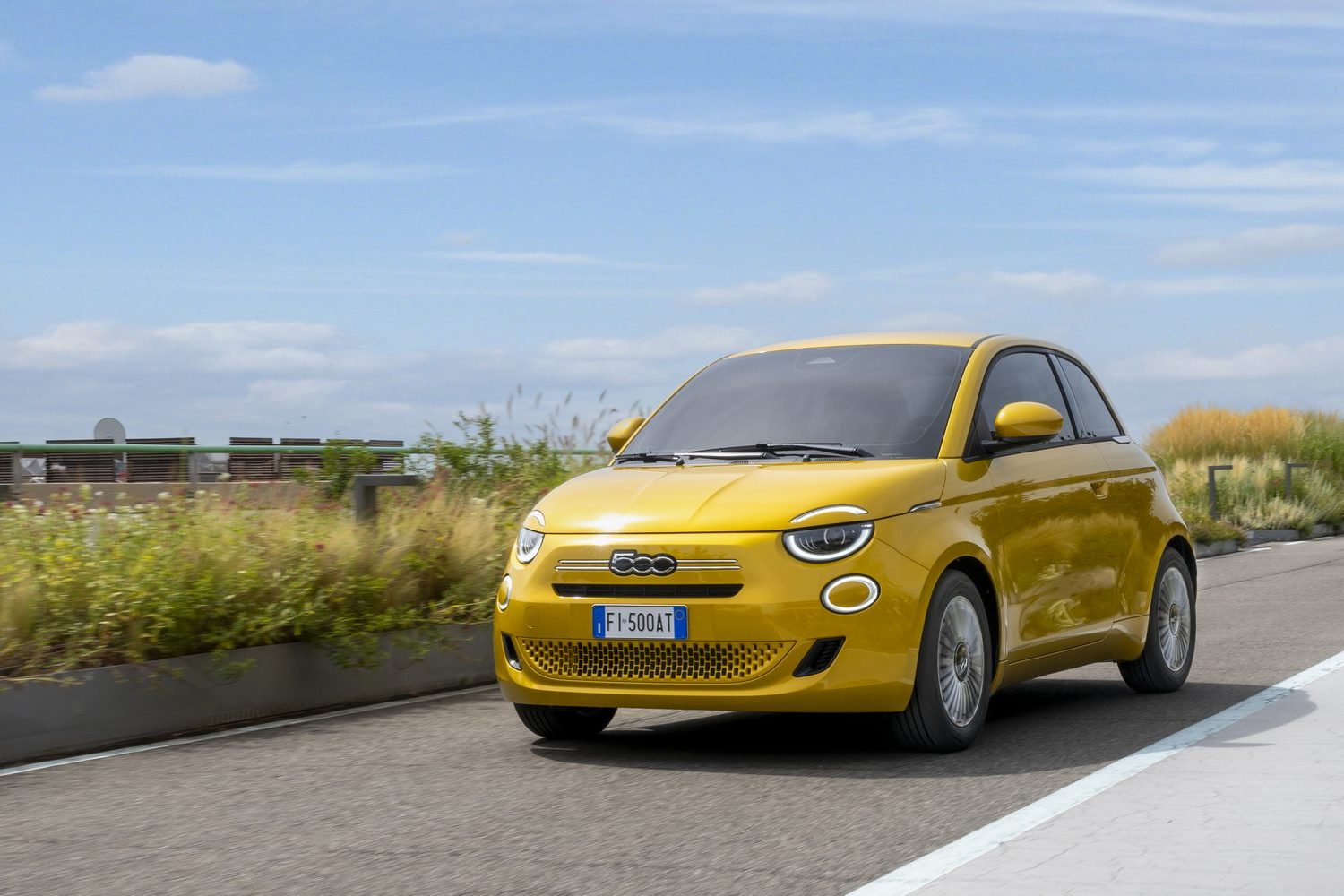
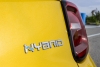
You'll need to look closely to see any exterior differences between the Fiat 500 Hybrid and its electric counterpart. To help you figure it out, the front end gets an additional opening just below the 500 badging, which is enough of an aperture to let the atmospheric three-cylinder engine breathe.
We're pleased to see that little else has changed with the 500's exterior design. It retains its stylish city car proportions and look that has remained a signature of the model throughout its 70-year history. This current iteration does have some neat touches, such as the daytime running light signature that is incorporated into the clamshell bonnet. Or the side indicators that are housed in clear plastic and jut out from where the bonnet and wing meet, and start a character line that flows through almost to the rear lights.
Other modern touches in the current Cinquecento include recessed door handles that require you to reach into the door to press the electronic actuator to release them. As an option, buyers can also choose a retractable fabric roof, where the centre section slides rearwards to provide open-top motoring while retaining the metal bodywork from the A-pillars to the C-pillars. Fiat's engineers have also utilised the same circular charge port cover for the fuel filler in this instance, and even the exhaust is hidden from view behind the rear bumper. There's a choice of 16- or 17-inch wheels, depending on specification, and some rather vibrant colours.
Interior
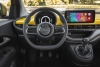
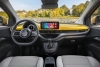
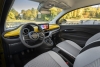
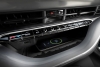
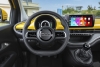
Being a city car means the interior is never going to be cavernous, but the Fiat does feel roomy up front, although there is slightly less space than before. That's primarily due to the need to install the gearshift mechanism for the six-speed manual transmission. The rest of the dashboard layout is as per the electric version, featuring a seven-inch digital instrument display housed in a rounded binnacle and a free-standing 10.25-inch touchscreen for the infotainment.
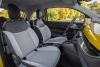
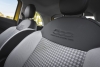
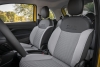
That native system works well, and the screen is quick to react to inputs. It's also capable of wireless mirroring with Android Auto and Apple CarPlay. There's also an optional wireless charging pad within the dashboard that features the Turin skyline, one of several little easter eggs dotted throughout the car's interior. You get a good amount of support and comfort from the front seats, which on La Prima models are also heated. The materials offered include some tastefully retro upholsteries, one of which is a two-tone option that features a houndstooth insert in the central sections on the Torino launch-spec versions.
Practicality
Being a city car means space is somewhat at a premium inside the Fiat 500 Hybrid. While there's little to complain about in the front seats, the rear of the cabin is that bit tighter on both legroom and headroom. At least Fiat is realistic and offers only two rear seats. Both have ISOFIX mounting points - though getting a child seat in or out will require some contortion - as does the front passenger seat. Boot space is a modest but useful 183 litres, and if you need more, the rear seats fold forward.
Performance
It's important to highlight that the 500 Hybrid uses the most basic of mild-hybrid set-ups, meaning it isn't capable of driving on electric power alone. The 1.0-litre 'Firefly' petrol engine is an evolution of what has featured in other Fiat models and now gains a 12-volt mild-hybrid system that uses a belt-starter generator (BSG) to start the engine and a small 0.13kWh battery to support this function, along with prolonged engine-off periods when stationary. The total output is an honest 65hp and 92Nm, which considering the 500's kerb weight of 1,066kg, is almost on par with the segment.
Ride & Handling
That BSG means the engine starts smoothly and quietly, but soon makes its three-cylinder construction known. There's a characterful thrum at lower rpm, and both the clutch and gear change have a light yet positive action. On paper, the 500 Hybrid's performance stats don't look like much to get the pulses racing, but in reality it does feel a bit brisker than the numbers suggest. You do need to be generous with the engine revs and quick with your gearchanges to get the Fiat up to any meaningful speeds. It feels nimble, partly due to its compact dimensions and quick steering rack, and it's happiest when bimbling around city streets below 40mph.
It's only when you come to a stop (or slip into neutral as you slow to a stop) that the mild-hybrid portion of the powertrain kicks into action, as engine revs drop away to silence. The compact battery has enough capacity to keep the ancillary systems running until you engage gear once more and set off. Even though it occupies the smallest of footprints, the ride is comfortable for a car this size. If you try to rush the 500 Hybrid along, you'll get more noise from the engine working overtime, but not the performance to match. Acceleration drops off beyond 50 miles per hour, and beyond that, it's hard enough work.
Value
The Fiat 500 Hybrid goes on sale in 2026, and prices are expected to start at a little under £19,000, though these won't be confirmed until closer to the car's arrival in dealerships. The convertible will carry a roughly £3,000 premium with a £1,500 price walk between specification grades. That still makes it more affordable than the electric 500e, which starts at more than £25,000. You're unlikely to notice any significant savings in fuel economy in day-to-day driving, as the aforementioned hybrid system is the mildest of mild.
Verdict
By slinging a petrol engine into the 500e, Fiat has created a car that, even by its own admission, it should have made from the outset. But better late than never, the 500 Hybrid opens up the characterful little city car to a wider audience thanks not only to its lack of need to be plugged in, but also to its more affordable price tag. Its design, interior finish and overall package ensure that it remains an appealing city car; it's a pity there isn't a more comprehensive hybrid powertrain available.