Test Car Specifications
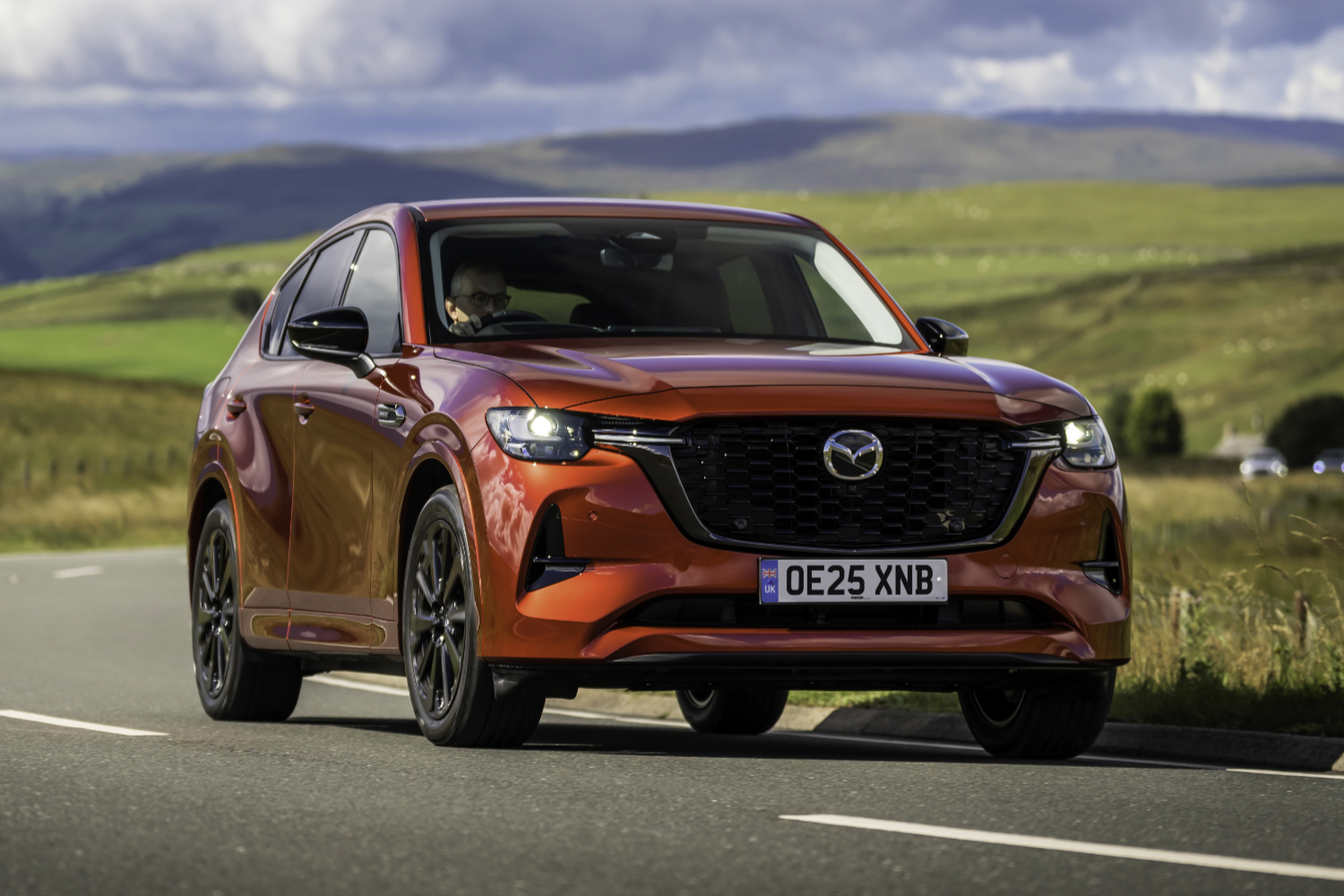
Model: 2025 Mazda CX-60 2.5 PHEV AWD Homura Plus
Price: £53,540 (as tested)
Engine: 2.5-litre turbocharged four-cylinder petrol plug-in hybrid
Battery: 17.8kWh lithium-ion
Transmission: eight-speed automatic, all-wheel drive
Power: 327hp
Torque: 500Nm
Emissions: 33g/km
Range: 39 miles
Economy: 201.8mpg
0-62mph: 5.8 seconds
Top speed: 124mph
Boot space: 570-1,726 litres
Styling
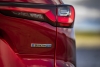
Visually, Mazda hasn't changed the CX-60 at all, save for the arrival of this Zircon Sand paint job, which is a bit of an acquired taste. We hated it at first, but familiarity has bred some acceptance, and it sits on a relatively handsome design. Perhaps the CX-60 shape isn't quite as smart as that of the smaller CX-5, which remains one of our favourite SUVs, but it still feels more premium than a Skoda Kodiaq or a Nissan X-Trail. We think the larger CX-80 is a more attractive thing overall, though.
Interior
While we may not have been massive fans of the old CX-60, we did like its interior, and the new model has continued where the old one left off – at least on that front. The design isn’t all that innovative, but the cabin looks classy and modern, and the materials are brilliant, so it all feels as upmarket as some of the poshest SUVs out there.
But while the CX-60’s interior might feel posh, Mazda has a slightly different approach to in-car technology. The central screen is controlled via a rotary control on the centre console, and the design is clean and classy, rather than vibrant and flamboyant. It won’t be to everyone’s taste, but it’s clear, cool and easy to navigate, which is arguably more important.
And don’t go thinking it’s short of functionality. You still get Apple CarPlay and Android Auto, and there’s a reversing camera and satellite navigation. It isn’t the fanciest system, but it’s one of the most user friendly.
The same goes for the digital instrument display. It might sound fancy, but Mazda’s clean-and-tidy approach means it doesn’t look as spectacular as those of its rivals. It does work well, though, even if it looks more like a posh watch than cutting-edge computer tech. If truth be told, we like this kind of design, but there are those who will prefer the more glitzy designs of other products.
Practicality
Although it’s ostensibly a big SUV, the CX-60 is only a five-seater – the seven-seat work is left to the even bigger CX-80. For the five seats that do exist, the space is pretty generous, with lots of headroom for all concerned, and plenty of elbow room for those in the front. There’s plenty of legroom in the back, too. But with the hybrid technology on board, the CX-60’s boot measures 570 litres, which is hardly small, but it is significantly less than you’ll get from some of its rivals. And while you probably won’t notice the difference too much from day to day, it isn’t ideal.
Performance
One of our biggest gripes with the CX-60 has always been the 2.5-litre plug-in hybrid powertrain, which has long been lumpy, inefficient and uninspiring. And, on the face of it, Mazda hasn’t really done anything to improve it. It’s still the same four-cylinder engine, paired with a 129kW electric motor and a 17.8kWh lithium-ion battery.
Officially, the system is good for 327hp and 500Nm of torque, allowing a 0-62mph time of 5.8 seconds. That’s the kind of performance that hot hatchbacks deliver, but they tend to do so with more panache than the CX-60. The engine is gruff and droning, the electrical power is delivered with a jolt and the whole thing feels jagged and uncultured. It’s as though the electrical side of the powertrain was an afterthought that has been grafted on in a hurry, rather than an integral part of the system.
In Mazda’s defence, the hybrid doesn’t feel quite as bad as before – whether it’s a software update or what, we can’t tell – but it’s definitely a little less rough-and-ready. It’s a low bar to vault though, and despite the official electric range of 39 miles, and the lower company car tax rates, the 3.3-litre diesel options are still considerably more appealing.
Ride & Handling
One of the biggest changes to the CX-60 is an updated suspension set-up, which promises to solve one of our other major complaints about the early examples: the ride. Normally, Mazdas offer a brilliant blend of ride and handling that puts them among the most driver-friendly cars in their classes (see the CX-5, Mazda3 and Mazda6 for details), but the original CX-60 was woeful. Stiff as a board, yet still wallowy in the corners, it was the worst of all possible worlds.
Yet the new version has updated front suspension geometry taken from the considerably more impressive CX-80, and a heavily modified rear suspension set-up, promising better body control and improved axle articulation off-road. The results are dramatic, to say the least, and the CX-60 finally rides and handles as it should.
Is it perfect? No, but it’s much closer than its predecessor, and it feels more like the CX-80 on the road. That means it doesn’t quite hide its weight, but it deals with it fairly well, riding with a suppleness and subtlety that was missing from the old car, while providing a bit more stability and joie de vivre in the corners. It still isn’t as good as the CX-5 – the steering isn’t as sharp – but it’s a vast improvement.
Value
The CX-60 range starts at just under £46,940, and that pays for the 2.5-litre plug-in hybrid in basic Exclusive-Line form. And for just another £60, you can have the cheapest 3.3-litre diesel engine instead. Either way, you get 18-inch alloy wheels, black leather upholstery and heated front seats, as well as two-zone climate control, a heated steering wheel and a reversing camera. A head-up display, wireless Apple CarPlay and Android Auto connectivity, and a power-operated tailgate round out a packed specification that makes more upmarket models seem a little superfluous.
If you really want to, though, you can go for the Homura or Homura Plus models with larger 20-inch alloy wheels, more upmarket leather and heated rear seats, plus heated and ventilated front seats. Alternatively, you can choose the Takumi or Takumi Plus versions, with their snazzier 20-inch diamond-cut alloys and white Nappa leather upholstery. At the top of the range, the Takumi Plus models cost £53,840 in plug-in hybrid form.
Verdict
The CX-60 has definitely improved, and it's certainly nicer to drive than it was before, but the fact remains that the 2.5-litre plug-in hybrid system is far from ideal. Yes, it is a bit more refined than it was, but you can't help wishing it had the 3.3-litre straight-six diesel engine on board. Fortunately, that's an option you can tick, and we recommend that you do.