Styling
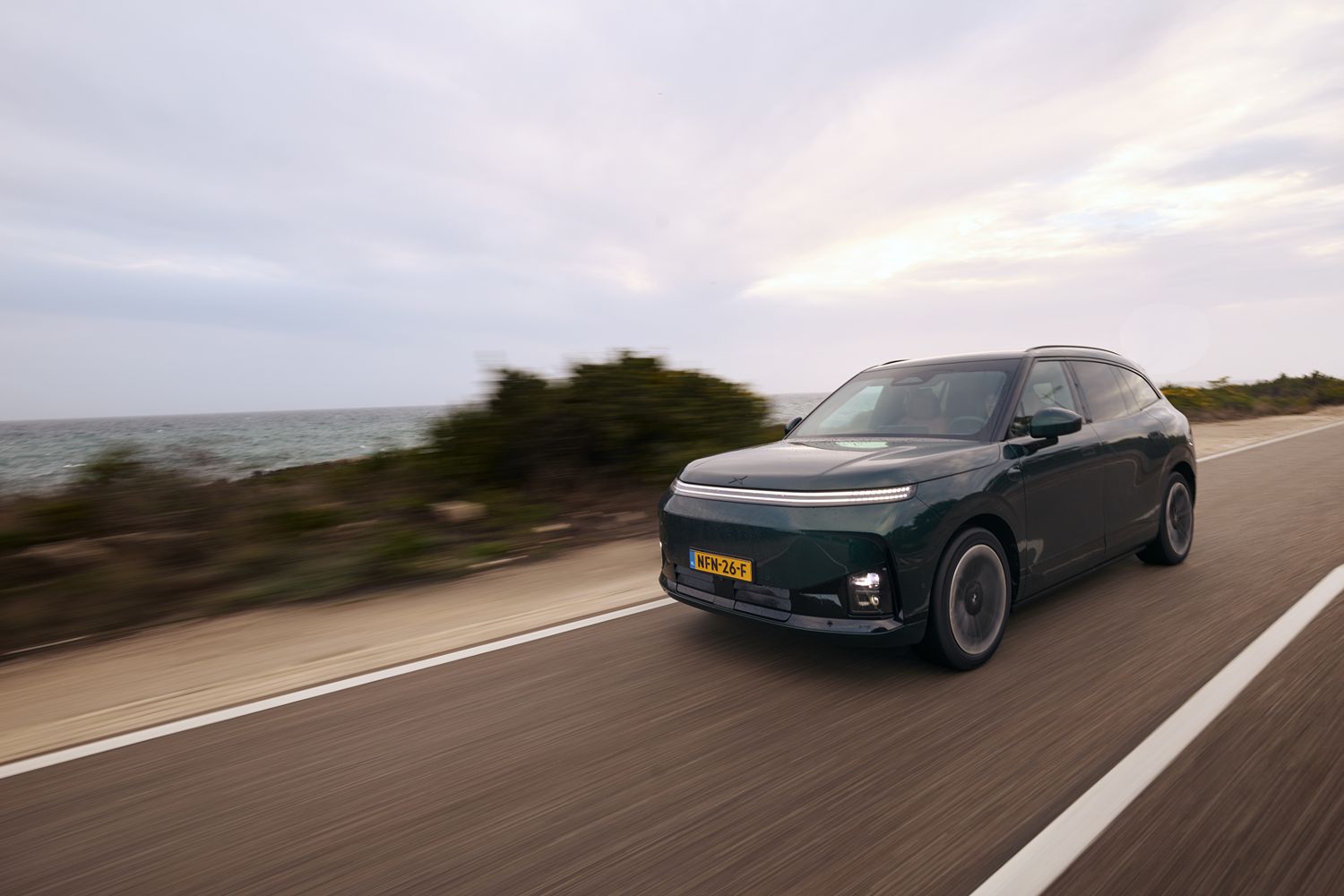
You could say the Xpeng G9L looks like all the other Chinese SUVs, of all sizes, to emerge in recent years. You could further say that it's a bit, um,
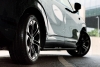
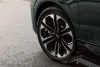
flanky, given it sits on whopping 21-inch alloys across the board, and yet these look rather small in the arches due to the sheer expanse of metal sitting above them. You could even opine that it's a socking huge thing, measuring one-mill shy of two metres across the beam, *excluding* its door mirrors, and clocking in at more than 5.1 metres long with 3,100mm of wheelbase.
But in Waving Green, or even Arctic White (the latter the only no-cost colour), and with its aerodynamic shape (0.246Cd) and twin-strip light signatures, we found after a couple of days in the Xpeng's company that we had grown to quite like its appearance. Perhaps we'll conclude here by saying it is another one of those cars which looks a lot better in the metal than it does in photos, if that helps at all.
Interior
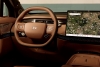
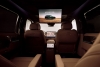
Material quality inside the Xpeng G9L, save for that silvery trim of plastic surrounding the 8.8-inch strip-shaped instrument cluster, and maybe the surround for the central armrest, is uniformly excellent, so the cabin feels suitably plush before you've so much as clocked some of the tech highlights. Which include: an augmented-reality head-up display (HUD) with an effective field-of-view of 88 inches; the 17.3-inch infotainment panel running Google Maps as its native nav; a 12.5-litre fridge which slides out of the back of the central armrest up front; and then the showstopper, that 21.4-inch, 3K cinema screen which folds down from the SUV's roof, similar to what you might find in a
BMW 7 Series.
Love technology or hate it, you cannot deny that all this gear does make for a special ambience in the G9L's passenger compartment, especially if finished in the eye-catching (if potentially divisive) Tangerine upholstery. But the best thing about the Xpeng is that all the tech works slickly. Yes, there are minor irritations - you adjust the door mirrors and steering column using the touchscreen and steering-wheel pads, the car's headlights and glovebox-opening switch are on the infotainment display too, all the window tabs have been installed the wrong way around, and the HUD can occasionally, as our driving companion rightly expressed, look like you're watching a 3D film without the necessary glasses on. However, in general, the cabin of the G9L ought to be considered a major success.
Practicality
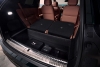
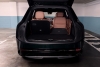
For such a big car with a goliath wheelbase, space in row three is not as generous in the Xpeng G9L as you might imagine, but it's not bad either. Taller adults can sit there, albeit they might not want to sit there for long. The six-seat model is considered more opulent than the seven-seaters, as it brings in two captain's chairs in the middle - and leg- and headroom in this location is generous in the extreme. Boot capacity, all seats in use, is 367 litres, which doesn't look like a vast amount but is excellent for three-row SUVs. The 1,330 litres with the rear-most seats down isn't quite so impressive, however, although a 65-litre under-bonnet storage zone does bolster the Xpeng's practicality case.
Performance
We'll skip the range-extender (REEV) for now as we've not yet tested that, but in brief it has a 63.3kWh battery and a 1.5-litre turbo petrol engine (natch) for a system output of 503hp, with 0-62mph in 5.4 seconds and a combined range of 717 miles. Apparently.
The full EVs are more pertinent. Things kick off with the single-motor RWD Long Range, which has a 110kWh gross, 106kWh usable NMC battery and 367hp/465Nm at its disposal. You'll notice the number '367' a few times with the G9L - boot capacity, rear-drive power output... and also its peak range, of 367 miles. Which isn't amazing for a 106kWh battery, but it'll suffice.
We drove the flagship version, though, known as the AWD Performance Ultra. Dual motors kick out a whopping 585hp and 695Nm, which means that despite this G9L weighing a colossal 2,760kg in this format, it'll still run 0-62mph in 4.9 seconds.
It feels every bit capable of that sprint, as the speed of the Xpeng is about spot on. It's effortlessly and insistently fast in what might once have been termed the mid-range, when combustion engines were still all the rage, and yet it doesn't have that brain-scrambling sensation of hyper-power EVs that can sometimes make you feel nauseated during full acceleration. Good calibration of both the throttle and brake pedals helps with the G9L's experience here, although there is no one-pedal driving mode, even in the strongest regenerative setting.
You do pay a bit with overall range, which is down to 343 miles in this car. But the 540kW DC charging rate is lightning (forgive the pun), so getting the battery from 10-80 per cent can be done in as little as 11 minutes. And as the Xpeng proved more efficient than its stated numbers while on test, maybe you've got a better chance of achieving its range claims in real-world conditions.
Ride & Handling
The Xpeng G9L is a delight to drive. It's one of, if not
the best Chinese car we've tried yet, thanks to twin-axle, dual-chamber air suspension, adaptive dampers and active four-wheel steering with a sizeable 7.5 degrees of rear-wheel turn, this last item boosting its agility no end (it has an 11-metre turning circle, which is TOIGHT). There's clearly a lot of highly effective sound-deadening also stuffed into the SUV's hidden crevices (steady...) and so, at a cruise, the thing is imperiously comfortable and getting on for silent, even when travelling at 70mph.
It remains supple and pleasant around towns, too, although the very sharpest-edged jolts can introduce a bang through the G9L's structure that reminds you of the 21s' unsprung mass at times. However, that's an infrequent occurrence, and our only other dynamic complaint is that the steering lacks any true feel. It's consistent and accurate, so it's not terrible to use, albeit it does have that lightness geared in to mask the Xpeng's 2.8-tonne bulk on the fly.
Despite this, and the fact that rarely do people chuck seven-seat electric SUVs around in the corners with any degree of vim, the G9L handles tidily, and even has a background sensation of being throttle-adjustable at the rear. So no, it's not some deft-handling jewel, but it's a lot, lot better than you might predict of a leviathan like this when the road ahead of its tech-laden form becomes interesting.
Value
The obvious main sticking point is Xpeng's brassy pricing of the G9L, which seemed to touch a nerve on social media during the launch. This is a premium product and with a starting figure of £64,990, rising to £78,990 for this six-seat AWD Performance, its bracket is about on a par with the likes of the
Hyundai Ioniq 9 and
Kia EV9. It is a bit more than a
Skoda Peaq and a long way in advance of a
Peugeot E-5008, but Xpeng would counter that both of those are nowhere near as grand nor performative as the G9L.
Going the other way, the
Volvo EX90 kicks off at £73,160 at the time of writing and if you can somehow consider the G9L as a rival to the
Range Rover Electric then that EV's starting price of £154,000 means the Xpeng compares favourably. Especially as every G9L model gets the fridge, the cinema screen, AI-enhanced-massaging/ventilated/heated seats in the front two rows and heated seats in row three, automatically powered doors and powered sidesteps, and a 23-speaker Xopera proprietary hi-def sound system as standard.
Verdict
The sticking points with the Xpeng G9L are the price, its potentially anonymous styling, and the unknown quantity of a Chinese technology brand ambitiously pushing forward into the hyper-luxe electric-SUV realm. But aside from American-spec steering, its relative inability to deal effectively with the sharpest of depressions in the road surface, and one or two minor interface niggles, the way the G9L drives is largely superb. It'll take something of a leap of faith to plump for the Xpeng over a good EV9 or Skoda Peaq, of course, but if you do so, we doubt you'll be seriously disappointed.