Styling
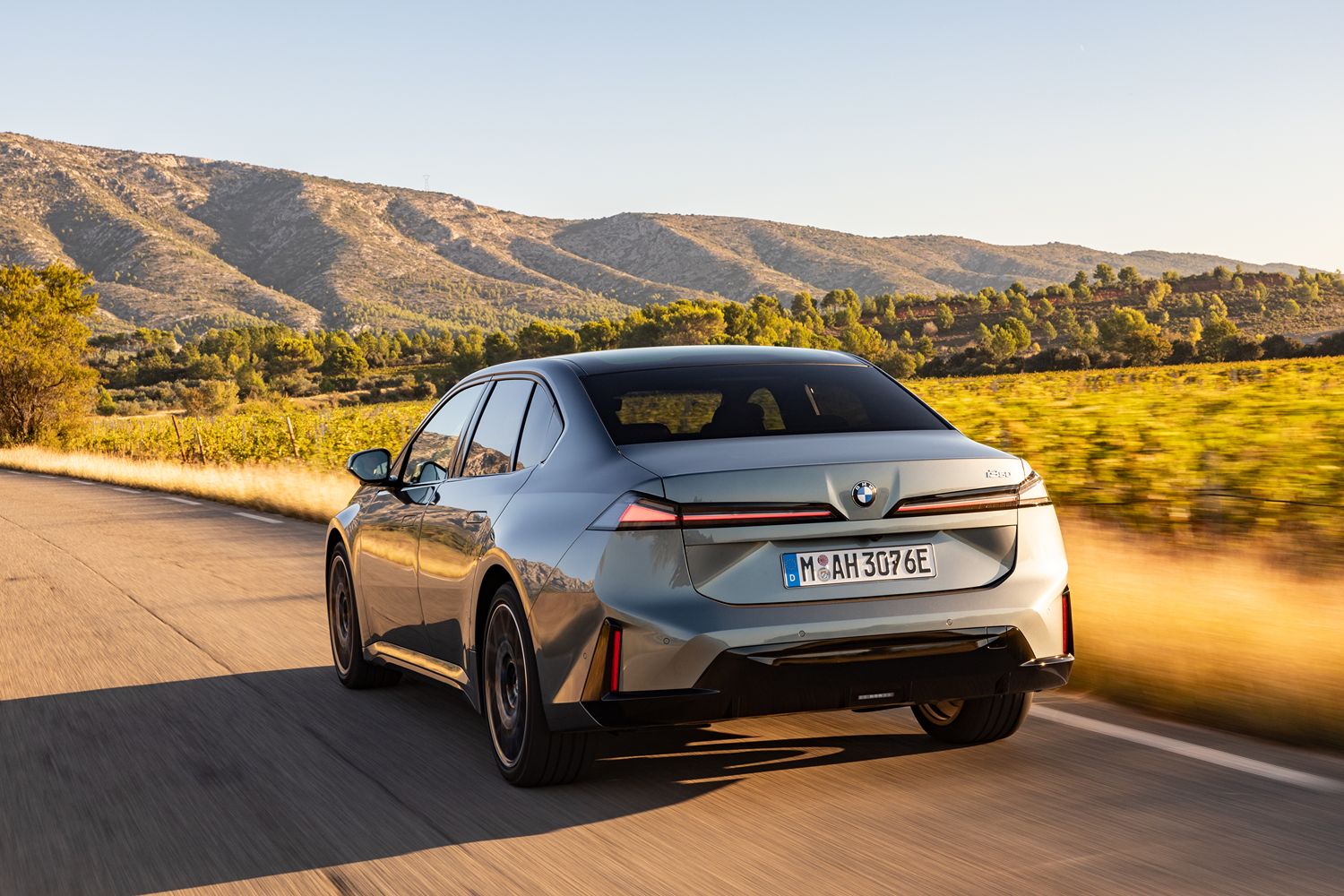
Although looking almost identical to the G50 3 Series family to which it is related, the different chassis (resulting in the model code of 'NA0' for the EV) changes all the proportions of the car. Subtly, of course, but it's shorter overall, wider, taller and blessed with a longer wheelbase. However, you'd have to be some kind of a spatial-awareness savant to spot those differences with the naked eye, so to all intents and purposes the i3 looks the same as its ICE-powered siblings. That is to say: possibly contentious styling, that is sure to be love it or loathe it, but certainly not in any way dull to behold. In fact, we think it's the best-looking
Neue Klasse product yet.
Interior
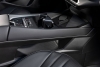
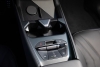
Again, the interior of the i3 is supposed to be comfortingly familiar to you if you've sat in the contemporary 3 Series, although the electric BMW doesn't have an engine start-stop button on the central tunnel (you simply belt up and press the brake to 'ignite' the i3's powertrain) but it does gain an under-dash storage zone not in the ICE cars.
We could, here, talk about superb material quality and excellent ergonomics and the pleasingly thinner rim of the steering wheel if you'd like, but your attention is sure to be on the ginormous digital screens that make up the BMW's interface. We're not shy in saying that, despite the fact we are normally huge advocates of proper switchgear and averse to an over-profusion of technology for technology's sake, the mesmerising iDrive Panoramic set-up in the G50/NA0 cars is where they feel like an enormous step on from the old
G20 Three.
The ultra-sharp, graphically slick 17.9-inch Central Display with its 'free-cut' form to the frame would normally be the main talking point, angled - as it is - 3mm more towards the driver than in the iX3 SUV to reinforce the i3's driver-centric DNA. But it's that Panoramic Vision strip underneath the windscreen which is the star of the show in the BMW. It's fabulously executed and works wonderfully well in practice. Honestly, even if you're the biggest Luddite technophobe going, give the i3 a chance in this regard. We think it will wow you, too.
Practicality
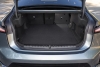
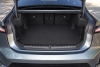
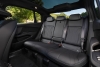
The boot in the BMW i3 is a little smaller than in the petrol-hybrid-powered G50s, down by 30 litres to the tune of 420 litres overall. Yet the i3 retains the 40:20:40 split-folding rear seats, plus it also gains a 31-litre front boot to eclipse its combustion relations' overall cargo capacity by one solitary litre. It also benefits from the aforementioned under-dash stowage area, although on the flip-side the driver's seat in the i3 feels like it won't go as low as the one in the M350 xDrive, for instance, while rear-seat space is not as amazing as a near-2.9-metre wheelbase might have you believe. Legroom is good, but it's more that there's not an awfully big gap underneath the bases of the front seats in which second-row occupants can put their feet. It does, though, have a completely flat floorwell in the back of the car, natch; it's an EV, after all.
Performance
At launch, there are two i3s to choose from, the smaller-batteried 40 xDrive (374hp, 0-62mph in 5.4 seconds, 441 miles of range) and then this 50 xDrive, with a whopping great 108.7kWh NMC battery pack. Power and torque are set at healthy numbers of 469hp and 645Nm, so despite weighing almost 2.3 tonnes at the kerb, the i3 50 can still do 0-62mph in 4.7 seconds.
But it's the range which will garner the headlines, because this model is said to be able to cover 566 miles between charges. That is, at the time of writing, the longest-range EV of any available, so calling the i3 an industry-leading electric is not hyperbole in any way, shape or form.
From our first drive experience of the BMW, it's not going to leave you wanting more pace. But if it somehow does, then know an M60 high-performance derivative of the i3 is on the way to sate your needs. However, we'd say the 50 delivers all the effortless on-road speed you could feasibly require, while its brakes are calibrated beautifully and feel less like EV stoppers, and more like just a really good retardation system from an ICE vehicle.
Also, we gave the i3 50 xDrive a good thrashing (or whatever the electric equivalent is) on a 90-mile test loop in France, and it would still have done around 350 miles from its reserves in that situation. So driving it much more sensibly should easily see it breaching the 450-mile barrier in day-to-day usage, and maybe pushing close to 500 real-world miles if you're sensible with it. That's nothing short of game-changing in EV world right now.
Ride & Handling
We'll begin with a tiny negative: the BMW i3 50 xDrive M Sport is not quite as rewarding and enjoyable to drive at or near the limits of its grip as the M350 xDrive. We mean, how could it be? It doesn't have a lusty great straight-six turbo installed up front and it's carrying 345 kilos more timber than its petrol equivalent, so it's less playful in the corners and more prone to understeer before it does anything else.
Yet by the standards of EVs, the i3 is genuinely brilliant to drive. Its body and wheel control are of a high enough standard that even our passively sprung test car proved itself to be seriously adept on some of the excellent roads of Provence, while the i3 has steering that's every bit as feelsome and pleasurable to use as the set-up in the M350.
So while you might have to trim a little bit of your driving exuberance back if you opt for an i3, you can still press it on a twisting route and find that its dynamic case will not fall apart entirely. It's too agile and composed to ever have you thinking it genuinely weighs 2,280kg, for example.
Of course, it rides as favourably as the M350, if not more so as the 50 xDrive isn't as overtly sporty as the M Performance Three, and it's quieter at a high-speed cruise due to its lack of a noisy six-pot motor. We'd be keen to try an adaptively damped i3 on the UK's roads to give a definitive verdict on its overall ride comfort and refinement levels, but it already seems to be exceptional at both disciplines as things stand.
Value
BMW has priced the i3 in the £48,000-£57,000 bracket, which seems mighty competitive for an EV as all-round talented as this. Trims are a 'Base' car, then M Sport and M Sport Pro, with most predicted to go down the middle for an M Sport here - and that comes with plenty of desirable equipment from the get-go. Understandably, as an EV, it should prove to be very affordable to run, but also usable too, as its 800-volt architecture means that when you
eventually get around to almost running its battery out of charge, then you can top the 50 back up at an ultra-rapid DC rate of 400kW. So a 10-80 per cent replenishment will only take 21 minutes, despite the BMW having a battery the size of Kent.
Verdict
We could possibly have predicted it, but that doesn't make this outcome any the less welcome nonetheless: BMW has aced the i3. The only concerns we have with the car are slightly cramped rear-passenger space, a design of steering wheel which can hardly be called attractive, and then those divisive exterior looks, so we'll refrain from giving it full marks (yet) until we've had a longer go in it back on home turf.
But if you love the angular bodywork (we do), don't mind the tiller (it's OK, we suppose) and make sure you're always driving it, then you'll probably think of the thoroughly magnificent i3 the same way we do - it's getting on for being the perfect present-day EV, all things considered.