Test Car Specifications
Model: 2025 Honda HR-V Advance Style Plus
Price: HR-V from £32,250 (£38,825 as tested)
Engine: 1.5-litre, four-cylinder i-MMD petrol hybrid system
Transmission: continuously variable transmission (e-CVT), front-wheel drive
Power: 131hp (electric motor only)
Torque: 253Nm (electric motor only)
Emissions: 122g/km
Economy: 52.3mpg
0-62mph: 10.7 seconds
Top speed: 105mph
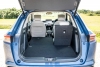
Boot space: 319-1,289 litres
Styling
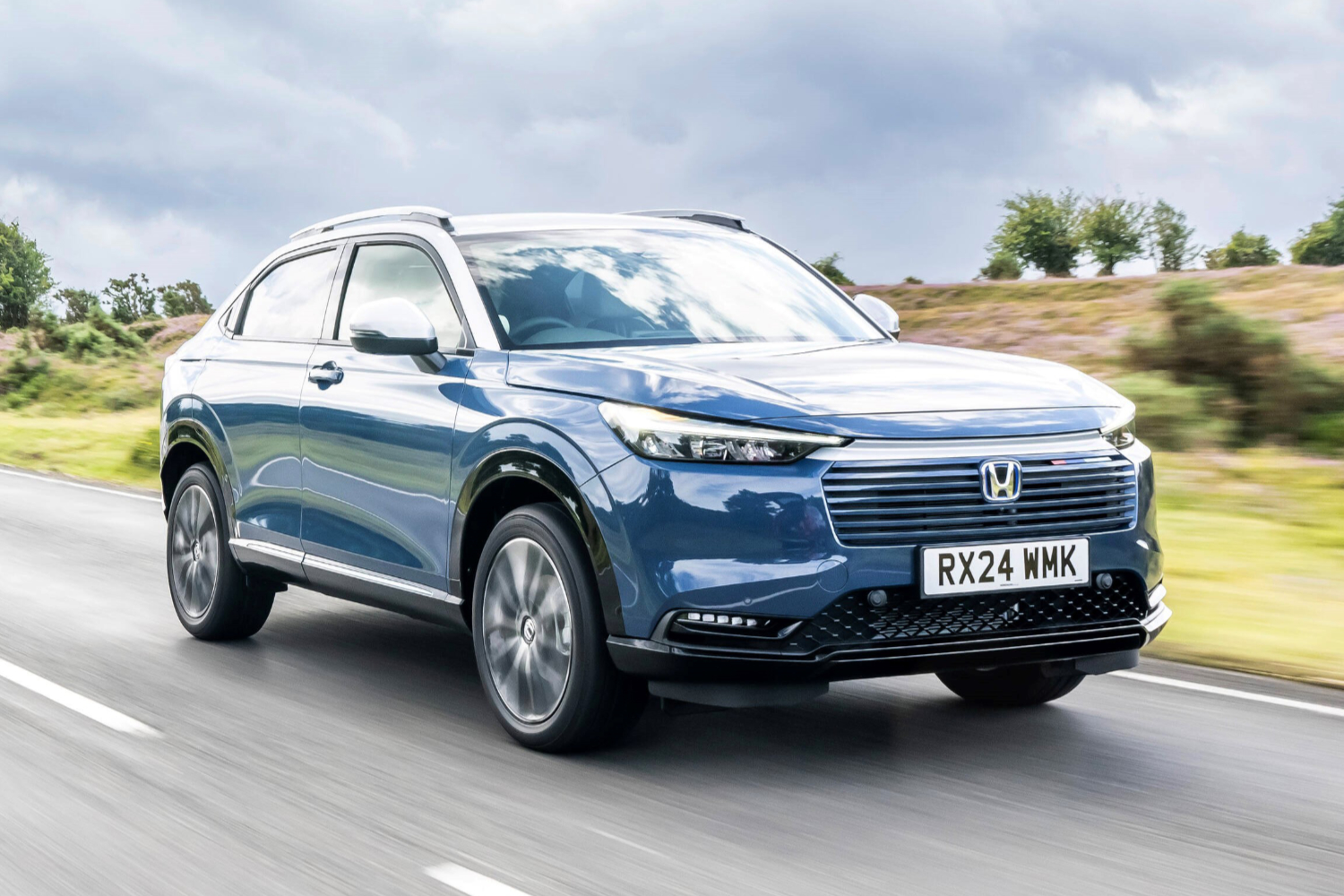
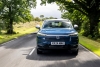
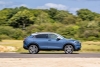
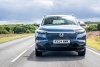
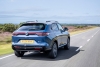
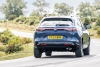
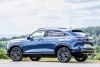
At first glance, the HR-V looks much the same as before, but those who look closely will spot a new front-end design with fresh bumpers, an updated grille and darkened headlight fairings, as well as a more prominent daytime running light signature and gloss black bumper trim. There are changes at the rear, too, where there's a redesigned full-width light bar, and Honda is now offering a range of new paint colours, including Sage Green, Seabed Blue, and Urban Grey. If we're honest, the changes haven't made all that much difference, and only those who were really paying attention will notice, but the HR-V is not an ugly thing by any stretch of the imagination.
Interior
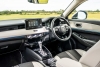
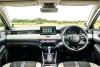
Honda's interiors have not traditionally been the cars' best qualities, but things have changed in recent years, with much more appealing cabin design and material quality. The new HR-V is another sign of that, with plush materials that are well stitched together, and a strong, modern design that's smart and stylish. Admittedly, that's much the same as the old HR-V, but it's good to see that its greatest strength has not been diminished.
That said, Honda hasn't quite managed to fix up its slightly archaic infotainment system, which feels a bit underwhelming. It's better than it was, but the graphics still aren't great, and the menus feel a bit clunky in places, but the system is a bit quicker. That means it works well with Apple CarPlay and Android Auto, so you can simply plug your phone in to avoid most of the touchscreen's foibles.
Practicality
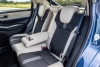
Although SUVs are supposed to be more practical than hatchbacks, the HR-V isn’t all that much more spacious than the Jazz. The 319-litre luggage space, for example, is an improvement of just 15 litres on the Jazz, and feels pretty mean compared with the Civic’s capacity of more than 400 litres. Equally, rear cabin space is just about acceptable, but headroom is a bit tight for tall adults, so it isn’t really any more practical than a Jazz. That said, you can carry four people relatively comfortably – especially if those in the back are youngsters – and folding the back seats down to free up more boot space leaves you with a very practical cargo space.
Performance
Under the bonnet, the HR-V comes with a 1.5-litre petrol engine that works with Honda's clever i-MMD petrol hybrid system. With two electric motors taking much of the strain, it promises a quiet, smooth and efficient driving experience, but it never really delivers.
Admittedly, it's better than its predecessor. The old HR-V's powertrain was dreadful, with absolutely no nuance or sophistication, and a whole lot of noise. Oh, and it was slow, too.
And if you plant your right foot, the HR-V is still sluggish and noisy, but it is a bit better at more moderate throttle positions. In short, if you don't push it too hard, it's just about acceptable, although the CVT transmission still makes life a bit noisy and short on performance. Despite having about 130hp, the HR-V still takes almost 11 seconds to get from a standstill to 62mph.
But it is efficient. Because the hybrid system mostly depends on the electric motors, Honda claims just over 50mpg economy, and we found that kind of efficiency was achievable in a relaxed cruise.
Ride & Handling
Although the HR-V isn’t at all sporty on paper, it is actually quite pleasant to drive quickly. Body roll is well controlled and the steering is reasonably accurate, so you don’t feel too uncomfortable chucking it into the corners. It doesn’t exactly reward you for grabbing it by the scruff of the neck, but it’s better to drive than a lot of its less stable peers.
Yet despite that, the car rides reasonably well. Cars that handle well – and SUVs in particular – are often uncomfortable, but the HR-V rides pretty well at any speed, and it’s particularly comfortable on the motorway. It isn’t perfect, and it often clunks a bit over the potholes, but the bumps aren’t usually transmitted through the seats.
Around town, the ride is a little less impressive, but that’s somewhat mitigated by good visibility, which means the HR-V is easy enough to position on the road and it’s simple to manoeuvre. The rear-view camera isn’t the best, it’s true, but in combination with parking sensors, it makes parking the HR-V a doddle.
Value
The new HR-V starts at a tickle over £32,000, which is quite a lot for a compact SUV. A VW T-Cross, which has a bigger boot, starts at just £25,115, and though it isn't a hybrid, it's still significantly less expensive. You do get more kit from the HR-V, though, which gets plenty of standard equipment. Even basic Elegance models get heated front seats, a reversing camera and satellite navigation, as well as front and rear parking sensors, keyless entry and start, and the digital instrument display. Move up the range and you can have a heated steering wheel, and electrically operated tailgate, a panoramic glass roof and wireless phone charging, as well as a handful of other options. But then our top-of-the-range Advance Style Plus test car came to almost £39,000, so you'd expect a lot of kit for that money.
Verdict
The HR-V has improved since its introduction, with a more pleasant driving experience and a fractionally less abrasive hybrid system. Now, then, it's a decent compact SUV for urban life, with sensible dimensions and an economical powertrain, but it still struggles slightly on a country road or a motorway slip road, and that will put some customers off. Stick to town centres, however, and the HR-V will perform admirably.